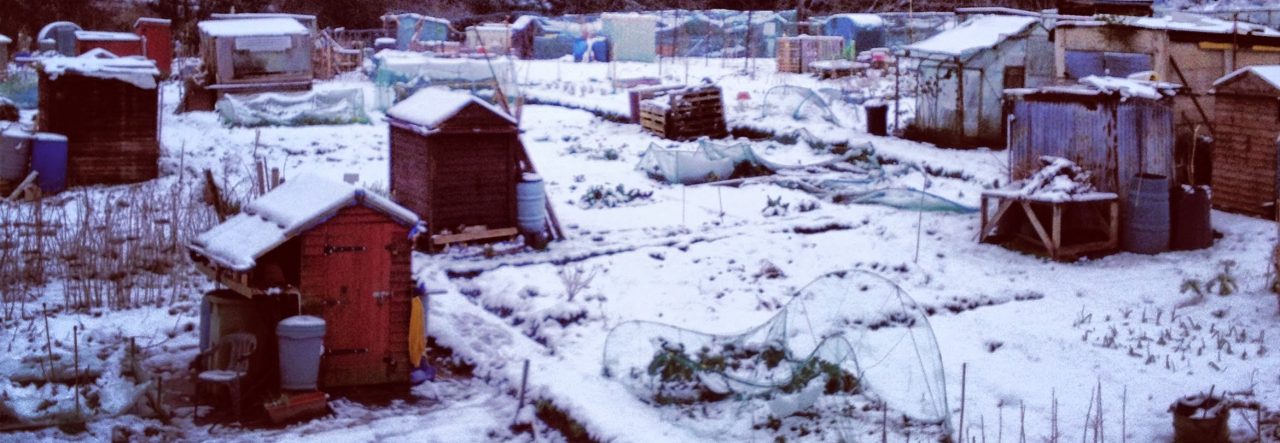
The allotment is looking good at the moment, there are a few things that aren’t, in particular the radish and turnip, but that’s gardening. I’m already thinking about what I’m going to do with the area that is currently occupied by the broad beans, I suspect some more salad crops will go in one, and the other might just get covered by the courgettes. According to my notes, the early potatoes should be ready around the 3rd July, but they might be ready sooner, as it’s looking like they are starting to die off. I might lift a few soon, just to see.
Category: Fork To Fork
Potting Shed Update
The potting shed is now fully over to it’s “summer” set-up, with all the troughs for peppers and tomatoes full. I’m not growing cucumbers in there this year, as I’ve switched to outdoor cucumbers on the allotment this year as an experiment. I’ll have more tomatoes than I originally planned too, as I’ve lost the first trough of peppers to the snails!
I’ve sown some radish seeds in some of the spare space around some of the plants too. I want to see if I get better luck with a more frequent watering regime, than I have so far on the allotment. The radishes there are coming up very woody, and not very big and I think that might be due to the infrequency of watering.
Short video update below on the potting shed.
Planting and Harvesting on the Allotment
 The allotment feels like it’s reached that point in the year where there is going to be a regular supply of veg coming from it. I walked around this morning, and was surprised to see just how much things have grown in just a couple of days. Leeks that were just looking like blades of grass a day or so ago are now looking more like stout reeds, and the runner beans have now all germinated (or at least there is one plant beneath each cane). I decided that I was going to plant out my pumpkins and the remaining cucumbers, as well as some courgettes. They need to go out, they’ve exhausted the compost that they were sown in, and are big plants, but the leaves are yellowing, so they need more nutrients. I gave them a liquid feed last night, but the weather forecast for the next week or so, is for double figure nighttime temperatures, so I’m going to risk it. I’ve kept some of the courgettes back just in case, and the pumpkins have gone in relatively sheltered spots, so I think they’ll be okay.

I’ve also harvested the first broad beans of this year. There were absolutely loads of pods, and I’ve picked enough for a meal tonight, and I’ll get some more later in the week. These are the ones that were sown last autumn, and I didn’t think were going to amount to much, but oh how they’ve proved me wrong! There are lots of pods, and the ones sown a few weeks ago to fill some of the gaps are coming along too. Hopefully they’ll be well spread out, but if I get a glut, then I’ll freeze as many as I can.
As I’d planted so many plants I also got the hose out of storage and laid it out. I used it to water the plants that I’d put in, and gave the rest of the plot a good watering. It will stay out now until the winter. I’m always a little worried that it is something that could easily be stolen, but in the eight years that I’ve had the plot it’s been left alone, and hopefully will be again this year.
With everything looking so good at the moment, I’m really enjoying my growing year again this year. Sure it’s hard work, but I love being able to feed myself and my family.
If you’re in the UK and have a long weekend this weekend or are off for the half-term school holiday next week, why not get out in your own garden and sow some seeds?
Sweetcorn With Heat!
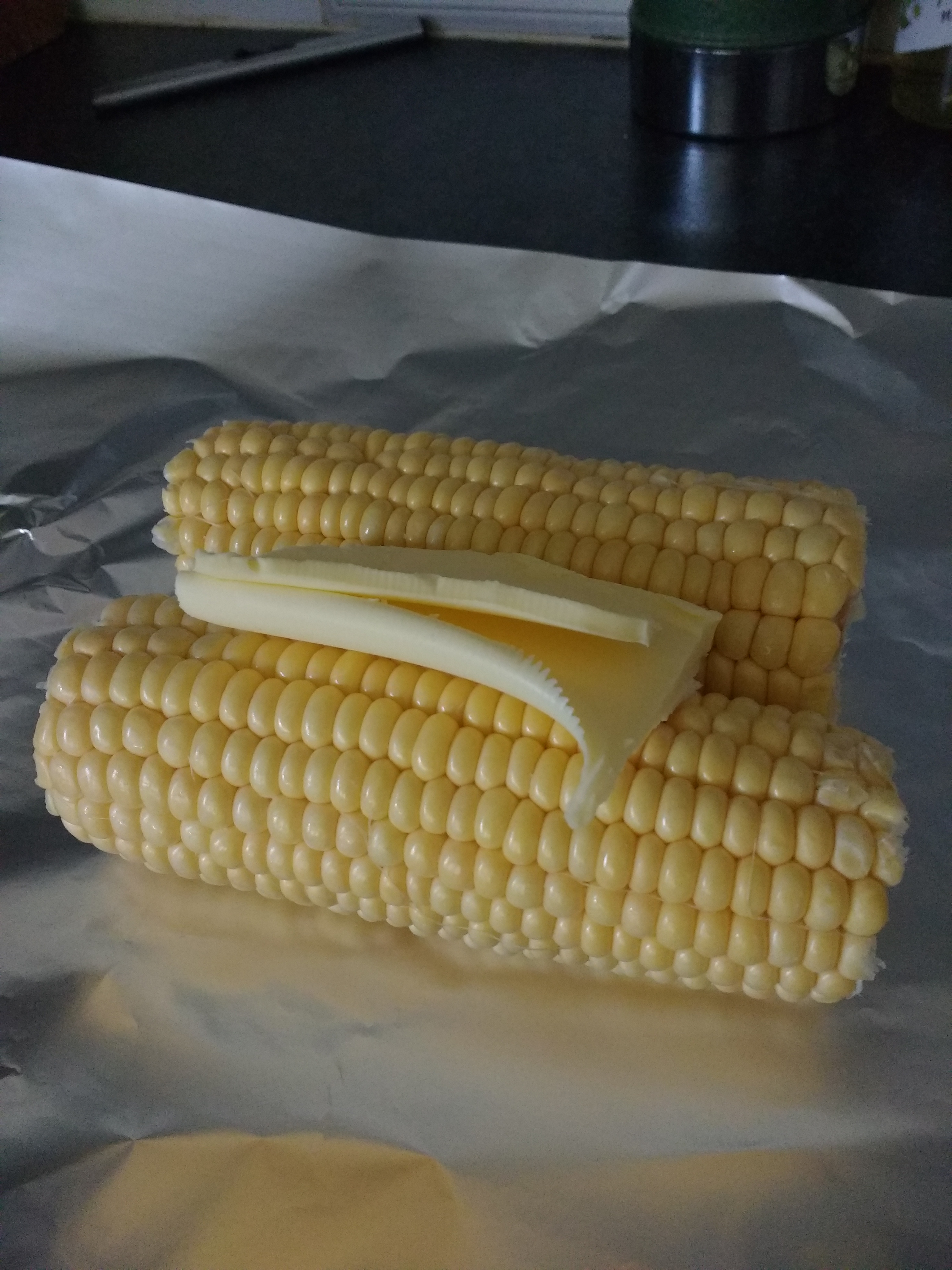
This is a really quick recipe for adding a little heat and flavour to corn on the cob.
Simply clean your corn cob, and wrap up in some kitchen foil, with a large knob of butter, a diced chilli and the juice of a lime.
Put the parcel in an oven at 200°C and cook for about 20 mins (longer if you want slightly less crunchy corn).
Serve and enjoy the heat.

Potting Shed Update
Each year during late spring, after the risk of frost has passed I convert our “potting shed” from an overwintering area for tender plants to a growing space for tomatoes and other plants that prefer a bit of heat. The quick video below covers the basics of the new set-up.
Ready, Steady, Not Quite Go! & A Rhubarb Recipe

Well, it’s been a very busy week, and a little unexpectedly so. It was good to get to the weekend though, and to get down to the allotment. If you read my post about the water problems at the site, I’m pleased to report that they have been resolved it seems. The leak has been fixed, and my prayers for rain have been answered, it even managed to rain on the workman when they were trying to sort the problem out.
We’ve had a week of rain at night, and into the morning and then from about mid-morning onwards it’s been bright and sunny, and that pretty much sums up every day this week, until the weekend arrived at it was sunny from the get go!

My alternative plan for getting water to the allotment arrived in the post during the week, and although it wasn’t technically needed, I still wanted to try it out this morning. It’s an H2GO bag, [Amazon Link – other suppliers do exist] that sits in a wheelbarrow and holds about 50 litres of water. I was a bit skeptical about whether it would actually work, but it does, and I’m really impressed. You need something large like a big bucket to tip the water into, so that you can then scoop it up into a watering can and 50 litres weighs quite a bit so if you’re a long way from where you want to get the water too, you might want to think about not filling it completely full. If I get a chance I’ll try and do a quick video, so you can see it in action.
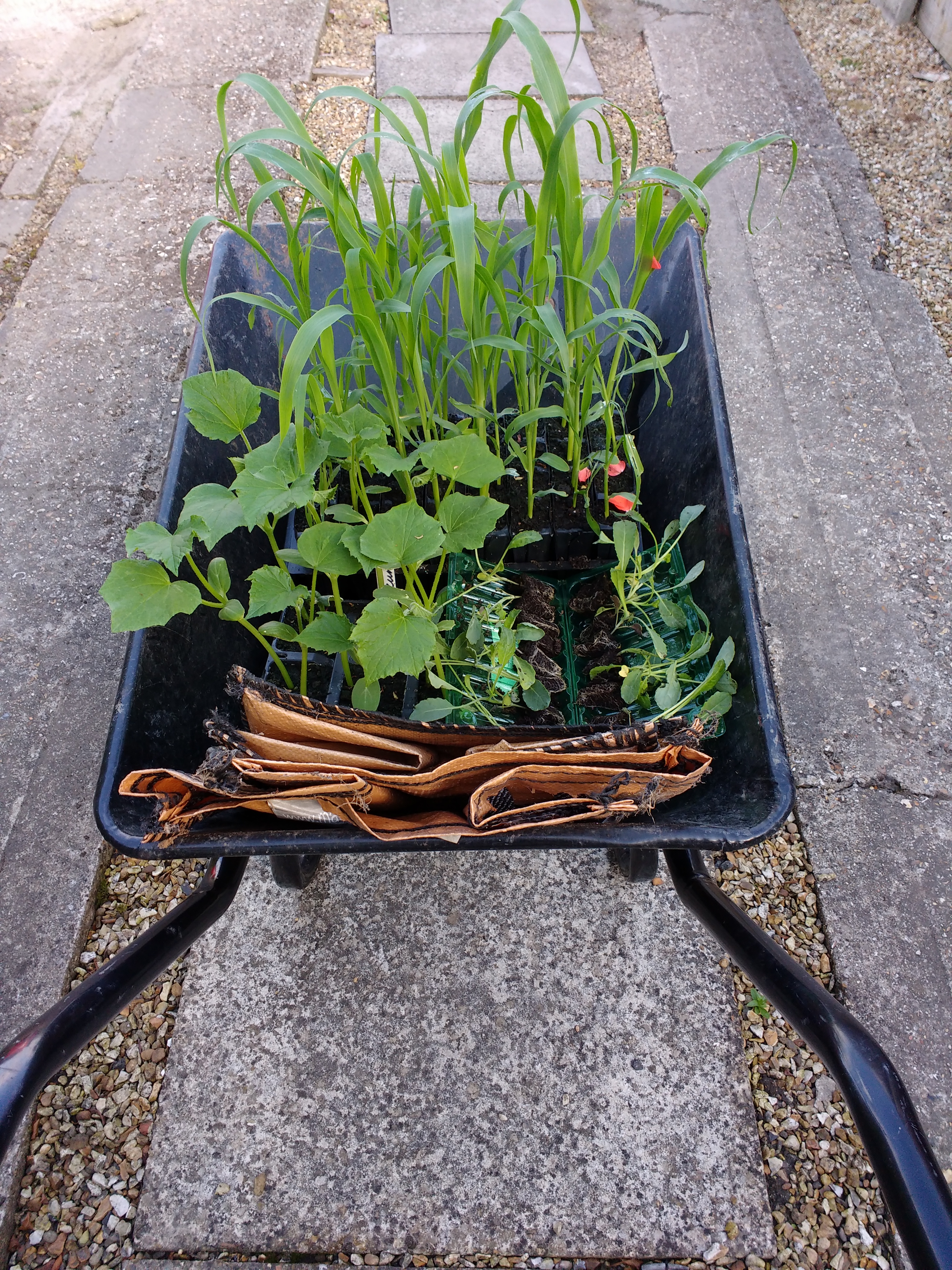
When I went down to the plot this morning it was with the main intention of getting some more plants into the ground. Things have been getting a little tight for space in the potting shed, and it was time for some to move out onto the allotment. I had Cavalo Nero, Sweetcorn and some Cucumbers to go down, and although it’s potentially too early for the latter two I had a cunning plan to protect them from the nighttime temperatures which are still dropping down into the mid single figures.
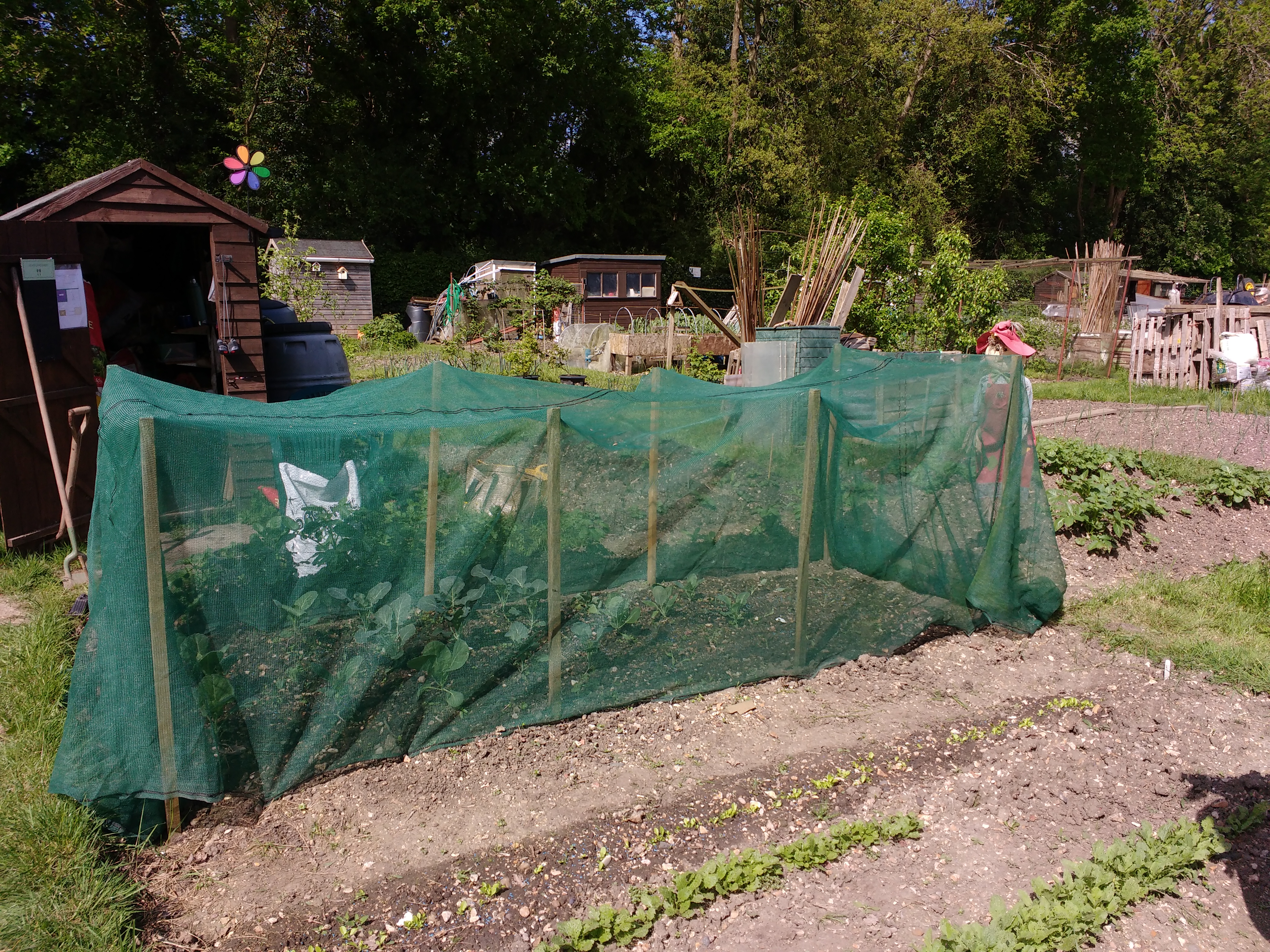
The Cavalo Nero plants went into the brassica cage alongside the cabbages, cauliflowers and broccoli. It’s now as full as it’s going to be this year. There are some more brassicas to go, but there’ll have to go into another part of the plot

The sweetcorn have gone in as well, and I’ve built a little windbreak / cage for them too. This one made from enviromesh and some old net curtains (because I didn’t have a big enough piece of enviromesh). The cucumbers are just alongside, and have a fleece “dome” over the top of them. I hope both of these slightly Heath Robinson constructions will help the plants establish. The forecast for the week ahead looks good, and nighttime temperatures aren’t too low, so they may be okay. I’ll keep an eye on them anyway, because they’ll need watering in.
And finally I had a great crop of rhubarb to harvest. I love rhubarb and there are many things that you can do with it, including jams, wine and other nice things. However I think that you can’t beat some nice stewed rhubarb. Now I know that sounds a bit like school dinners, but take my word for it and give it a try. Here’s how I go about preparing it:
- Take your rhubarb stalks and remove the leaves (you can’t eat the leaves, as they’re toxic, so throw them on the compost heap or in the bin). Clean the stalks and chop into pieces about 2.5cm long.
- Place these in an oven proof glass dish, add a small amount of water (you don’t want to cover them, so just about halfway to the top of the rhubarb).
- Add ground cinnamon and brown sugar to taste (about a level teaspoon of cinnamon and a level tablespoon of brown sugar to six stalks of rhubarb, add more sugar if you have a sweet tooth).
- Add a generous handful of sultanas.
-

- The Rhubarb Mix – Ready To Go Into The Oven
- Cover & put in the oven at a 140ºC / Gas Mark 3, for about 20 minutes. At this point, remove and stir with a fork to break-up (shred) the rhubarb.
- Return to the oven for about another 10 minutes, and then repeat the shredding process until the rhubarb is soft and stringy.
- Serve straight from the oven (it will be very hot!) with a big scoop of vanilla ice cream or allow to cool and serve. Works great on porridge or muesli for breakfast!
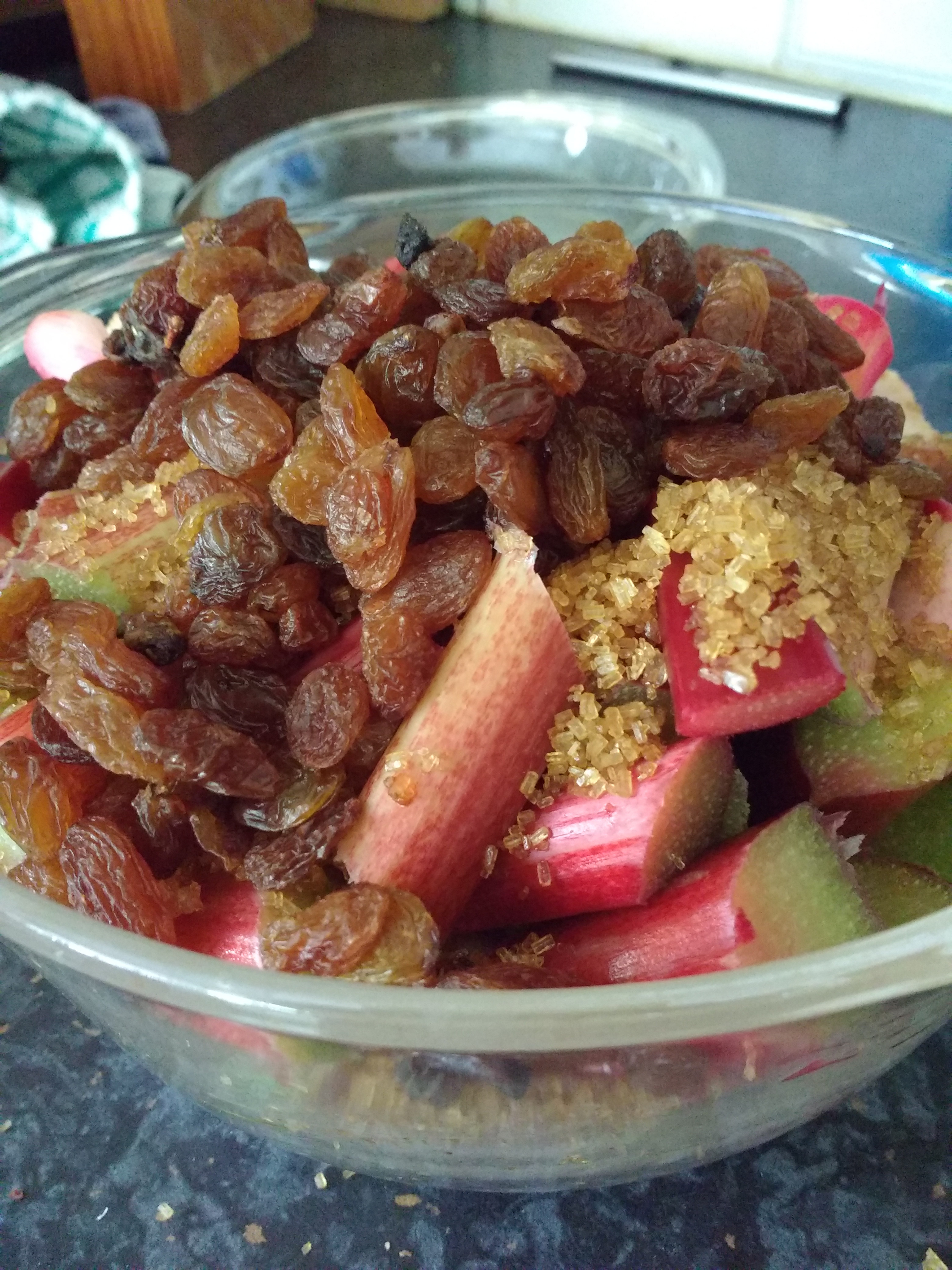
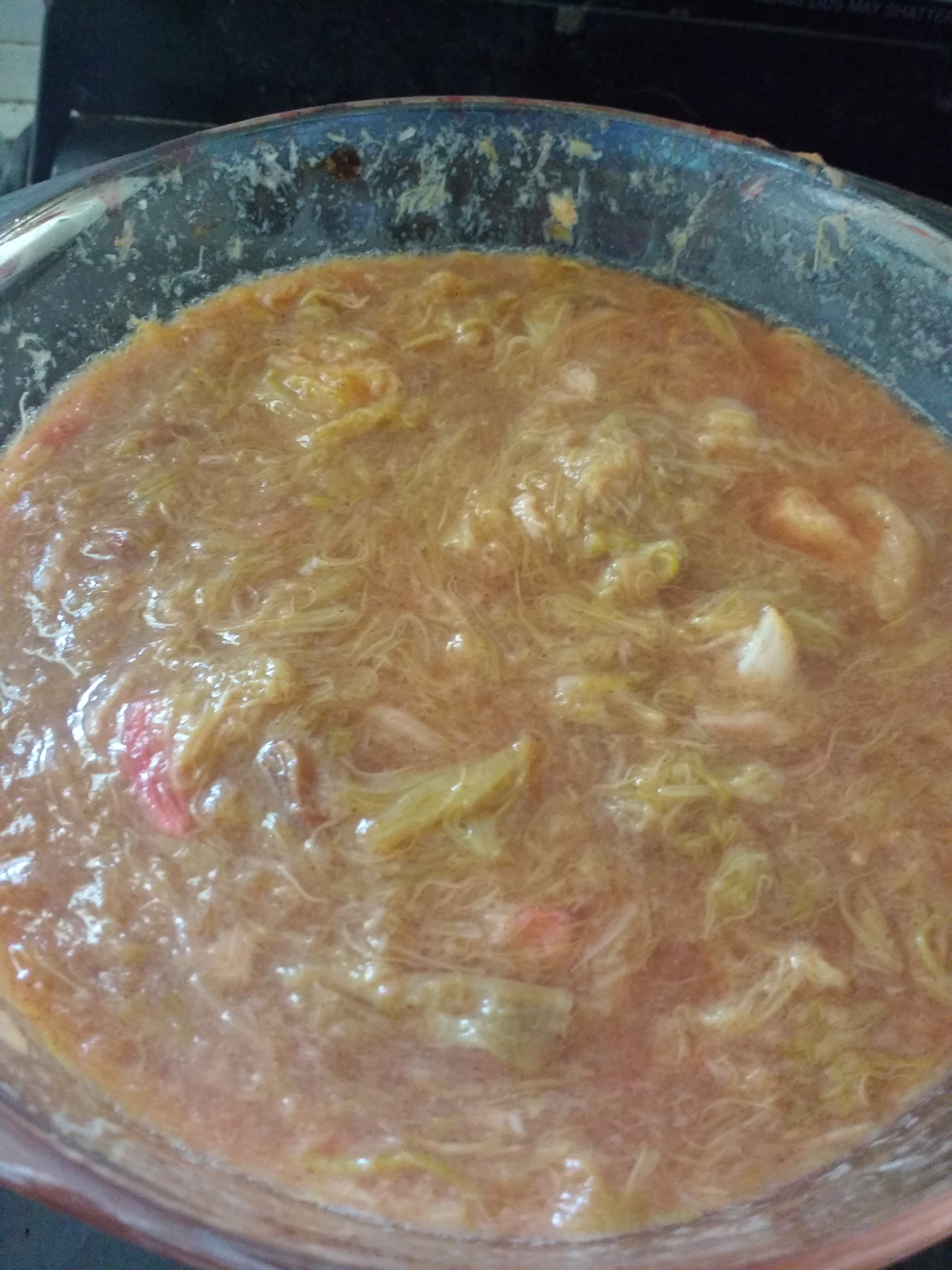
Great With Vanilla Ice Cream
Raindance?
 I received an email from the Allotment Site Manager at the end of last week that said owing to a broken pipe the water at the allotments had been turned off, and would stay that way until further notice i.e. until they can locate and fix the leak. Not a major problem for me yet, as I have two large waterbutts which collect water from my shed roof, so I have some water for the time being. However if the weather stays the same for the next couple of weeks that water will be gone. At the moment the seedlings need something nearly every day, and although we’ve had the odd nighttime shower it won’t be enough. I think I have a solution in terms of how I can get water from home to the site if I need to, but I’ll write about that some other time (when I’ve tested it).
It has sent a few others into a flat spin however in terms of getting water to their plots. Very few seem to have their own waterbutts and are reliant on the tap(s) to keep their allotments watered. Most seem to have taken to bringing water to site in camping containers and other portable water systems for now.
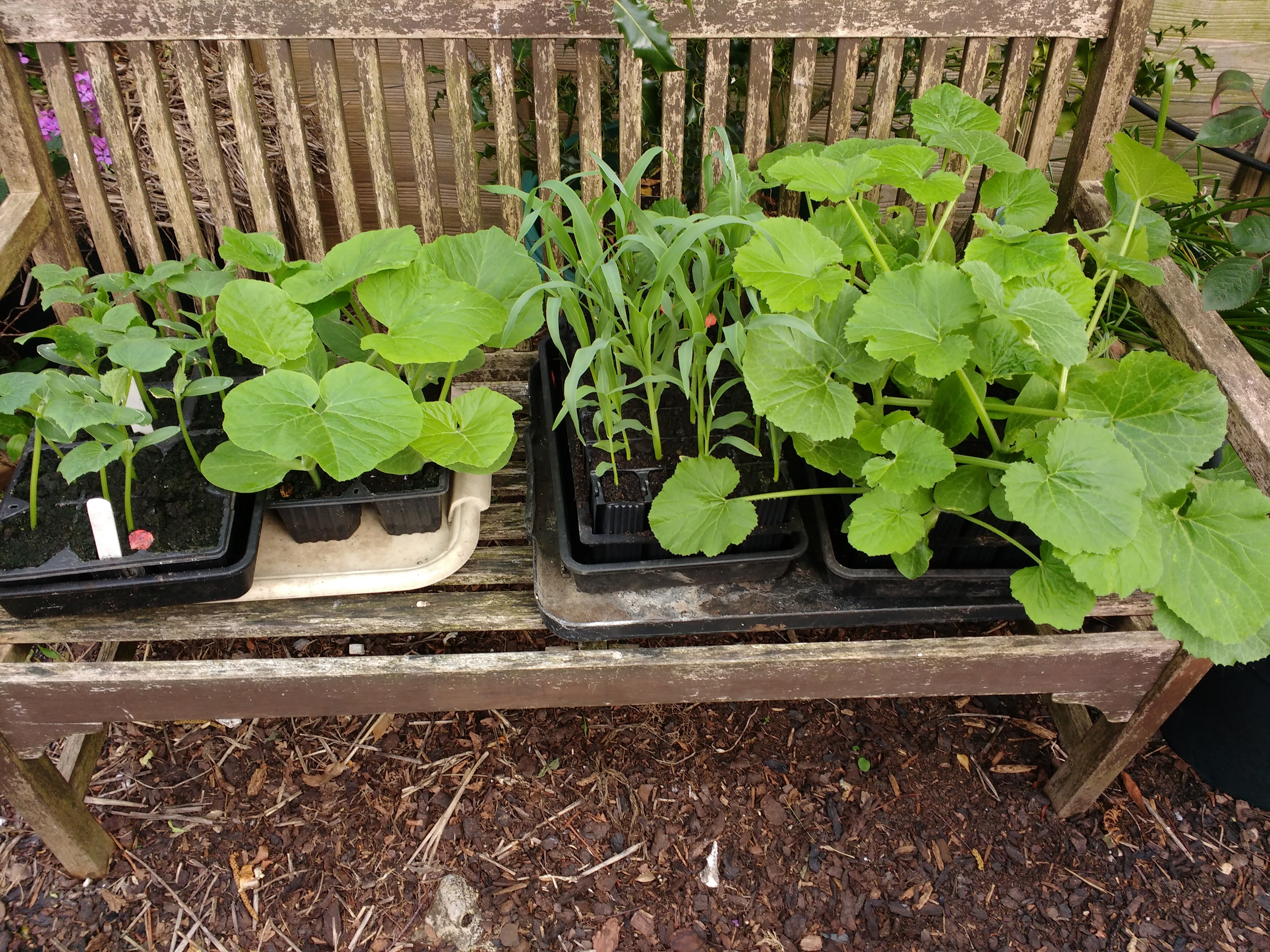
In other news the plants that I’ve been bringing along in the potting shed have been doing very well indeed (see above, from left to right; cucumbers, pumpkins, sweetcorn & courgette). I’ve started bringing them out into the back garden during the day now, as the potting shed has been reaching temperatures during the middle of the day of 40°C which is great for getting them going, but not so good if they are to go out onto the allotment soon, so I’ll be hardening them off. They’ll go back into the potting shed overnight.
And Finally:
Planting Leeks
I went down to the allotment this morning to plant out some leeks. I’ve recorded a little video, see below, because I thought it might be useful to someone. As with many things, this is just the method I use and there may well be other better methods.
While I was there I took an opportunity to weed the brassica bed. It wasn’t too bad but it felt good to be on top of weeding that area. There’s a little slug damage to some of the plants, but otherwise they seem to be doing well, so hopefully we’ll get a good crop again this year.
Symbols From The Allotment
There are symbolic things that happen on the allotment each year. They mark a particular moment in the growing season, a point at which you know you’ve reached the same point as a previous year, even though the exact date might be different. I suppose in many ways this is a kind of almanac.
This last weekend saw the final harvest of the purple sprouting broccoli from the plot. It’s been especially good this year, and has given us many meals of homegrown veg, at a time when our supplies are growing short and we are more reliant on store bought produce than I would like.
I used this final crop to accompany a slow cooked shepherd’s pie that I made to serve dinner guests on Saturday. The shepherds pie had a little heat and warmth included courtesy of a bit of chilli pepper, and was a fine result, enjoyed by all.
The area that was once the purple sprouting broccoli has now been dug over, and has had some pelleted chicken manure added to it. It is destined to be an area for sweetcorn or courgettes and pumpkins, depending on the exact position of those plants. At the moment these are still seedlings in the potting shed so it will be a little while longer before they are ready to go out onto the plot.
I also recorded a short update video for YouTube, embedded below to watch should you wish.
 Electronic Scrapbook