
Category: Fork To Fork
Making A Quick Potato Salad
Here’s a quick video for making potato salad. Details below.
Makes enough for four people.
You’ll Need:
- 6 to 8 small / medium sized potatoes
- Fresh Chives or mint
- 2 small / medium red onions
- Mayonnaise
- Salt & Pepper
- Lemon juice (2 to 3 tablespoons)
To Make:
- Prepare the potatoes, peel if needed (if you’re using young new potatoes, they’ll probably just need a scrub and the skins can stay on). Chop them into bite size pieces.
- Boil them until they are just soft, be careful not to over-boil, particularly if you are using a fluffy type potato.
- When they’re done, drain and put them back into cool water, and allow them to cool down, until they cold enough to handle comfortably with bare hands.
- Prepare the onions and chives by chopping into as finer pieces as you can manage, put these into a large mixing bowl.
- Add the potatoes into the mixing bowl, with the onions and chives.
- Add some mayonaisse (about 3 or 4 tablespoons), be careful not to add too much, you can always add a little more if needed.
- Add a good grind of pepper and salt and the lemon juice.
- Mix all together in the bowl, either with clean hands or a couple of large spoons, be careful not to mash the potatoes!
- This is ready to serve or can be refrigerated in a covered container for a couple of days.
Potting Shed Update 19th August
A quick video from the potting shed.
Allotment Update from 13th August 2016
Since I recorded the above video, the pumpkin that is next to the brassica cage has succumbed to slug damage. I think I’m going to pull out that plant this weekend, as although it has already fruited another pumpkin, there is no way that it will ripen in time.
Making Summer Vegetable Tart
This is an easy and quick way to use up gluts of some vegetables, and you can swap out ingredients for whatever you happen to have. For this version you’ll need:
Sheet of ready made puff-pastry (or hand make a sheet)
2 medium or 1 large courgettes (make sure that the skins aren’t too tough)
3 large tomatoes or a couple of handfuls of cherry tomatoes
2 medium red onions
100g Goats Cheese
Small bunch of basil (or dried flakes)
Small bunch or oregano (or dried flakes)
Regular olive oil & extra virgin olive oil
Balsamic vinegar
Salt & Pepper
1. Preheat you oven to 200°C or whatever temperature recommended on you pastry packet.
2. Take a baking tray that’s large enough for you to roll out your puff pastry sheet out onto. Pour a little regular oil on the sheet and grease the sheet thoroughly (use a pastry or oil brush if you need to).
3. Put the puff pastry sheet onto the baking tray, and with the tip of a sharp knife, score around the outside edge of the pastry about 1 to 2 cms from the outside edge – be careful not to cut all the way though the pastry, and don’t cut to the edges. (This allows for a crust to form around the outside of your tart when it cooks). Put the sheet to one side.
4. Now slice up all your vegetables. Slice onions to form rings, and thin to medium slices of courgettes and tomatoes (if you’re using cherry tomatoes, slice in half or if really small leave whole). Cut goats cheese into slices too.
5. Now layer the vegetables onto the pastry sheet starting with the onions, next the tomatoes and finally the courgettes. Sprinkle the herbs over the top of the courgettes and then add the goats cheese.
6. Drizzle lightly with extra-virgin olive oil, balsamic vinegar and add a good sprinkle of salt and pepper.
7. Cook in the oven for about 20 mins. at 200°C or until the pastry is cooked. Be careful not to burn the edges of the pastry!
8. Serve with a light green salad.
Allotment and Potting Shed Updates 22nd July 2016
The last week has been incredibly hot, with temperatures in the high twenties and low thirties most every day. I don’t mind the heat, but the humidity some days has made things feel quite oppressive. The plot and the potting shed are doing well though, with some exceptions. Video updates of both below.
Blight on the Allotment
We’ve been having a lot of weather recently that is ideal conditions for the spread of blight. It effects tomatoes and potatoes, of which I grow both. Fortunately I am only growing my tomatoes inside this year, so they are less likely (although not guaranteed) to contract it. The potatoes on the other hand are outside and directly in the firing line. I wasn’t that surprised then to find that I had blight on the potatoes when I arrived at the plot yesterday.
I’d been keeping an eye on them, so I caught it early and it was confined to the haulms, and hadn’t reached the roots or the potato tubers themselves.
There’s a bit more detail in the video below, but essentially blight, which is airborne, spreads more easily when the weather is wet, mild and humid. More details about this disease in the UK can be found at: http://www.blightwatch.co.uk
Allotment Update 2nd July 2016
I spent a bit of time on Saturday morning recording the above update from the allotment. I achieved most of the tasks I wanted to, but primarily I wanted to dig my early potatoes. Although I didn’t weigh them, I’d estimate around about 15 to 20 kilos of spuds (including what I’ve already harvested), which is a good harvest and should keep us going for a while. The second earlies and main crop aren’t due to be ready until the last week of August, but I’ll keep and eye on them and in particular for signs of blight. With all the humid and wet weather we’ve been having, with relatively low temperatures, it’s ideal conditions for blight. If I see any signs I’d consider an earlier harvest, or at least remove the haulms to prevent transmission to the potatoes underground.
Otherwise the main harvest at the moment seems to be the loganberries, I’m picking every other day and taking home between 250 – 300 grams each time. Lettuce, beetroot, and rainbow chard are also doing well, and courgettes are starting to come into their own. At the moment I’m cutting the latter when their small and cooking a few together, but given the number of plants I’ve got I can see a glut on the horizon! Harvested the first broccoli head at the weekend too!
Potting Shed Update (28th June 2016)
I shot this quick video yesterday in the potting shed. I’d been meaning to do an update on the tomatoes and peppers a while ago, when things were looking a little better than they do now. Things started off well, but the slugs have ravaged the peppers, completely destroying the Lipstick Peppers that were in the first trough, and I can see they’ve been nibbling else where too. So far there is very little in the way of peppers, and also the tomatoes, which also started off well, have stalled a bit. They’ve grown really well, but are either not putting out many flowering trusses or when they do they’re not getting pollinated (even though I’ve been trying to do it by hand) because the weather has been so poor, and there have been very few flying insects about to do it for me.
That’s gardening, and on the whole, the allotment is doing so well, that I’m not too worried that the tomatoes and peppers aren’t.
Allotment Update 18th June 2016
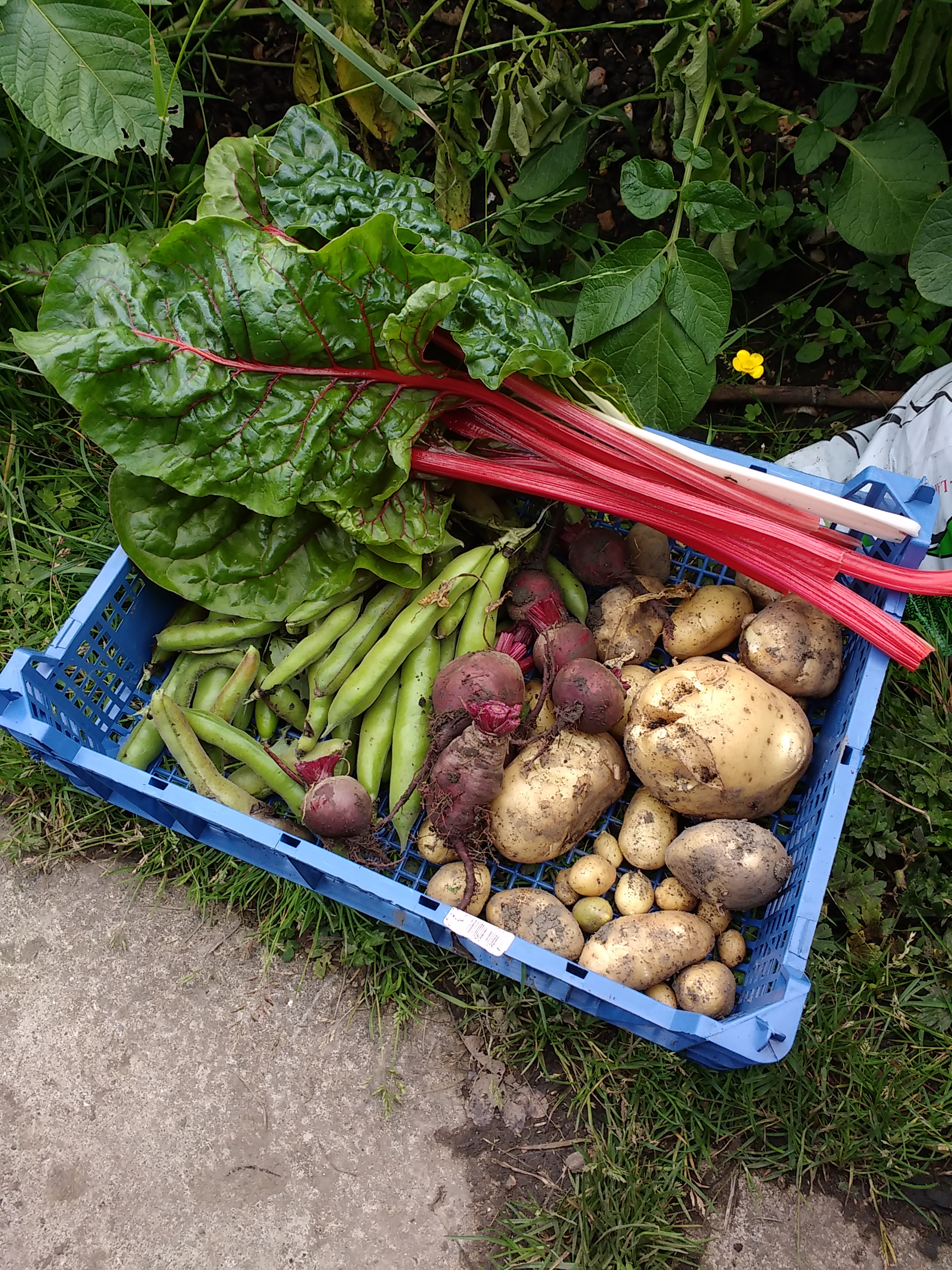 I had a really productive weekend on the allotment. I’d been itching to get down to the plot all week, so was pleased when Saturday came around. It’s odd, that as I work for myself, I shouldn’t feel guilty about going to the plot during the week, assuming that my “paid” work is up to date and I’m not letting a client down by being there, but I guess some habits are hard to shake and being on the plot Monday to Friday still feels a little weird. Maybe if I did it a little more frequently it would feel less weird?
Anyhow I knew that I had a lot to do, mostly weeding, as we’d had a warm, humid but wet week, so everything but in particular the weeds was growing well. Some of my plants in particular the leeks and the most recently planted brassicas were in need of some weeding.
I had a little experimental dig of my early potatoes. Technically they shouldn’t be ready until the beginning of July, but they’re already starting to go over, so they appear to be ready. I dug the end of the short row, as that area is one that I’ll need again fairly soon, for my overwintering brassicas. I dug the first couple of plants and got a kilo of spuds for my efforts. We had some of them for supper that evening, along with the chard, runner beans and a “crustless” caramelised red onion and cheddar quiche that I knocked up later on.
The spuds were amazing. They’re a variety called Arran Pilot, and tend to be quite a floury potato and can go quickly to mush if over-boiled, but I cooked them in a steamer and they seem to have held together much better. Whether it is the more gentle cooking action of the steamer as opposed to boiling I don’t know, but anyway they were delicious and I don’t think we’ll be buying potatoes from the shops for a while now.
 I also lifted all of the over-wintering onion sets and shallots. They too had started to lean over and were ready to be harvested. They need to be dried a little, and sorted through, which I’ll do some when in the next few days. I noticed there were a couple that need to be eaten sooner rather than later due to basal rot, but the vast majority should store well. Another item that we won’t need to be buying from the store for some time. I dug over the area where they were, and sowed some mixed coloured beetroot there. I’ve left some space as it’s close to where the courgettes and cucumbers are, and I expect they will spread out a little.
The radishes and turnips were next on my list, as they haven’t done anything apart from bolt and go straight to seed. I’m not sure why, but I removed them, dug over the ground and have replaced them with Perpetual Chard (a gift from Dale Calder in Canada) and some Rocket. The latter I had previously sown earlier in the year, but it failed to germinate, so I’m hoping for better luck this time.
The rest of the time I spent weeding and tidying. It looks as though the first of the soft fruit (loganberries and gooseberries) might be ready this week, so I’ll keep an eye on those but otherwise there is plenty of other veg coming to keep us fed.
 Electronic Scrapbook