Book Review: Murder Takes Time by Giacomo Giammatteo

SYNOPSIS:
A string of brutal murders has bodies piling up in Brooklyn, and Detective Frankie Donovan knows what is going on. Clues left at the crime scenes point to someone from the old neighborhood, and that isn’t good.

Frankie has taken two oaths in his life—the one he took to uphold the law when he became a cop, and the one he took with his two best friends when they were eight years old and inseparable.

Those relationships have forced Frankie to make many tough decisions, but now he faces the toughest one of his life; he has five murders to solve and one of those two friends is responsible. If Frankie lets him go, he breaks the oath he took as a cop and risks losing his job. But if he tries to bring him in, he breaks the oath he kept for twenty-five years—and risks losing his life.

In the neighborhood where Frankie Donovan grew up, you never broke an oath.

About the Author:
I live in Texas now, but I grew up in Cleland Heights, a mixed ethnic neighborhood in Wilmington, Delaware that sat on the fringes of the Italian, Irish and Polish neighborhoods. The main characters of Murder Takes Time grew up in Cleland Heights and many of the scenes in the book were taken from real-life experiences.
Somehow I survived the transition to adulthood, but when my kids were young I left the Northeast and settled in Texas, where my wife suggested we get a few animals. I should have known better; we now have a full-blown animal sanctuary with rescues from all over. At last count we had 41 animals—12 dogs, a horse, a three-legged cat and 26 pigs.

Oh, and one crazy—and very large—wild boar, who takes walks with me every day and happens to also be my best buddy.

Since this is a bio some of you might wonder what I do. By day I am a headhunter, scouring the country for top talent to fill jobs in the biotech and medical device industry. In the evening I help my wife tend the animals, and at night—late at night—I turn into a writer.

Excerpt

Chapter 1
Rule Number One―Murder Takes TimeBrooklyn, New York—Current Day
He sipped the last of a shitty cup of coffee and stared across the street at Nino Tortella, the guy he was going to kill. Killing was an art, requiring finesse, planning, skill—and above all—patience. Patience had been the most difficult to learn. The killing came naturally. He cursed himself for that. Prayed to God every night for the strength to stop. But so far God hadn’t answered him, and there were still a few more people that needed killing.The waitress leaned forward to refill his cup, her cleavage a hint that more than coffee was being offered. “You want more?”He waved a hand—Nino was heading towards his car. “Just the check, please.”
From behind her ear she pulled a yellow pencil, tucked into a tight bun of red hair, then opened the receipt book clipped to the pocket of her apron. Cigarette smoke lingered on her breath, almost hidden by the gum she chewed.Spearmint, he thought, and smiled. It was his favorite, too.

He waited for her to leave, scanned the table and booth, plucked a few strands of hair from the torn cushion and a fingernail clipping from the windowsill. After putting them into a small plastic bag, he wiped everything with a napkin. The check was $4.28. He pulled a five and a one from his money clip and left them on the table. As he moved to the door he glanced out the window. Nino already left the lot, but it was Thursday, and on Thursdays Nino stopped for pizza.

He parked three blocks from Nino’s house, finding a spot where the snow wasn’t piled high at the curb. After pulling a black wool cap over his forehead, he put leather gloves on, raised the collar on his coat then grabbed his black sports bag. Favoring his left leg, he walked down the street, dropping his eyes if he passed someone. The last thing he wanted was a witness remembering his face.

He counted the joints in the concrete as he walked. Numbers forced him to think logically, kept his mind off what he had to do. He didn’t want to kill Nino. He had to. It seemed as if all of his life he was doing things he didn’t want to do. He shook his head, focused on the numbers again.

When he drew near the house, he cast a quick glance to ensure the neighbors’ cars weren’t there. The door took less than thirty seconds to open. He kept his hat and gloves on, walked into the kitchen, and set his bag on the counter. He removed a pair of tongs and a shot glass, and set them on the coffee table.
A glance around the room had him straightening pictures and moving dirty dishes to the sink. A picture of an older woman stared at him from a shelf above an end table. Might be his mother, he thought, and gently set it face down. Back to the kitchen. He opened the top of the black bag and removed two smaller bags. He set one in the fridge and took the other with him.

The contents of the second bag—hair and other items—he spread throughout the living room. The crime scene unit would get a kick out of that. He did one final check, removed a baseball bat from the bag, then sat on the couch behind the door. The bat lay on the cushion beside him. While he stretched his legs and leaned back, he thought about Nino. It would be easy to just shoot him, but that wouldn’t be fair. Renzo suffered for what he did; Nino should too. He remembered Mamma Rosa’s warnings, that the things people did would come back to haunt them. Nino would pay the price now.

A car pulled into the driveway. He sat up straight and gripped the bat.

#
Nino had a smile on his face and a bounce in his step. It was only Thursday and already he’d sold more cars than he needed for the month. Maybe I’ll buy Anna that coat she’s been wanting. Nino’s stomach rumbled, but he had a pepperoni pizza in his hand and a bottle of Chianti tucked into his coat pocket. He opened the door, slipped the keys into his pocket, and kicked the door shut with his foot.

There was a black sports bag on the kitchen table. Wasn’t there before, Nino thought. A shiver ran down his spine. He felt a presence in the house. Before he could turn, something slammed into his back. His right kidney exploded with pain.

“Goddamn.” Nino dropped the pizza, stumbled, and fell to the floor. His right side felt on fire. As his left shoulder collided with the hardwood floor, a bat hit him just above the wrist. The snap of bones sounded just before the surge of pain.

“Fuck.” He rolled to the side and reached for his gun.

The bat swung again.

Nino’s ribs cracked like kindling. Something sharp jabbed deep inside him. His mouth filled with a warm coppery taste. Nino recognized the man who stood above him. “Anything you want,” he said.
“Just kill me quick.”

#
The bat struck Nino’s knee, the crunch of bones drowned by his screams. The man stared at Nino. Let him cry. “I got Renzo last month. You hear about that?”

Nino nodded.

He tapped Nino’s pocket with his foot, felt a gun. “If you reach for the gun, I’ll hit you again.”

Another nod.

He knelt next to Nino, took the shot glass from the coffee table. “Open your mouth.”

Nino opened his eyes wide and shook his head.

The man grabbed the tongs, shoved one end into the side of Nino’s mouth, and squeezed the handles, opening the tongs wide. When he had Nino’s mouth pried open enough, he shoved the shot glass in. It was a small shot glass, but to Nino it must have seemed big enough to hold a gallon. Nino tried screaming, but couldn’t. Couldn’t talk either, with the glass in there. Nino’s head bobbed, and he squirmed. Nothing but grunts came out—fear-tinged mumbles coated with blood.

The man stood, glared at Nino. Gripped the bat with both hands. “You shouldn’t have done it.”

A dark stain spread on the front of Nino’s pants. The stench of excrement filled the room. He stared at Nino, raised the bat over his head, and swung. Nino’s lips burst open, splitting apart from both sides. Teeth shattered, some flying out, others embedding into the flesh of his cheeks. The shot glass exploded. Glass dug deep gouges into his tongue, severing the front of it. Shards of glass pierced his lips and tunneled into his throat.

He stared at Nino’s face, the strips of torn flesh covered in blood. He gulped. Almost stopped. But then he thought about what Nino had done, and swung the bat one more time. After that, Nino Tortella lay still.

He returned to the kitchen and took a small box from the bag on the counter then went back to the living room. Inside the box were more hairs, blood, skin, and other evidence. He spread the items over and around the body then made a final trip to the kitchen to clean up. He undressed and placed his clothes into a large plastic bag, tied it, and set it inside the black bag. He took out a change of clothes, including shoes and plastic covers for them. Careful not to step in any blood, he went back to stand over the body.

Nino lay in his own piss, shit, and blood, eyes wide-open, mouth agape.

You should never have done it, Nino.

He blessed himself with the sign of the cross while he repeated the Trinitarian formula. “In nomine Patris, et Filii, et Spiritus Sancti.” Then he shot Nino. Once in the head. Once in the heart. An eye for an eye. And then some.

Before stepping out the door, he removed the plastic covers for his shoes, placed them into the bag, then closed and locked the door behind him. The wind had picked up since he arrived, bringing a cold bite with it. He turned his collar up and tucked his head into his chest.
Forgive me, Father, for what I have done.

He walked two more blocks, almost to the car, when an image of Donnie Amato appeared in his head.

And for what I still have to do.

My Review:

It’s a difficult task writing a story that transcends a significant period of time; generally I stay away from them by choice as I rarely find them done well. In Murder Takes Time, it is written incredibly well. Decades pass between the events of the story, with each passing chapter drawing the past and the present together. Giacomo Giammatteo has masterfully crafted this together in to a real page turner.
The plot is a relatively simple one, but so cleverly written that I had to keep reading to see how the characters would get drawn in together, and where things would end up. Sometimes I read books and you know exactly how things are going to end up, but here I was never quite sure. There was always sufficient doubt to leave me wanting to read on to find out whether or not I was right.
The characters were all good, the principals were very well described, and with the time shifting element to the story it was easy to see why they became who they were in the present day. My only criticism would be that I never really felt I knew what they actually looked like, they were larger than life in terms of their thoughts and actions, but a little grey to me in terms of a visual representation. Not too big a deal, and as this is a series I’m sure that some of that will come out with later books.
Finally this book came with a warning of some sex and violence, I’m not sure that it really deserved it. Yes there was both within its pages, but to be honest there’s worse out there, so don’t let that put you off.
I’d say take your time and savour Murder Takes Time, but I have my doubts that you’ll be able to, I think you’ll be turning the pages just like me, wanting to get to the end to find out what happens. A great read and recommended.

My Rating: 4 out of 5 Stars – I Really Liked It.

Giveaway:

I have an ebook copy of Murder Takes Time to giveaway, to be in with a chance to win this, please leave a comment below. The winner will be selected at random from all the entries a week from the date of posting of this review i.e. November 16th 2012.

Money Back Guarantee:

As a part of this tour the author is offering a money back guarantee on e-book copies of this book:

From the author: For anyone who buys a digital book during this tour and mentions the tour, I will offer a money-back guarantee, with these conditions:

 1. Understand that this book contains several chapters with graphic violence. 
2. Understand that it contains rough, street language
3. Understand that there are two chapters with sexual scenes
4. Understand that the story is told in multiple Point of Views. 
 
If for any reason, other than those stated above, you do not like the book or aren’t happy with it, just write me an email and tell me why. Email me a proof of purchase receipt, and I’ll refund your money. This applies only to the digital books. I can’t do it with print editions.

Please note this offer is from the author directly, and not from the owner of this website.

Book Review: Sasha Plotkins Deceit by Vaughn Sherman

Synopsis:

It is 1972, and the Soviet Union has succeeded in planting a mole in the top echelons of the Central Intelligence Agency. Three years earlier, CIA officer Chris Holbeck took part in a failed mission to engineer the defection of a Soviet KGB officer who may know the mole’s identity.
His name is Sasha Plotkin. When they were both stationed in Stockholm, Sweden, in 1969, Chris and Sasha connected on a personal level. Chris was excited to find a KGB officer interested in changing sides. Then, on the day of the Soviet agent’s defection, Sasha was a no-show. Chris would soon discover the full extent ofSasha Plotkin’s deceit. Now Sasha has resurfaced and wishes to make another attempt to defect. To Chris’ dismay, he is the only CIA officer the man will consent to deal with, even though their once close relationshipis now riddled with mistrust. Chris’s wife, Lisa, has sworn to leave him if he abandons her and the family for one more perilous mission. His alluring young colleague Bisan seems determined to seduce him. Despite the risk to his life and his marriage, Chris answers the call of duty. If Chris succeeds in transporting Sasha to theUnited States–come hell or high water–will the Soviet agent reveal the true identity of the mole? One thing is certain: the lives of the two men will be forever changed.
Sasha Plotkin’s Deceit reads almost as a memoir of a real CIA agent’s life. It is much more than a spy novel. Amid the action and suspense, another drama emerges, based on the relationships between the three main characters—Chris, his wife Lisa, and KGB agent Sasha Plotkin—one of love, friendship, and betrayal. Chris’s love for his neglected wife Lisa. Chris’s burgeoning friendship with Sasha Plotkin, a fascinating, flawed man with a terrible past who gains the personal and professional trust of his American counterpart only to dash that trust to pieces. This betrayal is so much more complicated than it first appears. The ending is at once surprising, uplifting and devastating.

About the Author:

Vaughn Sherman’s career as a fisheries biologist was cut short when he was recruited by the Central Intelligence Agency. He served long assignments in the Far East and Europe before doing a short tour in Vietnam. After taking early retirement Vaughn joined in numerous community activities, most involving the governance of non-profit agencies and community colleges. In addition to Sasha’s Plotkin’s Deceit, he has written the memoir of a northwest mariner titled An Uncommon Life (1988). He has also published three books dealing with the management of non-profits.

Website    FaceBook

Book Excerpt:

FRIDAY DAWNED MUCH LIKE THE DAY OF HIS LAST MEETING WITH
PLOTKIN, COLD AND CLEAR WITH NEW SNOW. SUCH A PRETTY DAY THAT THIS TIME HE
RESOLVED NOT TO RETURN TO THE EMBASSY AFTER SIGNALING PLOTKIN AT NK THAT THE
MEETING WAS ON. AFTER THE SAFETY SIGNAL AT TEN O’CLOCK, HE’D GO DIRECTLY
HOME, MAYBE HAVE A CHANCE TO CHAT WITH LISA BEFORE LUNCH.UPON LEAVING THE EMBASSY, HE NOTED THAT THE SUN HADN’T WARMED THE AIR AT
ALL. THE SQUEAKING SNOW UNDER HIS FEET CONFIRMED HOW COLD IT WAS AS HE
WALKED TOWARD HIS CAR. THE SHADOWS FROM THE TREES ALONG STRANDVÄGEN
WEREN’T QUITE AS LONG AS THEY HAD BEEN LAST WEEK AT THIS TIME. STOCKHOLM
WAS ON THE DOWNHILL RIDE TOWARD SPRING. IN THE SCANT HOUR HE’D BEEN AT THE
EMBASSY THE CAR HAD COOLED OFF COMPLETELY. HE LET IT WARM UP BEFORE DRIVING
DOWNTOWN TO WAIT THE FEW MINUTES AT NK FOR PLOTKIN’S SAFETY SIGNAL. NO
POLICEMAN THIS TIME, AND NO PLOTKIN VISIBLE IN THE PARK. BUT THEN HE
HADN’T SEEN PLOTKIN LAST TIME, EITHER.
NEXT HE HEADED WEST FROM THE CITY, TOWARD HOME. CHRIS ENJOYED THE DRIVE AND
WAS FEELING GOOD AS HE SLID TO A STOP IN FRONT OF HIS HOUSE. LISA DIDN’T
REPLY TO HIS CHEERY “HELLO” WHEN HE LET HIMSELF IN THROUGH THE FRONT
DOOR. NOW WHAT? HER ACTIONS WERE SO STRANGE THESE DAYS HE WAS AFRAID SHE
MIGHT HAVE TAKEN OFF WITHOUT PREPARING THE LUNCH FOR PLOTKIN. A WALK THROUGH
THE DINING ROOM TO THE KITCHEN PUT HIS MIND AT EASE. THE TABLE WAS SET, AND
SOUP WAS SIMMERING ON THE STOVE. SHE MUST HAVE WALKED DOWN TO THE SHOPPING
SQUARE FOR SOME LAST MINUTE ITEMS. IT WASN’T YET TEN THIRTY, AND SHE HAD
NO REASON TO EXPECT HIM. HE WENT BACK TO THE FRONT WINDOWS TO LOOK DOWN THE
STREET, ON THE CHANCE THAT HE MIGHT SEE HER WALKING BACK. NO LISA, ONLY A
SKIER HEADING TOWARD DROTTNINGHOLM. THIS CASTLE WAS LOCATED NOT MUCH MORE
THAN A MILE FROM THEIR HOME ACROSS DROTTNINGHOLM BRIDGE. IT WAS A FAVORITE
RESIDENCE OF THE ROYAL FAMILY AND SURROUNDED BY A PARK OPEN TO THE PUBLIC.
HE AND LISA HAD SKIED THERE SEVERAL TIMES WITH THE CHILDREN DURING THE
CHRISTMAS HOLIDAYS.
AN IDEA STRUCK. CHRIS WENT QUICKLY TO HIS BEDROOM TO CHANGE INTO LONG JOHNS
AND SKI PANTS, THEN TO THE FRONT HALL FOR HIS SKI PARKA, HAT AND MITTENS.
NEXT HE WENT TO THE GARAGE FOR HIS SKIS. HE’D SKI DOWN TO THE SQUARE TO
PICK UP LISA AND COME BACK WITH HER. OUTSIDE THE GARAGE DOOR, HE SLAPPED HIS
SKIS DOWN ON THE NEW SNOW AND FASTENED THE CABLE BINDINGS.
OUT ON THE STREET CHRIS LOOKED IN THE DIRECTION OF THE SQUARE. STILL NO
LISA. NOBODY, IN FACT, ON THE STREET. IN THE OTHER DIRECTION THE SKIER HAD
LONG SINCE DISAPPEARED. AN HOUR SKIING AT DROTTNINGHOLM WOULD PROBABLY DO
HIM MORE GOOD THAN TRYING TO TALK WITH LISA.
FEW PEOPLE WERE OUTDOORS ON THIS WORK AND SCHOOL DAY. IT WAS TERRIBLY COLD,
BUT THE ATMOSPHERE BROUGHT SOME NEEDED PEACE TO CHRIS. HE FELT GOOD. THE
CHILDREN IN THEIR NEIGHBORHOOD WERE ON SKIS MOST EVERY AFTERNOON. AS HE USED
HIS POLES TO PUSH HIMSELF ALONG AND KEEP HIS BALANCE, HE THOUGHT ABOUT HOW
MISSY AND HER FRIENDS SKIED MERRILY ALONG WITH NO POLES. AH, TO BE YOUNG
AGAIN!
THERE WAS A KNOLL OFF THE BEATEN PATH IN THE PARK WHERE SOMEBODY HAD BUILT A
SMALL SKI JUMP, MAYBE A COUPLE OF FEET HIGH. PROBABLY SOME OF THE OLDER BOYS
WHO LIVED NEARBY. CHRIS THOUGHT ABOUT TRYING IT.
HE’D DO IT.
CLIMBING THE KNOLL TOOK MORE OUT OF HIM THAN HE’D EXPECTED. WHEEZING AT
THE TOP, HE MADE HIS WEEKLY RESOLVE TO START AN EXERCISE PROGRAM. THE KNOLL
WASN’T HIGH, BUT LOOKING DOWN THE RUN TO THE JUMP, IT APPEARED A LOT MORE
IMPRESSIVE THAN FROM THE BOTTOM. WELL, HE HAD BEEN A PRETTY GOOD SKIER
DURING COLLEGE DAYS. THERE WASN’T ANYBODY IN SIGHT TO EMBARRASS HIM IF HE
BOTCHED THE LITTLE JUMP. HE POLED HARD AND HEADED DOWNHILL.
TWO THINGS SURPRISED CHRIS. FIRST, HIS SKIS WERE MUCH FASTER THAN EXPECTED.
WHEN HE STARTED OUT HE ALMOST LOST HIS BALANCE BACKWARDS. THEN, WHEN HE DUG
IN THE POLES AND LAUNCHED HIMSELF ON THE JUMP, HE WENT MUCH HIGHER THAN HE
THOUGHT HE WOULD. IN THE FEW SECONDS HE WAS IN THE AIR HE REALIZED THAT HE
HAD OVERCOMPENSATED FOR THE FIRST MISTAKE. NOW HE WAS LEANING TOO FAR
FORWARD. HE TRIED TO BRING UP THE TIPS OF HIS SKIS AND FAILED, HITTING THE
SNOW WITH THE TIP OF ONE SKI. HE SOMERSAULTED, BOUNCED ON HIS SHOULDERS,
MADE A HALF-ROLL AND CAME TO A STOP WITH HIS RIGHT SKI BURIED IN THE SNOW.
HIS LEG MUST BE BADLY TWISTED, HE THOUGHT. HE MOVED TO UNTANGLE HIMSELF AND
CAME CLOSE TO FAINTING. IT WAS MORE THAN A TWIST, FOR SURE. THE PAIN WAS
AWFUL WHEN HE TRIED TO MOVE.CHRIS LAY BACK, CHILLED, AND FELT THE PANIC START. NOBODY WAS IN SIGHT.

My Review:

If you’re a fan of classic spy fiction then I suggest you get Sasha Plotkin’s Deceit without delay. As I turned the pages of this book I was reminded of some of the best of them. The Le Carré’s, and Deighton’s; of classic East Vs. West espionage, with a troubled hero and an enigmatic foreign operator.
Set predominately in Sweden the story takes place over a number of years at the end of the 1960’s and early 1970’s and Vaughan Sherman brings that time back clearly through the pages of his story. The passage of time is important in the telling of the story and acts as both plot and subplot with the two main characters taking on the bulk of the story without the need for multiple additional identities confusing the reader. That said the vulnerability of Chris’ relationship with his wife is also critical, and well told as a side love story between the two.
I loved the simplicity of the story, it was well told without the author feeling the need to spoil it with unnecessary action to “spice-up” the spy element. There was tension without flash-bang heroics and this made the overall story much more believable than it would have been if the pages had been filled with break-neck action and adventure. The story was not slow however and cracked along at a good pace, keeping me turning the pages until late in the evening on more than one occasion.
I really enjoyed Sasha Plotkin’s Deceit and would recommend it. It holds a good story and makes for a great read.

My rating: 4 out of 5 stars – I really liked it.

Book Review: Curveball by Jen Estes

Synopsis:
Baseball reporter Cat McDaniel specializes in exposés. Now that very talent has left her unemployed. Desperate to get off the bench and back into the lineup, she is thrilled to land an interview with the Buffalo Soldiers’ General Manager Roger “Rakin’” Aiken–Baseball legend, eight-time All Star … and oblivious father to a Major League bratty co-ed named Paige. Aiken offers Cat the team writer position for the following spring, but the opportunity is tempered by a curveball of a caveat: she must first spend the winter as a blogger reporting on the Latin American training facility. She is also supposed to look out for Paige, nominally the team’s newest scouting assistant. Being a glorified babysitter and chaperone still beats being an out-of-work sportswriter. Cat reluctantly leaves behind her gorgeous boyfriend Benji and accompanies the party girl to sunny Santo Domingo to balance baselines and conga lines. Paige falls for Chance Hayward, an agent who plays hardball—the figurative kind. Joining them on the field is Paige’s ex, Junior DeLeon, one of the coaches who’d really like to score with Cat. When an aspiring player turns up dead, it is up to Cat and Junior to devise a game-changing strategy. Will Cat’s snooping work in her favor this time, or will she strike out … losing her job, her boyfriend and her life? Curveball follows Big Leagues as Book 2 of the Cat McDaniel Mysteries, also known as the Foul Ball series.

About The Author:


Born and raised in Illinois, Jen Estes started her writing career as a baseball blogger in 2007 and expanded to freelance sports writing in 2009. She is an active member of the Society of American Baseball Research (SABR), Springfield Poets & Writers and the National Writers Union (NWU). Curveball is the second in a series featuring sassy sports writer Cat McDaniel. When Jen isn’t writing, she enjoys running, yoga, traveling and watching baseball with her husband and cat.

Author Website
Facebook
Twitter

Book Excerpt:

As they walked out of the restaurant, Cat caught the eye of a busy Cristian and waved goodbye. She tapped Chance on the shoulder. “That reminds me, we want to talk to you about your client.”

“Oh, that’ll cost you and Paige.”

Cat gave him a wary look. “Cost us what?”

“A walk on the beach.” He extended both arms. “One for each of you.”

Paige eagerly locked her right arm with his, but Cat pressed his left arm down to his side. She kicked off her sandals and let them dangle from her fingers before begrudgingly following the duo onto the damp sand.

A few fisherman could be seen on the jetty a hundred yards away, but otherwise they had the beach to themselves. Her steps broke the moist clumps and the powdery sand spilled out over her toes. The sand massaged her soles as they moved closer to the breaking waves. Living in downstate Illinois most of her life, Cat didn’t take the relaxing sound of the oceanic thunder for granted. The soft wind whipped her skirt around her thighs. As they approached the shoreline, the restaurant odors of garlic and grease were replaced with a salty tinge of sea air. The half moon smiled down upon them. It was a perfect moment, until Chance spoke.

“Not bad, huh?”

He said it as though he was taking credit for the beautiful evening. Cat sneered in his direction but it was too dark for the message to be received.

Paige looked around the vacant beach. “There’s nobody here. Is it always like this at night?”

“Almost. We’re just about at the end of our rainy season so the beaches will be busier. But on weeknights, most of the action is in town.”

Their stroll was nearing the rocks that bordered the end of the beach and led out to the jetty. Cat pointed up at the fisherman. “What are they trying to catch?”

Chance shrugged. “Hell if I know. I only eat it; I don’t hunt it.”

Paige watched them thoughtfully. “My dad loves fishing. Says it’s the only true way to get away from the field.”

“Let’s sit for a minute.” He placed his jacket on the sand.

Cat shook her head. “I’m good with standing. I was hoping we could talk about Cristian.”

Chance sat on the sand with his knees in front of him. “We will.” He patted the jacket. “Paige?”

Paige tucked her dress beneath her thighs as she sat on it, facing the ocean.

He scooted closer to her. “What do you think?”

Paige’s eyes didn’t leave the water. “Of the ocean, dinner, or you?”

He chuckled. “All of the above.”

Cat held in a groan as she waited for his predictable moves, expecting the yawn and reach any minute now.

He didn’t yawn, but sure enough, his tan arm slivered around Paige’s bare shoulders.

“Hmm …” Paige tapped her chin thoughtfully. “The ocean is beautiful. Dinner was delicious. And you, well you kind of pale in comparison. Perhaps you should’ve grouped yourself with the fisherman and that weird pile of seaweed over there.”

With his phony chuckles, Chance was beginning to sound like the laugh track from an eighties sitcom. Cat tapped her foot on the sand, but neither of them seemed to notice.

Paige tossed him a playful smile, but then was distracted by the aforementioned pile of seaweed near the jetty. She cocked her head. “What is that?”

In tandem, Cat and Chance turned around. “What?”

Paige stood up, dusted her dress off and pointed. “Over there, in the rocks.”

Chance squinted. “Probably just some litter.”

Cat shook her head. “That doesn’t look like litter.” She took off toward it.

Chance bounced to his feet and caught up to her. The waves smacked the rocks with loud slaps. Cat took slow, deliberate steps, as though trying to sneak up on the mound of seaweed. Another foamy wave crashed onto the shore, this time taking the pile of seaweed back into the ocean with it. Before she could take another step, Chance reached his arm out to stop her. “Cat, don’t go any closer.”

Cat gasped, choking on the breath wedged in her throat. It was too late.

She’d seen the body.


My Review:

You know right from the outset that all is not as it seems in the world of Cat McDaniel, the world of baseball. Jen Estes paints a picture where you have to feel that Cat is the kind of person that finds trouble wherever she goes, and if she doesn’t trouble will soon find her.
Curveball takes place mostly in Santo Domingo, and the local character and scenery is not lost from the pages of the story, it adds an additional dimension that bring alive many of the scenes within the book.
Classed as a ‘cozy’, it is certainly that. An easy going read that moves along at a good pace, but do not expect flash-bang action here. The story of Curveball is more subtle than that, with very little to hint at the reveal towards the end and a little bit of misdirection as the plot progresses.
The characters are well grounded and seem alive and believable; from the likes of Paige, who I could quite cheerfully have strangled myself to the main protagonist Cat, who made a very believable hero, if perhaps a little naive at times.
You don’t have to be a huge baseball fan or knowledgeable about the sport to understand Curveball, if there is something you need to know the information is supplied. There were a couple of parts where the baseball terminology took over a bit, but they were in the spirit of the story and so didn’t really detract from the plot.
Overall Curveball is a good read, if you like your action thick and fast, then you might find it a little slow, but it’s worth sticking with as overall the story plays out well.

My Rating: 3 out of 5 stars; I liked it.

Giveaway:

As part of this tour, the publisher is offering an ebook copy of Curveball to be given away. For a chance to win, simply leave a comment below. A winner will be selected at random from all of the comments left, seven days after this post is published, i.e. 9th November 2012.

Author Q & A: Mark Gilleo

In addition to reviewing his book today, author Mark Gilleo kindly agreed to me asking him a few questions. So without further delay please welcome Mark to the blog.

Q.  Sweat is your second novel, was it easier to write than Love Thy Neighbour, or with one novel under your belt, did number two come easier?

A.  Believe it or not, I wrote Sweat prior to writing Love Thy Neighbor. I wouldn’t typically mention this, but if you research the William Faulkner-Wisdom competition, and do a little sleuthing, the information is already out there. That said, neither book was “easy” to write. When I am in writing mode, I spend a fair bit of time pacing in circles, mumbling to myself. I am equally apt to cut a conversation off in mid-sentence and scramble for a note pad. And while things may not get easier from one book to another, I would like to think on some level that I am becoming a little more efficient. I do enjoy the task of writing. I look forward to seeing where the story is going to take me, much like a reader would but in a more connected way. Editing, on the other hand, is awful.

Q.  The sweatshop scenes, and those in the Senate seemed very realistic. How did you research these?

A.  The sweatshop scenes were half based on experience and half from imagination. When I lived in Asia I was fortunate enough to travel within the region. On one of those trips I visited a furniture manufacturing facility in Taiwan. (A good friend of mine was a Japanese businessman who had furniture providers in mainland China, Taiwan and a few other places.) The “facility” we visited in Taiwan was in a rural area a couple of hours from Taipei. When we arrived, it was lunchtime, and it was a hundred degrees. All of the workers were lying on benches, sleeping on unfinished furniture. The place was pretty spartan. That is where the experience portion of the sweatshop scenes came from. (I would like to stress that these factories were not sweatshops, they merely provided the mental imagery of what a sweatshop could very easily look like.)

I think the research portion of the Senate was largely a result of growing up the DC area. I was not really aware of the “Mark-Up” process involved on Capitol Hill and the topic was so surprising that I included it in detail in “Sweat.” For the physical buildings, I have been inside many of those I included in the book, so the description aspect was largely based on experience. For the inner workings of congressional hearings and proceedings, I watched CSPAN. When I woke up later with the remote controller in my hand, and the same congressman still on the screen, I figured that part of the research had been exhausted.

Q.  Were you intending to raise awareness of sweatshops, and do you think governments are doing enough with respect to conditions outside of their direct territorial control?

A.  It wasn’t my original intention to raise awareness regarding sweatshops, but that would be a by-product of the book I would certainly welcome. When I first started Sweat, believe it or not, a Senator was not involved. The story only involved a businessman. But as I started writing the story, and consequently doing research as I went, I ended up learning quite a bit about US territories, labor law, etc. There was also a lawsuit a few years ago involving Saipan and some major US clothing manufacturers. So the pieces sort of fell in place as the story unfolded at the keyboard.

I can’t really speak to whether or not the government is doing enough to prevent sweatshop conditions within U.S. Territories. We all know about accusations of major US companies using sweatshop labor, or underage labor, in various locations around the globe. I think it becomes hard to prevent proactively. I am sure when companies expand overseas there are promises made and standards to be enforced, and everyone agrees to abide by the law. I am equally sure that once a manufacturing facility is established, it becomes very difficult to ensure that standards are being followed. But to some degree all parties must realize the potential for abuse is there. And once abuse is discovered, it needs to be corrected.

Q.  Terrorism and sweatshops are not exactly lightweight topics, what can your readers expect from your next book?

A.  I think everyone is going to have to stay tuned for the next book for the answer to that question. All I will say is the next book will also take place in the DC area.

Book Review: Sweat by Mark Gilleo

Synopsis:

When Jake Patrick took a summer internship at his estranged father’s corporation, he anticipated some much-needed extra cash and a couple of free meals from his guilty dad. He would never have guessed that he’d find himself in the center of an international scandal involving a U.S. senator, conspiracy, backroom politics, and murder. Or that his own life would hang in the balance. Or that he’d find help – and much more than that – from a collection of memorable characters operating on all sides of the law. Jake’s summer has turned into the most eventful one of his life. Now he just needs to survive it.

From the sweatshops of Saipan to the most powerful offices in Washington, SWEAT rockets through a story of crime and consequences with lightning pacing, a twisting plot, an unforgettable cast of characters, and wry humor. It is another nonstop thriller from one of the most exciting new voices in suspense fiction.

About the author:

Mark Gilleo holds a graduate degree in international business from the University of South Carolina and an undergraduate degree in business from George Mason University. He enjoys traveling, hiking and biking. He speaks Japanese. A fourth-generation Washingtonian, he currently resides in the D.C. area. His first two novels were recognized as finalist and semifinalist, respectively, in the William Faulkner-Wisdom creative writing competition.

As the van pulled away in a small cloud of dust, the senator inspected the main guard booth and the now present guard. Lee Chang took Peter by the arm and stepped away. The sweatshop boss dropped his voice to a whisper and looked over Peter’s shoulder as he spoke, “Interested in the usual companionship?”

Peter, in turn, looked over at the senator who looked back and nodded in approval to the conversation he couldn’t hear but fully understood. “Is Wei Ling available?” Peter asked as if ordering his favorite wine from the menu.

“Yes, of course. Wei is available. Shall I find a companion for the senator as well?”

“Yes, the senator would enjoy some company. Someone with a good command of English. I don’t think he wants to spend the evening playing charades,” Peter responded.

“No, I’m sure he wouldn’t.” Lee Chang smiled, nodded, and barked at Chow Ying in Chinese. The large subordinate walked across the front lot of Chang Industries, down the side of the main building, and vanished into the seamstresses’ two-story living quarters. The CEO, senator, and sweatshop ruler went upstairs to wait.

Traditional Chinese furnishings cluttered Lee Chang’s living room.

“Nice piece,” the senator said, running his hands across a large black cabinet with twelve rows and columns of square drawers.

Peter spoke. “It’s an antique herbal medicine cabinet. The Chinese characters written on the front of each drawer indicate the contents.”

“Tattooed reminders of a former life,” the senator said with poetic license.

Lee Chang stepped over and pulled open one of the drawers. “And now it holds my DVD collection.”

“Modernization never stops,” Peter added.

The three men found their way to the living room and Peter and Senator Day sat on the sofa. Lee took a seat on a comfortable wooden chair, small cylindrical pillows made from the finest Chinese silk supporting his arms.

The middle-aged woman who entered the room to serve tea didn’t speak. She had standing orders not to interrupt when her boss’s guests were wearing suits. The senator watched the woman skillfully pour tea from a blue and white ceramic teapot. He wondered if the woman was Lee Chang’s lover. Peter knew Lee’s taste ran much younger.
The intercom came to life on the wall near the door and Chow Ying announced that the ladies were ready. A brief exchange followed in rapid-fire Chinese before Lee Chang ended the conversation abruptly, flipping the intercom switch off.

“Gentlemen, if you are ready, the car is waiting.”

The senator took the front seat next to Chow Ying. Peter gladly sat in the back seat, squeezing in between the two beautiful Asian women. As he got comfortable in the rear of the car, Wei Ling whispered in his ear, her lips tickling his lobe. Peter smiled as his lover’s breath blew on his neck.

Shi Shi Wong, the senator’s date for the evening, looked up at the seamstresses’ quarters as the car began to move. She spotted several faces pressed against the glass of a second floor window and fought the urge to wave.

By the time the black Lincoln exited the gate of Chang Industries, Peter had one arm around each lady. He kept them close enough to feel their bodies move with every bump in the road. He leaned his torso into theirs with every turn of the car.

Peter Winthrop’s favorite table at The Palm was in an isolated corner next to a small balcony overlooking intimidating cliffs thirty yards from the back of the restaurant. A steady breeze pushed through the open French doors that led to the balcony, blowing out the candle in the center of the table as they arrived.
Peter asked for recommendations from the chef and ordered for everyone. They had spicy barbecued shrimp for an appetizer, followed by a salad with freshly sliced squid that the senator refused to eat. For the main course, the party of four shared a large red snapper served in a garlic and lemon-based Thai sauce. Copious amounts of wine accompanied every dish.

Chow Ying waited subserviently in the parking lot for over three hours. He fetched two cups of coffee from the back door of the kitchen and drank them in the Lincoln with the driver’s side doors open. With his second cup of coffee, he asked the waiter how much longer he thought the Winthrop party was going to be.

“Another hour at the most,” came the reply.

On the trip back to the hotel, the honorable senator from Massachusetts threw his honorability out the window and sat in the backseat with the ladies. Flirtatious groping ensued, the senator’s hands moving like ivy on human walls. His Rolex came to rest on Wei Ling’s shoulder. His Harvard class ring continued to caress the bare skin on Shi Shi Wong’s neck.

Peter made conversation with Chow Ying as the driver forced himself not to look in the rearview mirror. Peter, never bashful, glanced at Wei Ling on the opposite side of the backseat, their eyes meeting with a twinkle, her lips turning up in a smile for her lover. Peter smiled back.

Wei Ling was beautiful, and a sweetheart, and intriguing enough for Peter to find an excuse to stop in Saipan when he was on business in Asia. He usually brought her a gift, nothing too flashy, but something meaningful enough to keep her compliant in the sack. A dress, lingerie, earrings. He liked Wei Ling, a simple fact tempered by the realism that he was a CEO and she was a third-world seamstress. Pure attraction couldn’t bridge some gaps. But Lee Chang was proud of the fact that Peter had taken a fancy to Wei Ling. It was good business. She was a company asset. He wished he could put her on the corporate balance sheet.

Chow Ying dropped the party of four off at the Ritz, an eight-story oasis overlooking the finest stretch of white sand and blue water on the island. He gave Wei Ling and her sweatshop roommate-turned-prostitute-without-pay a brief command in Chinese and followed with a formal handshake to the senator and Peter. He waited for the four to vanish through the revolving door of the hotel and then pulled the Lincoln into the far corner of the parking lot.

The senator and Peter weaved slightly across the lobby of the hotel. Wei Ling and Shi Shi Wong followed several paces behind. The concierge and hotel manager, jaws dropping momentarily, engaged in a seemingly urgent conversation and didn’t look up until the elevator doors had closed.

My Review

Sweat is a multi-plotted tale which covers the globe from Washington DC to Saipan, and contrasts the lives of the rich and privileged to those of the suppressed sweat shop workers. It builds complicated characters, some of whom I found to the very end of the book were difficult to work out and understand. They were believable, and incredibly well described, giving me the reader some very clear images of their motive and personality. They were also not short in number, however each one had a role to play, and unlike many novels where there are multiple characters, very easy to keep up with.

The description of the sweatshop pulls no punches. The slave-like conditions felt very real, and as central to the plot, made fiction all too real. The same can be said of the scenes in the US Senate and the offices of big business.

It’s never quite clear whether everything will turn out right before the end of the book, and in some ways, there are elements that aren’t tied nearly away. This doesn’t detract from the story though, this approach adds to the sense of realism throughout the story.
It’s difficult to say anything critical about Sweat. From a personal point of view, I would have liked the overall story to have moved a little faster, but this is a very minor thing as the pace fits the story well, and in places needs to move this way in order to allow the wider story to play out, rather than particular scenes.

As with Mark Gilleo’s first book, this blend of real facts into the story give the overall story greater strength than it might otherwise have. As a second novel, you might wonder whether this is going to be as strong as Mr Gilleo’s first. Well to those thinking that you won’t be disappointed, as this author has gone from strength to strength.

My Rating: 4 out of 5 Stars; I really liked it.

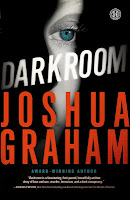
Book Review: Darkroom by Joshua Graham

Synopsis:

A thrilling suspense novel about a man’s dark past, his daughter’s mysterious visions, and a psychopath who wants to kill them both.
After scattering her mother’s ashes in Vietnam, photojournalist Xandra Carrick moves home to New York to rebuild her life and career. When she experiences supernatural visions that reveal atrocities perpetrated by American soldiers during the Vietnam War, she finds herself entangled in a forty-year-old conspiracy that could bring the nation into political turmoil.

Launching headlong into a quest to learn the truth from her father, a Pulitzer Prize winner who served as an embedded photographer during the war, Xandra confronts him about a dark secret he has kept—one that has devastated their family.

About the author: 

Winner of the 2011 INTERNATIONAL BOOK AWARDS, and Amazon.com #1 bestselling author Joshua Graham’s Barnes & Noble #1 bestselling novel BEYOND JUSTICE is taking the world by storm, one reader at a time. Many of his readers blame him for sleepless nights, arriving to work late, neglected dishes and family members, and not allowing them to put the book down.

BEYOND JUSTICE, THE ACCIDENTAL EXORCIST, THE ACCIDENTAL HERO, THE ACCIDENTAL HEALER, and DEATH AND TAXES, have reached the top of multiple bestseller list on Barnes & Noble topping titles by John Grisham, Linda Fairstein, Scott Turrow and James Lee Burke, Ted Dekker and Steven James. Soaring to the top of the Barnes & Noble lists, BEYOND JUSTICE recently hit #1 in the Legal Thriller and Christian Thriller categories, topping by John Grisham, Joel C. Rosenberg, and Michael Connelly. It has also remained on the Amazon.com top 100 bestselling Kindle bestseller list months after its release.

Suspense Magazine listed BEYOND JUSTICE in its BEST OF 2010, alongside titles by Scott Turrow, Ted Dekker, Steven James and Brad Thor.

His short story THE DOOR’S OPEN won the HarperCollins Authonomy Competition (Christmas 2010.)

Publishers Weekly described BEYOND JUSTICE as:
“…A riveting legal thriller…. breaking new ground with a vengeance… demonically entertaining and surprisingly inspiring.”

Pursued across the continent, Xandra comes face-to-face with powerful forces that will stop at nothing to prevent her from revealing the truth. But not before government agencies arrest her for murder, domestic terrorism, and an assassination attempt on the newly elected president of the United States.

Darkroom is a riveting tale of suspense that tears the covers off the human struggle for truth in a world imprisoned by lies.

My Review:

Darkroom stayed in my head for several days after I’d finished it, a good book is always one that stays with the reader after the last page. Darkroom spans time, with part of the book set during the Vietnam War and other parts in more modern times. It is able to render the historical parts into vivid life, so that you feel and smell what is going on. Some parts are a little unpalatable, but no less real in terms of recreating some of atrocities of the time.

The characters are well drawn, I struggled a little with the main character of Xandra, but I think that’s probably because she was so real, that we wouldn’t get on if we were to ever meet! The darkness of others, particularly Richard Colson, and in his case never really being able to work out until the final pages, whether he will change, was a real hook.
At one point I thought the ending was going to be very different, and I guess the book could easily have ended a number of ways. I wonder if the author considered different endings when he wrote the book, and why he opted for the one he did?

Overall, and having now read a number of Joshua Graham’s books, I wouldn’t describe them as a light read. They are intricate creations of both reality, with a little of spirituality and fiction thrown in for good measure. You can easily imagine the stories have reality within their pages.

My Rating: 4 out of 5 Stars; I really liked it.

Enhanced by Zemanta

The Drop by Michael Connelly – Researching Room 79

Yesterday I posted my review of Michael Connelly’s, The Drop. While I was doing a bit of internet surfing and research for my next novel I came across a YouTube video that shows some insight into the research that Connelly did for his book. I thought I’d share it.

It’d be great to have this sort of access for my own research, but it’s a fantastic insight.

Enhanced by Zemanta

Book Review: The Drop by Michael Connelly

The Drop (Harry Bosch, #15)The Drop by Michael Connelly

My rating: 4 of 5 stars

The Drop is a Harry Bosch novel, and a fine one. Michael Connnelly is a master of the plot and sub-plot, and able to weave a very intricate tale which keeps the reader turning the pages without the need for lots of action scenes, gunfights and other attention keepers that other authors use (including myself)!

Harry’s in the Open and Unsolved Unit, looking into cases that have never been concluded but remain open. He is given a difficult case to look at, difficult in the sense that the evidence that has come to light, doesn’t add up with the timelines. As he and his partner David Chu start to investigate, they are called to another crime scene, the death of the son of a high ranking Councilman. The death looks to be one of either accident or suicide, but as the investigation progresses there is sign of homicide.

As the story continues both investigations are bought to there conclusion, but not before there are several unexpected twists, and the politics (“high jingo”) between the LAPD and City Council plays out, and there is even time for a little romance for Harry.

If your a fan of Michael Connelly or like a good procedural, then I would recommend this one to you.

View all my reviews

Book Review: Around The World in Eighty Days by Jules Verne

Around the World in Eighty Days Around the World in Eighty Days by Jules Verne
My rating: 4 of 5 stars

I read this for the “Classic Translation” category of the back to the classics challenge that I am doing through 2012.

I think this story is probably fairly well known, and so I won’t go into the details of that, but this is by far my favourite of the classics that I read so far this year.

As I had a kindle version of this book, I had no idea just how long it was going to take me to get through it, have no “real” book to gauge the size etc, and I was very disappointed when I came to the end. It seemed to over far to fast, and is one of the most readable classics that I have ever come across.

The adventure is very fast paced, and well plotted. Given that this book has been dramatised some many times for film and television, I was half-expecting to be disappointed, but I most certainly wasn’t.

A fantastic book.

View all my reviews

Challenge_12


Guest Post From Peter Leonard, Author of Voices of the Dead

Voicesofthedead_banner

I’ve been lucky enough to review “Voices of the Dead” by Peter Leonard, as part of his tour with Partners In Crime Tours.

Peter Leonard also kindly agreed to a short guest post as part of the tour. Now some of the readers here may not know that Peter Leonard is Elmore Leonard’s son. Of course that raises some interesting questions about how his dad has influenced his writing, but I guess that’s the predictable question, so I thought I’d asked something related but different.

I posed the question:

“Other than your Dad, which other writers do you admire, and who has influenced your own writing the most?”

So please welcome to my electronic scrapbook, Mr Peter Leonard. Here’s what he had to say:

Dear Alan,

Hemingway and Steinbeck were big influences, Hemingway’s simple style that puts in the center of the action, and Steinbeck’s ability to paint a picture of a character with very little description. I was also influenced by George V. Higgins’ crime masterpiece, The Friends of Eddie Coyle. The characters are real and the dialogue is perfect. 

I admire Jim Harrison. I remember reading Legends of the Fall, thinking the three novellas therein were among the best I’d ever read. I read Michael Connolly and think he’s as good as anyone writing crime fiction today. I had my James Lee Burke phase, loved the early Dave Robicheaux novels, especially Heavens Prisoners. I’m a big fan of Philip Roth and John Updike. I read a lot but can’t think of anyone who has made a big impression of late. 


All the best,

Peter Leonard

You can find out more about Peter Leonard’s writing, and some of his other books at his website.

Partnersincrimetourhostbutton_250x250