A Stab In The Dark Podcast

I’ve been listening to “A Stab In The Dark” podcast over the last few days. Featuring all things associated with crime books, and tv, here’s a link to the webpage, although you can download via iTunes or whichever podcast player you use.

So far it’s had some good interviews with authors such as Val McDermid, Lee Child, Anne Cleeves & Michael Connelly; it’s also given me a few good pointers to some new books that I might check out in the future.

Worth a listen if you’re interested in either crime fiction or television.

Sacred Sierra by Jason Webster

I’ve just finished reading “Sacred Sierra: A Year on a Spanish Mountain” by Jason Webster. It’s a book that I thoroughly enjoyed and here are my thoughts.

Sacred Sierra: A Year on a Spanish MountainSacred Sierra: A Year on a Spanish Mountain by Jason Webster
My rating: 5 of 5 stars

This is Jason Webster’s story of his first year in the mountainside “mas” which he and his wife Salud move to, and begin to renovate both the cottage and the land.

As he works with the elements he narrates a wonderful story of the characters he meets and the friendships made, as well as his expansion of almond, olive and truffle farming.

Each chapter, told in monthly parts, is started with a traditional folk tale from the area, which adds something extra to what is already a great and well written story.

This book was one that was recommended to me by Amazon on the basis of previous purchases and for once was spot on as something I really enjoyed and was sorry to finish. I’ll be checking out his other books, as he is also a crime fiction writer, although I’d certainly read more tales from his mountainside too, where he ever to write more.

There’s also a video on YouTube, where the author explains a little more about the book.

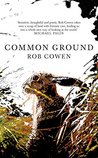
Book Review: Common Ground by Rob Cowen

Common GroundCommon Ground by Rob Cowen

My rating: 5 of 5 stars

It has taken me a while to read Rob Cowen’s Common Ground, because I’ve wanted to savour it. It reminds me of classic natural history books such as J A Baker’s “The Peregrine” and Richard Mabey’s “Nature Cure”, both of which I’ve reread this year, and so are fresh in my mind.

Common Ground takes the reader through a journey of the area of land on the edge of town. Rob Cowen takes the reader there through a series of chapters on different aspects and through different points of view. It is both incredibly well written, but also captivating in it’s description of the nature and of mankind and our attitude to an increasingly pressured natural system.

I’ve taken my time with the book, dipping in now and again to read a chapter or two. To savour it, as I didn’t want it to end, and I will miss it now that it’s over.

Recommended to anyone who enjoys natural history books.

View all my reviews

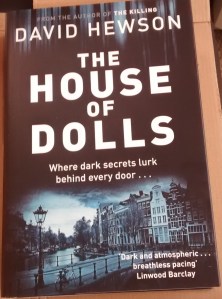
Book Review – The House of Dolls by David Hewson

It’s not often t2014-04-10 16.02.28hat I can stay up late reading a book, my body / mind can’t cope and I fall asleep, however over the last week I’ve been staying up, turning the pages of David Hewson‘s new book. The House of Dolls is set in the Dutch city of Amsterdam, where it’s main character Pieter Vos lives on a houseboat. Vos is a former police detective, who left the job following the kidnapping of his daughter Anneliese. He’s dragged back to his former life by another kidnapping that has similarities to the kidnapping of his daughter.

Why has this book kept me away from slumber? Well the simple answer is that I had to know what was going to happen next. The book is one of short chapters, and this keeps the story moving between characters and actions at a tireless pace, breaking the story up just enough to keep the suspense tight and the reader wanting to know what’s happening.

The characters are varied, many with their own flaws and weaknesses, but some you will like and others come to detest. There’s “old-school” gangsters mixed with new generation cops, politicians and journalists in the mould of the ladder-climbing kind and backgrounds of tourists and café owners.

The story is very believable, it sits in the present and although as far as I could tell doesn’t actually draw on a current or recent situation, it could quite easily. You could imagine that any of the crimes or motivations of the characters are being drawn from real-life and that marks the success of this author. His characters, locations and situations are all true to life. They could easily be where, when and how; today, this week or next, and you’d not be able to tell fact from fiction.

If you’ve read any of David’s books before, particularly if you’re familiar with his Nic Costa series, then you’re really going to enjoy The House of Dolls.

My Rating: 5 out of 5 stars – I Loved It.

Enhanced by Zemanta

Book Review: The Shroud Key by Vincent Zandri

Shroud Key

Synopsis
Chase Baker is not only a true Renaissance Man, he’s a man who knows how to find trouble. A part-time resident of Florence, Italy, his resume reads like a modern day Da Vinci or Casanova. Writer, private investigator, tour guide, historian, treasure hunter, adventurer, and even archaeological sandhog, Chase is also a prolific lover. Unfortunately for him, his dangerous liaisons all too often make him the target of a jealous husband. Now, at the direct request of the Florence police, he finds himself on the trail of an archaeologist by the name of Dr. Andre Manion who’s gone missing from his teaching post at the American University. But having worked for the archaeologist several years ago as a sandhog on a secret but failed dig just outside the Great Pyramids in the Giza Plateau, Chase smells a renewed opportunity to uncover what just might be the most prized archaeological treasure in the world: The mortal remains of Jesus. But how will Chase Baker go about finding both the archaeologist and the Jesus Remains? With the help of Manion’s beautiful ex-wife, Chase will manage to secure an up-close and personal examination of the Shroud of Turin, not only to view the famous image of the crucified Christ, but to unlock the relic’s greatest secret which is none other than a map, or a key, detailing the precise location of Jesus’s body. Fans of Dan Brown, Clive Cussler and JR Rain will find The Shroud Key an irresistible adventure.

About The Author
Vincent ZandriVincent Zandri is the No. 1 International Bestselling Amazon author of THE INNOCENT, GODCHILD, THE REMAINS, MOONLIGHT FALLS, THE CONCRETE PEARL, MOONLIGHT RISES, SCREAM CATCHER, BLUE MOONLIGHT, MURDER BY MOONLIGHT, THE GUILTY, MOONLIGHT SONATA, MOONLIGHT WEEPS, FULL MOONLIGHT, THE SHROUD KEY, and more. He is also the author of the Amazon bestselling digital shorts, PATHOLOGICAL, TRUE STORIES and MOONLIGHT MAFIA. Harlan Coben has described THE INNOCENT (formerly As Catch Can) as “…gritty, fast-paced, lyrical and haunting,” while the New York Post called it “Sensational…Masterful…Brilliant!” Zandri’s list of publishers include Delacorte, Dell, StoneHouse Ink, StoneGate Ink, and Thomas & Mercer. An MFA in Writing graduate of Vermont College, Zandri’s work is translated, or soon to be translated, into many languages including the Dutch, Russian, French, Italian, and Japanese. An adventurer, foreign correspondent, and freelance photo-journalist for Living Ready, RT, Globalspec, as well as several other global news agencies and publications, Zandri lives in New York and Florence, Italy. For more go to WWW.VINCENTZANDRI.COM

Excerpt

Prologue
Florence, Italy
October, 2012“You stole my wife!”
That rather inflammatory accusation is lobbed from a fully grown man who, despite his God given gender, is most definitely screaming like a girl. A high school math teacher, to be precise, who’s attempted two back-to-back roundhouse swipes at me and whiffed miserably.
“I did not steal your wife,” I insist in as calm and nonthreatening a voice as I can possibly muster under the circumstances. “Your wife stole me. Get it?”
Here’s the deal:
I’m standing outside the Duomo Cathedral in beautiful, scenic Florence, Italy. No, that’s not right. I’m not standing. More like I’m dancing, dodging the punches and swipes of this paunchy, Dunkin Donut fed middle-aged American. The American wants me dead. Dead and buried. Yet I feel terrible for him. His chubby face has gone heart-attack red, eyes swollen with tears and rage. His horrified wife looks on as do a crowd of tourists who have come to the Duomo to witness some glorious Renaissance history but instead have managed to acquire free ringside seats to a brawl between a walking tour guide and one very jealous husband.
How did I get here? How did guiding these nice mid-western white-bread Americans result in my pulling the rope-a-dope inside one of the most sacred piazzas in the world while in the distance the polizia alarms blare, and the crowds of Japanese gawkers look on in smiley faced astonishment?
The sad truth of the matter is this:
I did it by being me. Chase Baker, former sandhog turned bestselling thriller writer, slash private investigator, slash tour guide, slash full-time screw up when it comes to some of the more attractive female clientele.
So what harm can come from a little innocent flirting?
Just ask the man desperately taking swings at me, trying to knock my teeth down my throat.
Maybe this isn’t the first time easy love has come my way via a tour client, and this isn’t the first time a jealous husband has wanted to hurt me over it. It’s just that this is the first time things have gotten physical in public, with potential clients looking on. So then, like a freshly dug grave that’s caving in on all sides, I suddenly find myself way in over my head.
But then, this rather sensitive situation is not entirely my fault. For example, it’s not my fault that the woman in question rang my doorbell at midnight last night, waking me from out of a sound sleep just to “chat” and drink a little Chianti together. Not my fault that I’m still the same not-entirely-worse-for-wear Renaissance man I was the day my now ex-wife walked out on me holding my infant daughter in her arms, shouting, “You don’t want a marriage! All you want is a plane ticket to anywhere but here!”
What is my fault, is my having answered the door for this exceptionally attractive tourist in the first place. Better that I simply rolled over and ignored the ringing doorbell. Better that I shut out the image of her lush blond hair, jade green eyes and legs so long and firm they began at her feet and ended somewhere inside her shoulders. Better that I reminded myself of her marriage status and then simply dozed cozily back to sleep.
But of course, what made things worse is that the lovely tourist woke the dog. And once Lulu, your two year old black and white pit bull is awake, half the residents on the Via Guelfa are awake from her barking and carrying on.
Dragging myself out of bed, I ran my hands over my short hair and down my scruffy face. I stretched myself one way and then the other, feeling the solid muscles in my back and arms tense up. Opening the shutters onto the cool spring night, I felt the cool air touch my naked skin, and I laid eyes upon the blond apparition thumbing my buzzer.
“It’s midnight, Mrs. Doyle,” I said out the open window. “I’m closed for business.”
In the background, I could make out the noise of some revelers returning from the bars near the Piazza Del Duomo, their boot heals slapping against the cobble-covered roads.
“I just want to chat,” she said, smiling, her alcohol-soaked voice sounding sultry and sexy in the night. In her right hand she gripped a five Euro bottle of Chianti which she raised up as an enticement, like she required an enticement with those eyes and everything that went with those eyes. “Look, Chase. I brought refreshments.”
I felt my heart beating. Felt my blood flowing through my veins. I glanced down at Lulu who was standing just a couple of feet away on the smooth wood floor of my five hundred year old third floor apartment.
“What should I do, Lu?” I whispered.
“You know what you should do,” the pit bull said with a wag of her tail. “You should go the hell back to bed. Get up bright and early in the morning, work on your new book, then get in a quick run before having to meet your group at ten for the Duomo tour. That’s what you should do. Don’t forget, you need the dough-ray-mi.”
“Yah,” I agreed, gazing back down onto the blond goddess dressed in short black mini-skirt, black lace tights and knee-length leather boots. “I should go back to bed, shouldn’t I?”
“But you’re not going to do that are you, Chase?” Lu added. “As usual you’re gonna listen to your dick, unlock the door for this lonely but very married tourist, invite her into your world. You’re gonna drink her wine until it’s almost gone and then you’re gonna get naked. From that point on I gotta be forced to listen to your moans and groans and bed-board banging when I should be getting my rest. But then what the hell do I know? I’m just a stupid dog. I don’t even know I’m alive.”
“You sure you’re just a dog, Lu?”
“If it looks like a dog, smells like a dog, barks like a dog…”
“Most dogs don’t talk human speak.”
“Most dogs ain’t gotta live with you, Chase. And you’re making all this dialogue up in your head anyway.”
“Thanks for reminding me, Lu. Thought I finally lost it for a minute.”
Working up a grin, I inhaled a deep, satisfying breath, and decided, “What the hell?”
That’s when I proceeded to jump down into the rabbit hole.
“Okay, Mrs. Doyle, I’m gonna let you in. But just for an hour. Long day tomorrow, remember? The Duomo tour and the ‘David’ in the Academia. You’re paying me big bucks for this.”
“Oh, good one, Chase.” Lu, moaning under her breath. “Real smooth.”
“Back off, Lu. Daddy’s got a date.” A wide smile plastered on my face, I sprinted out of the bedroom to the front door. Unbolting the door, I leapt down the stairs to let her in…
…Ten hours, thirty three minutes, and sixteen seconds later, I find myself wrestling. Only I’m not naked and the person I’m wrestling with is most definitely not a jade-eyed blond beauty. I’m grappling with the overweight husband of said jade-eyed beauty.
A one, Mr. Robert Doyle.
“I knew you were with her last night when I rolled over and she was gone,” screams the red-faced faced man, as he tries to trap me in a bear hug. “I knew it the moment you set eyes on her you’d try and get in her pants.”
I shove the far softer Doyle away, hold up my hands in surrender like I want no part of fighting him. And I don’t. He’s my client after all, and by the looks of his physical constitution, only two heartbeats away from a major coronary.
“She came to me, Mr. Doyle. Last night at midnight when I was asleep.”
“That supposed to make me feel better, Chase Baker?”
In the near distance, the wailing sirens growing louder. So is the crowd that surrounds me.
“Fight!” someone barks. An Australian. “Don’t just dance like a couple of Sallies.”
Australians love to fight.
“Yah, punch his lights outs!” someone else shouts. A Japanese man. Sounds like, “Punch his whites out!”
But I really don’t want to go all Russell Crowe on this man; don’t want to punch his lights out. He’s just angry, confused and hurt.
Doyle takes another swing at me, and another. This time he connects with my right jaw, sending a shock wave of pain into my head. It also flicks a trigger. My defensive trigger. The one that brings out Chase Baker the Survivor. The one that’s been triggered in bars and Irish pubs the world over. Istanbul, Athens, Cairo, Rome. You name it. I’ve tossed my fair share of punches and swallowed a few too. But this is the first time it’s happened while working.
“Chase, don’t you dare hurt my husband!” cries the suddenly concerned voice of Mrs. Doyle. She’s still looking mighty choice in her black mini skirt and leather boots. She did her share of screaming last night in my apartment. Now she’s screaming once more. Only difference is, she’s changed her tune entirely. Her eyes are filled with tears and she’s clutching her face with her pretty little hands. I’m the bad guy now. Like last night’s little midnight affair was all my idea.
“Don’t you dare hurt my husband you big bully!”
Her face is a combination remorse, fear and hatred for herself over what she’s done.
I know the look all too well. I’ve seen that face before on a dozen other too-attractive-for-their-own-good girls whose husbands have just discovered the worst thing they can possibly imagine: That their pretty little trophy wives are also pretty little cheats.
My head is ringing like the Duomo bell. I feel slightly out of balance. So much so that I don’t see yet another punch coming. This one connects with my other jaw. The crowd roars in approval.
If the first wallop triggered a survival mechanism, this one sparks rage.
“Sorry, Mr. Doyle,” I say, “but you leave me little choice.”
Taking a step into the bigger man’s body, I lead with an uppercut that travels through the math teacher’s soft underbelly all the way to his spine. I then quickly follow up with a left hook to the lower jaw and just like that, it’s lights out for Mr. Doyle on the cobblestones of a breathtaking Renaissance treasure.
It’s also precisely when the polizia arrive.
They jump out of their white and blue Fiat squad car, grab me by my weight-trained arms, demand that I drop to my knees. How’s the old saying go? It’s not the angry man who punches first who gets caught. It’s the sucker who punches last who eats the crap sandwich.
“Hey, he started it!” I shout. But what I really should be doing is pointing at Mrs. Doyle, insisting, She started it!
The polizia don’t want to hear it anyway. This isn’t the first time they’ve picked me up for brawling and it certainly won’t be the last. They push my arms up over my head in the opposite way God intended for them to be pushed. The pain causes little flashes of white light to explode in my brain as I feel the steel cuffs being slapped over my wrists.
“You big bully!” shouts Mrs. Doyle as she slaps me across the face. Then, dropping to her knees over her out-cold husband, “Oh my sweet darling, are you okay?”
“Let’s go, Chase,” one of the blue-uniformed cops insists in his Italian-accented English. “You’ve got yourself a front row audience with Detective Cipriani…Vai, vai.”
“Does this mean I’m under arrest, officer?” I say as they painfully yank me up onto my feet.
“Si,” the other cop says. “It means your ass is glass.”
“Grass,” I say. “It’s ‘ass is grass.’ Why don’t you learn to get it right, Pinocchio?”
I feel the quick fist to the gut, and it’s all I can do not to double over.
“Why don’t you learn to shut up, Chase?” the cop says. “Silencio.”
“Good idea,” I say through gritting teeth. “I should learn to shut up and you should learn to speak English…The international language of choice the world over.”
Together the cops drag me to the squad car where they thrust me into the back seat, slamming the door closed. An EMT van arrives on the scene then, the medical technicians immediately exiting the vehicle and going to work on the still prone Doyle. Meanwhile, the cops hop back into the front of the cruiser.
As the cop behind the wheel pulls away from the piazza, I catch one more glimpse of Mrs. Doyle. She’s still kneeling over her husband. I shoot her a smile, like, Thanks for last night. But she returns my glance with a glare that would ice over Dante’s Inferno. When she raises up her right hand and flips me a manicured middle finger, I realize I should have listened to my dog, Lu, and not my other head.
“I’ll never learn,” I whisper to yourself. “Oh well, at least Detective Cipriani has nice cigars.”
I contemplate smoking a fine Cuban cigar all the way to polizia headquarters.1.“Signor Chase Baker!” shouts the guard sergeant as he approaches the iron bars of this dark, dank, basement holding cell. “You are free to go! Andare!”
I shove through a pen that’s filled mostly with drunk, piss-soaked vagrants who’ve migrated from Peru. Why they cross over the big drink to Italy instead of heading north to America, which is far closer, beats the hell out of me. Maybe they get better health care here. Or maybe it has something to do with a higher alcohol content in the beer…Yeah that’s it, more alcohol in the beer.
The barred door slides open.
I step on through, offer the uniformed guard sergeant a smile like, Top o’ the mornin’ to ya! Or, Top o’ the late afternoon anyway. He doesn’t smile back. Go figure.
“Su,” he says, nodding at the staircase before me.
Su…That’s Italian for “up.” As in, Get the hell up those stairs! It’s also something an American redneck might shout at an old dog before kicking it in the ass with his Redwing-booted foot.
“Up the stairs, Chase. Detective Cipriani would like a word with you in his office.”
“He asking or telling?” I say.
But the short, stocky cop just glares at me like he has no idea how to answer my query. And he doesn’t. The guard sergeant on my heels, I climb the concrete steps as ordered, like an old dog being led around by his master.A minute later I’m granted my private audience with Florence’s top cop. If you want to call him that. Detective Federico Cipriani closes the door to his office, asks me to take a seat in a wood chair set before his long dark wood desk. Set out on the desktop is a translucent plastic baggy that contains my personals: my belt, the laces to my boots, my wallet, my passport, my cell phone, my cigs, my Saint Christopher’s medal, my gun, my bullets … I go to reach for them.
“Not yet!” barks Cipriani, from across the room. “We need to talk first, Chase.”
I sit back, my eyes peeled on the internationally licensed 9 mm Smith & Wesson.
“Looks like the Doyles aren’t pressing charges,” I say. “How sweet of them.”
The fifty-something Ciprinai goes behind his desk, sits himself down. He’s a big man with a barrel chest and a pleasant looking face mostly hidden behind a thick but well trimmed beard. His eyes are brown as is his hair, and the dark blue suit he wears was no doubt purchased in Florence, probably at the department store across the street from the Piazza Della Republica.
“It’s true they have dropped their case of assault against you,” he nods, picking up my handgun, staring down contemplatively at it. “But that doesn’t excuse you from punching the merda out of an American tourist.”
“You detaining me further, Cip?” I say, pronouncing the nick name like “Chip.”
He shakes his head.
“No, just trying to somehow get it through that thick skull of yours that the time will come when I can no longer keep you out of trouble. Eventually you will be asked to leave Italy for good.”
I force my eyes wide open.
“Never,” I say. “Who will guide all those lovely lost women who’ve just arrived from America and England and Australia and Japan and China and Russia and…?”
“I’ll never understand it why a bestselling author like you still insists on providing guided tours or working as a private detective or even a, what do you call it, sand dog? Doesn’t make sense.”
“Three reasons,” I say, slipping my hand inside my bush jacket for my cigarettes, but then quickly realizing that they are stuffed into the plastic bag along with my lighter and my bullets. Oh well, I’ve been trying to quit on and off for years now. “One, writing is a solitary existence. It gets mighty lonely. Second, guiding, detecting and sandhogging–not sanddogging–provides me with badly needed human contact and it also makes for good story material now and again. Third, the money is good and on occasion great. Royalties are good too but not always so consistent. You with me here, Cip? Just think of me as a Renaissance man living and thriving in the home of the Renaissance.”
He spins the gun on his thick index finger like a little boy and his plastic six-shooter, bites down on his lip.
“You know I don’t like that you are able to carry this in my peaceful town of art and culture.”
“Money talks,” I smile. “Especially in Italy. Just ask the American GIs who saved your ass from Nazi enslavement during World War Two. And you personally signed off on my permit, don’t forget. Besides, this isn’t your town anyway, Cip. It’s Brunelleschi’s town, or haven’t you noticed that big giant marble dome occupying the center of the city?”
“You’re not getting any younger, Chase. Soon you will not be so attractive to the young women who travel to this beautiful country. Perhaps you will now consider spending more time with your daughter in New York City.” Working up a smile. “You know, grow old gracefully. With dignity.”
“The food is better here. So is the wine. And I’m forty something. I’m not even close to old, yet.”
Cip sets the gun down on top of his desk. Opening the small wooden box set beside it, he pulls out a cigar, cuts the tip off with a small metal device he produces from his jacket pocket and gently sets it between his front upper and bottom teeth. Firing the cigar up with a silver-plated Zippo, he sensually releases a cloud of blue smoke through puckered lips. Then, slowly straightening himself up in his swivel chair, he reaches across the desk with his free hand, pushes the box of cigars in my direction.
“Thought you’d never ask,” I say.
Stealing a cigar from the box, I bite off the tip, spit it onto the wood floor. Leaning over the desk, I allow the cop to light me up.
“You always were a class act, Cip,” I say, sitting back. “When do I get my gun back?”
“Not yet,” he says. “I have a favor to ask of you first.”
I exhale the good tasting and very smooth Cuban-born smoke. If silence were golden, we’d be bathing in the stuff.
Finally I say, “Okay, Cip, you’ve got that look on your face like we’re going to be working together again whether I like it or not. What do you need? You want me to dig up some dirt on someone? Maybe follow some cheating hubby around Flo for a while?”
He shakes his head, smokes.
“Not exactly,” he explains. “But you’re right. It’s possible I have a job for you.”
“I’m listening, so long as it pays.”
He gets up, comes around the desk, approaches the set of French windows behind me, opens them onto the noises of the old city.
“I need you to find a missing man for me,” he says after a time.
I turn in my seat, looking at his backside as he faces out onto the cobbled street below.
“Find him where?” I say, knowing the question sounds like a silly one since if Cip knew where the man was he wouldn’t be asking me to find him in the first place. But it’s a good place to start.
“Somewhere in the Middle East would be my best guess. Egypt, perhaps.”
I smoke a little, visions of my sandhogging days in and around the Giza Plateau pulsing in my brain.
“Egypt,” I repeat. “Not the safest of places at this point in modern global history.”
“Especially if you’re an American. And the man I want you to find is indeed an American.”
“What’s his name?”
Cip backs away from the window, returns to his desk. Only instead of reclaiming his place behind it, he takes a seat on the desk’s edge, left foot dangling off the edge, the right foot planted.
“His name is Dr. Andre Manion. A biblical archeology professor from a small Catholic college in your Midwest. An expert on the historical Jesus of Nazareth and said to have discovered some relics belonging to the Jesus family.”
The name strikes home. So much so that a lesser man would allow the small electrical shock of the name to show on his face. But I’m not a lesser man. Or so I pretend.
“Did you say relics? Jesus relics?”
“Yes I did. Priceless antiquities, which no doubt stir your juices, perhaps more than Mr. Doyle’s wife did last evening. Manion’s over here on a teaching sabbatical at the American University. Or supposed to be here teaching, I should say. Early last month he went missing and hasn’t been seen or heard from since.”
Cip is right. The name Manion when combined with relics and antiquities does indeed stir my juices.
“Fact of the matter is this, Cip: I worked as a sandhog for Manion eight years ago in and around Giza where we were in search of some prized Biblical treasures. Perhaps the most prized Biblical treasure of all. But we never did find much of anything, and truth is, Manion ran out on me, leaving me hopelessly hung over and alone.”
“Sounds very dramatic, Chase,” Cip smiles. “I thank you for your honesty.”
“Don’t mention it. Obviously my life has improved in leaps and bounds since those days.”
“Obviously,” Cip says. “That prize fight performance in the Piazza Del Duomo is proof of that.”
“Very funny,” I say. Then, “Thought you said Manion was in Egypt?”
“That’s the best possible guess based upon what we’ve put together thus far. I didn’t say there weren’t any clues as to his specific whereabouts inside the embattled country. I said, he himself hasn’t been seen, other than on airport security video in both the Florence and Cairo airports.”
“He travelling alone?”
“Don’t know the answer to that.”
“Exactly what relics has Manion uncovered?”
I feel my heart race as I ask the question.
“Don’t know the answer to that either,” he admits. “But I’ve heard a rumor that he uncovered the small tomb that housed the bones of Joseph, Jesus’s father. But that was a while ago now and in any case, finds of this magnitude would naturally be snatched up by the Vatican. That is, the finds can be verified in the first place. Naturally you would be familiar with such a process.”
“Naturally,” I say. “Or at the very least, the relics would go to the highest bidding private collector. Perhaps someone from Moscow. Or maybe one of your richer-than-God friends in Florence, Cip.”
The top cop smokes, glares at me for a moment, like he’s waiting for the stink from my comment to dissipate.
I add, “I assume your support staff has done everything in their power to locate him?”
“And then some. We’ve even gotten Interpol involved. But they too have come up short. Egypt is not the most cooperative of countries since its revolution and the election of a radical Islamist backed government.”
I reach into the right-hand pocket of my bush jacket, pull out a small notebook and a Bic ballpoint that Short, Stocky Guard Sergeant failed to relieve me of before tossing me into the pen with the drunk Peruvians. I click on the back of the pen with my thumb, jot down the name Manion, as if I need to. Then I write the name, Jesus, as if I need to do that also. Finally I scribble in a dollar sign, just for good measure. Makes me smile when I look at it.
“Manion got a wife? A mother? A boyfriend? Someone I can speak with who might help me out here?”
I can’t recall if the professor was married at the time we were digging all over Egypt. I recall him mentioning a woman now and again. But I don’t recall her name.
“His wife is in town. She teaches English at the same college her husband teaches at. She’s been here for a couple of weeks now. She desperately wants to find him. In the meantime, she can be a wealth of information for you, if you play her the right way and keep your dick in your pants.”
“Hey, you know me,” I smile.
“That’s what I’m afraid of.”
“Who would I be working for? You or her?”
“If you take the job, you’ll be working directly for her. She’s independently wealthy I’m told.”
“My kind of client.”
He slides off his desk, goes around it to his top drawer, which he pulls open. He slides out a manila envelope and tosses it across the desk so that it lands on the desk’s edge. I take the package in hand and go to open it when he stops me.
“Take it home,” he insists. “Examine it. Take your time. You should know that this one won’t be easy. It will also be dangerous.”
“You mean I can actually say no for a change?”
“Sure you can, Chase. Under one condition.”
“And that is?”
“You pack up and head back home to the states, since I will personally revoke your temporary work permit and your permit to carry a firearm in Italy.”
“Those are my choices?”
“Take them or leave them.”
I smoke and pretend to think about taking the job.
“Can you perhaps give me a hint about what it is Manion was working on and why he was willing to disappear in order to find it?”
But then, I already know precisely what he’s working on. I just want to hear it from the good detective’s smoky mouth.
“My guess is that Manion is being paid by a private investor to locate something of extreme sensitivity in religious circles.”
“Which means it would be worth a lot of money in people circles,” I say, my eyes no doubt, lit up like the lights on a Christmas tree.
“Watch yourself, Chase,” Cip warns. “If what Manion is in search of is as important as I think it is, more than one person will be willing to die in order to get their hands on it.”
I feel the weight of the package in my hands.
“What the hell is Manion after, Cip?”
I need to hear it, to believe it…
Exhaling, he says, “I don’t know for sure since you will have to speak to his wife. But it’s possible that the professor has stumbled upon something that is liable to shake up the very foundation of Christian belief as the world knows it.”
The words aren’t exactly what I want to hear, but on the other hand, the words can only mean one thing. I stand up, my head feeling a little lightheaded from the cigar and from what Cip is telling me.
“And that is?” I press.
“The bones of Jesus himself.”
There, he said it. Said what I wanted him to say.
For the love of God, the quest for the mortal remains of Jesus begins again.

My Review

Vincent Zandri has created the character of Chase Baker, who is somewhere between Robert Langdon and Indiana Jones. In doing so he has created his latest novel which is his best yet. The action moves from Florence, to the Vatican City, to the pyramids of Egypt on a search for a historic artefact that neither Langdon nor Jones could even dream about.

The Shroud Key is a page turner, as is common to Vincent Zandri’s other novels the pace is relentless. The short punchy chapters move you onwards with a feeling of breathlessness akin to the fastest action movie. The descriptions are vivid, and as the reader you feel as if you’re right there in the thick of the story. The other characters are all believable, and there is no way of telling just how the story is going to play out until the last page. The reader is kept guessing, as the plot turns, and there are surprises along the way, including a couple that I didn’t see coming.

The use of historical facts and modern situations make for a very believable tale, blending facts and the fictional story telling of the author seamlessly over the pages. This is done in such a way that you’re never quite sure whether fact stops and the imagination of the author takes over, and because the story is moving so fast, there’s never time to think about it because you’ll be too busy turning the pages to find out what happens next.

I’m expecting more of Chase Baker and could see him developing into a strong series character. If not this novel works well as a stand-alone.

I’d recommend The Shroud Key to anyone who likes fast paced thrillers, and also fans of authors such as Dan Brown, and Clive Cussler.

My Rating 4 out of 5 Stars – I Really Like It.

Book Details

Genre: Action, Adventure, Romance, Suspense
Published by: Bear Media
Publication Date: Sept 3, 2013
Number of Pages: 241
ISBN: B00EZABN8E
Purchase Links:

PIC_badge

Disclaimer I received a complimentary copy of The Shroud Key in return for an honest review. No other form of payment has been made to me.

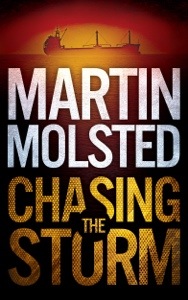
Book Review: Chasing The Storm by Martin Mölsted

About The Book

20131101-204241.jpgIn 2009 the ship MV Arctic Sea was hijacked in the Baltic Sea. Following intense media scrutiny, Russian commandos seized the ship a month later. Though Russia still claims that the ship carried timber destined for Algeria, many observers assume that the actual cargo was military-related, and that the mission was thwarted by Israeli forces.

But what did really happen?

While in Hamburg, lawyer and former elite soldier, Torgrim Rygg, witnesses the assassination attempt on Marko Marin, a Russian journalist investigating the disappearance of a ship ostensibly carrying timber bound for Algiers. He gets drawn into a world of conspiracies, cover-ups and the relentless search for a missing ship. Disenchanted with his mundane office-life he agrees to help Mr. Marin, and together with Marin’s girlfriend, Lena, and their hacker, Sasha, he sets out on a journey to discover the truth about the missing ship.

Their truth seeking kicks off a series of life-threatening events and a relentless race against time to foil whoever is behind the disappearance of the ship, The Alpensturm. Their revelation puts not only their own lives at risk but the safety of the whole world …

About The Author

20131101-204106.jpgChasing the Storm is Martin Molsted’s debut novel, although he has been actively engaged in writing shorter fiction, as well as screenplays since 2009. When he is not working as an Archivist in a Fortune 500 engineering company, he writes fiction and non-fiction.

He enjoys playing music, singing, travelling, nice food, great wine, tasty beer and awesome custom built motorcycles.

Martin Molsted lives in Asker, a small town between the greater cities Oslo and Drammen, in eastern Norway. He lives together with his French wife and their two daughters. No animals.

He is currently working on the storylines for a trio of further Rygg & Marin thrillers, so stay tuned for more compelling and intriguing action.

My Review

Chasing the Storm has shades of a Cold War spy story, with a modern twist. The premise is a simple one, but well told with believable characters and just the right balance between all out action and narrative of characters and scene setting. It will keep you on the edge of your seat at times, wanting to flip the pages as things move at a breakneck speed. At others the global trail of cities and scenes will make you feel the atmosphere and culture in each one.

I was never quite clear what was going to happen next, the book is well plotted and kept me guessing, with more than a twist or turn or two. I was invested in the characters from the start; Torgrim, Marin, Lena and Sasha, made a great combination. They were all believable, and it felt that the author had spent some time thinking about them and designing them to give them a sense of being real people.

As the start of a series, with recurring characters, I’m looking forward to the next instalment and will be adding Martin Mölsted to my list of authors to keep an eye on.

My Rating

4 out of 5 Stars – I Really Liked It.

Chasing The Storm is released on November 27th 2013, you can preorder your copy from Amazon US UK

The author provided me with a courtesy copy of his book in return for an honest review.

Dark Rite by Alan Baxter & David Wood

Dark RiteDark Rite by David Wood
My rating: 4 of 5 stars

Alan Baxter and David Wood have totally nailed the small town, backwoods horror with Dark Rite. The residents of the town are drawn as convincing obsessed characters with a feel of Deliverance in their attitudes to outsiders. You’re never quite sure what’s driving them, although all will be revealed, but they’re single minded in their intent.

The story has just the right amount of creepy horror and weird goings on to keep you turning the pages to find out the truth, much the same way as the hero, Grant, keeps on going.

This is a novella at the end of the day, and works perfectly in that form. The story fits the format well, and keeps the pace cracking along from first page to last, and can easily be read in one sitting. To be honest you’ll want to, as once you get started this is a difficult book to put down.

I’d recommend this one for fans of early Stephen King and Richard Laymon and anyone who wants a good creepy horror.

View all my reviews

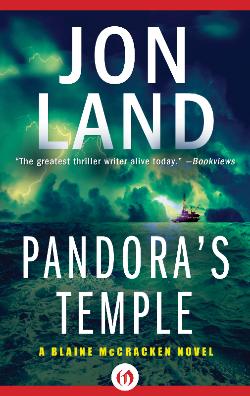
Book Review: Pandora’s Temple by Jon Land

Pandora_banner80138b

Synopsis:

What if Pandora’s box was real. That’s the question facing Former Special Forces commando and rogue agent Blaine McCracken who returns from a 15-year absence from the page in his tenth adventure.

McCracken has never been shy about answering the call, and this time it comes in the aftermath of deepwater oilrig disaster that claims the life of a one-time mem-ber of his commando unit. The remnants of the rig and its missing crew lead him to the inescapable conclusion that one of the most mysterious and deadly forces in the Universe is to blame—dark matter, both a limitless source of potential energy and a weapon with unimaginable destructive capabilities.

Joining forces again with his trusty sidekick Johnny Wareagle, McCracken races to stop both an all-powerful energy magnate and the leader of a Japanese dooms-day cult from finding the dark matter they seek for entirely different, yet equally dangerous, reasons. Ultimately, that race will take him not only across the world, but also across time and history to the birth of an ancient legend that may not have been a legend at all. The truth lies 4,000 years in the past and the construction of the greatest structure known to man at the time:

Pandora’s Temple, built to safeguard the most powerful weapon man would ever know.

Now, with that very weapon having resurfaced, McCracken’s only hope to save the world is to find the temple, the very existence of which is shrouded in mystery and long lost to myth. Along the way, he and Johnny Wareagle find themselves up against Mexican drug gangs, killer robots, an army of professional assassins, and a legendary sea monster before reaching a mountaintop fortress where the fi-nal battle to preserve mankind will be fought.

The hero of nine previous bestselling thrillers, McCracken is used to the odds be-ing stacked against him, but this time the stakes have never been higher.

About the author:

JonLand

Jon Land is the critically acclaimed author of 32 books, including the bestselling series featuring Texas Ranger Caitlin Strong that includes STRONG ENOUGH TO DIE, STRONG JUSTICE, STRONG AT THE BREAK, STRONG VENGEANCE (July 2012) and STRONG RAIN FALLING (August 2013).

He has more recently brought his long-time series hero Blaine McCracken back to the page in PANDORA’S TEMPLE (November 2012). He lives in Providence, Rhode Island.

Website Twitter Facebook 

Excerpt:

The Mediterranean Sea, 2008

“It would help, sir, if I knew what we were looking for,” Captain John J. Hightower of the Aurora said to the stranger he’d picked up on the island of Crete.

The stranger remained poised by the research ship’s deck rail, gazing out into the turbulent seas beyond. His long gray hair, dangling well past his shoulders in tangles and ringlets, was damp with sea spray, left to the whims of the wind.

“Sir?” Hightower prodded again.

The stranger finally turned, chuckling. “You called me sir. That’s funny.”

“I was told you were a captain,” said Hightower

“In name only, my friend.”

“If I’m your friend,” Hightower said, “you should be able to tell me what’s so important that our current mission was scrapped to pick you up.”

Beyond them, the residue of a storm from the previous night kept the seas choppy with occasional frothy swells that rocked the Aurora even as she battled the stiff winds to keep her speed steady. Gray-black clouds swept across the sky, colored silver at the tips where the sun pushed itself forward enough to break through the thinner patches. Before long, Hightower could tell, those rays would win the battle to leave the day clear and bright with the seas growing calm. But that was hardly the case now.

“I like your name,” came the stranger’s airy response. Beneath the orange life jacket, he wore a Grateful Dead tie dye t-shirt and old leather vest that was fraying at the edges and missing all three of its buttons. So faded that the sun made it look gray in some patches and white in others. His eyes, a bit sleepy and almost drunken, had a playful glint about them. “I like anything with the word ‘high.’ You should rethink your policy about no smoking aboard the ship, if it’s for medicinal purposes only.”

“I will, if you explain what we’re looking for out here.”

“Out here” was the Mediterranean Sea where it looped around Greece’s ancient, rocky southern coastline. For four straight days now, the Aurora had been mapping the sea floor in detailed grids in search of something of unknown size, composition and origin; or, at least, known only by the man Hightower had mistakenly thought was a captain by rank. Hightower’s ship was a hydrographic survey vessel. At nearly thirty meters in length with a top speed of just under twenty-five knots, the Aurora had been commissioned just the previous year to fashion nautical charts to ensure safe navigation by military and civilian shipping, tasked with conducting seismic surveys of the seabed and underlying geology. A few times since her commission, the Aurora and her eight-person crew had been re-tasked for other forms of oceanographic research, but her high tech air cannons, capable of generating high-pressure shock waves to map the strata of the seabed, made her much more fit for more traditional assignments.

“How about I give you a hint?” the stranger said to Hightower. “It’s big.”

“How about I venture a guess?”

“Take your best shot, dude.”

“I know a military mission when I see one. I think you’re looking for a weapon.”

“Warm.”

“Something stuck in a ship or submarine. Maybe even a sunken wreck from years, even centuries ago.”

“Cold,” the man Hightower knew only as “Captain” told him. “Well, except for the centuries ago part. That’s blazing hot.”

Hightower pursed his lips, frustration getting the better of him. “So are we looking for a weapon or not?”

“Another hint, Captain High: only the most powerful ever known to man,” the stranger said with a wink. “A game changer of epic proportions for whoever finds it. Gotta make sure the bad guys don’t manage that before we do. Hey, did you know marijuana’s been approved to treat motion sickness?”

Hightower could only shake his head. “Look, I might not know exactly you’re looking for, but whatever it is, it’s not here. You’ve got us retracing our own steps, running hydrographs in areas we’ve already covered. Nothing ‘big,’ as you describe it, is down there.”

“I beg to differ, el Capitan.”

“Our depth sounders have picked up nothing, the underwater cameras we launched have picked up nothing, the ROVS have picked up nothing.”

“It’s there,” the stranger said with strange assurance, holding his thumb and index finger together against his lips as if smoking an imaginary joint.

“Where?”

“We’re missing something, el Capitan. When I figure out what it is, I’ll let you know.”

Before Hightower could respond, the seas shook violently. On deck it felt as if something had tried to suck the ship underwater, only to spit it up again. Then a rumbling continued, thrashing the Aurora from side to side like a toy boat in a bathtub. Hightower finally recovered his breath just as the rumbling ceased, leaving an eerie calm over the sea suddenly devoid of waves and wind for the first time that morning.

“This can’t be good,” said the stranger, tightening the straps on his life vest.

* * *

The ship’s pilot, a young, thick-haired Greek named Papadopoulos, looked up from the nest of LED readouts and computer-operated controls on the panel before him, as Hightower entered the bridge.

“Captain,” he said wide-eyed, his voice high and almost screeching, “seismic centers in Ankara, Cairo and Athens are all reporting a sub-sea earthquake measuring just over six on the scale.”

“What’s the epi?”

“Forty miles northeast of Crete and thirty from our current position,” Papadopoulos said anxiously, a patch of hair dropping over his forehead.

“Jesus Christ,” muttered Hightower.

“Tsunami warning is high,” Papadopoulos continued, even as Hightower formed the thought himself.

“Whoa, whoa, whoa, we are in for the ride of our lives!” blared the stranger, pulling on the tabs that inflated his life vest with a soft popping sound. “If I sound excited it’s ‘cause I’m terrified, dudes!”

“Bring us about,” the captain ordered. “Hard back to the Port of Piraeus at all the speed you can muster.”

“Yes, sir!”

Suddenly the bank of screens depicting the seafloor in a quarter mile radius directly beneath them sprang to life. Readings flew across accompanying monitors, orientations and graphic depictions of whatever the Aurora’s hydrographic equipment and underwater cameras had located appearing in real time before Hightower’s already wide eyes.

“What the hell is—“

“Found it!” said the stranger before the ship’s captain could finish.

“Found what?” followed Hightower immediately. “This is impossible. We’ve already been over this area. There was nothing down there.”

“Earthquake must’ve changed that in a big way, el Capitan. I hope you’re recording all this.”

“There’s nothing to record. It’s a blip, an echo, a mistake.”

“Or exactly what I came out here to find. Big as life to prove all the doubters wrong.”

“Doubters?”

“Of the impossible.”

“That’s what you brought us out here for, a fool’s errand?”

“Not anymore.”

The stranger watched as a central screen mounted beneath the others continued to form a shape massive in scale, an animated depiction extrapolated from all the data being processed in real time.

“Wait a minute, is that a . . . It looks like— My God, it’s some kind of structure!“

“You bet!”

“Intact at that depth? Impossible! No, this is all wrong.”

“Hardly, el Capitan.”

“Check the readouts, sir. According to the depth gauge, your structure’s located five hundred feet beneath the seafloor. Where I come from, they call that impos—“

Hightower’s thought ended when the Aurora seemed to buckle, as if it had hit a roller coaster-like dip in the sea. The sensation was eerily akin to floating, the entire ship in the midst of an out-of-body experience, leaving Hightower feeling weightless and light-headed.

“Better fasten your seatbelts, dudes,” said the stranger, eyes fastened through the bridge windows at something that looked like a waterfall pluming on the ship’s aft side.

Hightower had been at sea often and long enough to know this to be a gentle illusion belying something much more vast and terrible: in this case, a giant wave of froth that gained height as it crystallized in shape. It was accompanied by a thrashing sound that shook the Aurora as it built in volume and pitch, felt by the bridge’s occupants at their very cores like needles digging into their spines.

“Hard about!” Hightower ordered Papadopoulos. “Steer us into it!”

It was, he knew, the ship’s only chance for survival, or would have been, had the next moments not shown the great wave turning the world dark as it reared up before them. The Aurora suddenly seemed to lift into the air, climbing halfway up the height of the monster wave from a calm sea that had begun to churn mercilessly in an instant. A vast black shadow enveloped the ship in the same moment intense pressure pinned the occupants of the bridge to their chairs or left them feeling as if their feet were glued to the floor. Then there was nothing but an airless abyss dragging darkness behind it.

“Far out, man!” Hightower heard the stranger blare in the last moment before the void claimed him.

My Review:

Pandora_Cover_Lg55b7c2Buckle-up! Hold Tight! Pandora’s Temple is one hell of a ride.

If you’re looking for a thriller with a break-neck pace then this could be the book for you. It has everything from unexplained natural phenomena to giant undersea creatures; and megalomaniac industrialists to suicidal Japanese fanatics. There are even some eco-terrorists and crazy gun-toting robots thrown in for good measure.

Blaine McCracken is the hero of this story; he’s a former Special Forces commando, who’s once again answering his country’s call to help. He carries a sense of vulnerability from a previous mission that wasn’t totally successful but is basically a strong, sound character, who with the other principle characters paints the believable cast. I particularly liked Wareagle, and the just plain crazy, Captain Seven who complimented their fellow adventurers.

At times, some of the action pushed the believability threshold a little, but the author kept things within the realms of possibility and scientific fact without going too far. The action when it came was swift and credible, and felt authentic; with good attention to detail where it mattered.

There are plenty of Blaine McCracken adventures to read, but this one stands alone well, and there’s enough detail that means you don’t need to read them in order and can easily start with this one if you wanted to.

Pandora’s Temple is an entertaining read, and perfect for when you need a book to let you escape your own world for a bit. Come and join Blaine McCracken and his companions on a non-stop adventure.

My Rating: 4 out of 5 Stars – I Really Liked It.

Special Giveaway:

The author has very kindly offered an e-book version of one of his previous novels The Omega Command. If you’d like a chance to win this, please leave a comment to this post below. Please state the e-book type you would like in your comment e.g. kindle, nook etc.

Thanks to Jon Land for his generosity.

PIC_badge

Book Review: Proof of Guilt by Charles Todd

ProofofGuilt_banner

Synopsis

An unidentified body appears to have been run down by a motorcar and Ian Rutledge is leading the investigation to uncover what happened. While signs point to murder, vital questions remain. Who is the victim? And where, exactly, was he killed?

One small clue leads the Inspector to a firm built by two families, famous for producing and selling the world’s best Madeira wine. Lewis French, the current head of the English enterprise is missing. But is he the dead man? And do either his fiancée or his jilted former lover have anything to do with his disappearance—or possible death? What about his sister? Or the London office clerk? Is Matthew Traynor, French’s cousin and partner who heads the Madeira office, somehow involved?

The experienced Rutledge knows that suspicion and circumstantial evidence are not proof of guilt, and he’s going to keep digging for answers. But that perseverance will pit him against his supervisor, the new Acting Chief Superintendent. When Rutledge discovers a link to an incident in the family’s past, the superintendent dismisses it, claiming the information isn’t vital. He’s determined to place blame on one of French’s women despite Rutledge’s objections. Alone in a no man’s land rife with mystery and danger, Rutledge must tread very carefully, for someone has decided that he, too, must die so that cruel justice can take its course.

About the Author

Charles Todd is the author of the Inspector Ian Rutledge mysteries, the Bess Crawford mysteries, and two stand-alone novels. A mother and son writing team, they live in Delaware and North Carolina, respectively.

Excerpt

Chapter One

Funchal Harbor, Madeira 3 December 1916

He couldn’t remember, later, what had taken him down to the harbor.

Now, staring out at the masts of the CS Dacia, the British cable-laying ship, he found himself thinking about England.

Dacia was said to be diverting the overseas cable, in an attempt to deny the Germans access to it. Whether it was true or not, he didn’t know. But she and the French gunboat Surprise had brought the war home to him in an unexpected and unwelcome fashion.

England had been at war since August 1914. But Portugal and, by extension, Madeira had remained neutral in spite of a centuries’ old alliance with Britain. In spite, as well, of clashes with Germany in the Portuguese Colony of Angola, in Africa. Neutrality was one of the reasons he’d decided to live here. His grandmother had been a Quaker by conviction, and he himself held strong views about war and the waste it brought in its wake.

He turned to look upward. Madeira was volcanic, its climate temperate, and its soil fertile. A paradise of flowers, which his mother had loved. Clouds were beetling down the mountainside, concealing the heights, but on a promontory to the far side of the bay, he could still see the tower of his house. Three stories, like most in Funchal, and in his eyes far more handsome than the house where he’d grown up in Essex. It was his late grandfather Howard French, his mother’s father, who had introduced him to the wine business here. He’d come as a boy and stayed as a man. An exile, but a happy one.

A flash spun him around to stare at the harbor just as an explosion amidships sent a column of black smoke rising from Dacia. He was trying to think what could have happened aboard when another explosion rocked Surprise, and just above him, from the vantage point of the Grand Hotel grounds, someone was pointing and shouting.

“There—look, it’s a submarine!”

The voice carried clearly, this close to the water.

He didn’t lose time trying to see. He began to run, turning his back on the harbor as other explosions shook it. People were coming out of doorways, stopping in the streets to stare, calling to one another, unable to believe the evidence of their own eyes. He risked a glance over his shoulder and saw pillars of black smoke rising from Dacia, which had been hit again, and Surprise, and even Kangaroo, a third ship near them.

Someone in the water was screaming, and he could hear other cries as the heavy smell of burning timbers wafted inland on the onshore breeze, making him cough.

His offices were on the street just above the harbor. French, French & Traynor, Exporters, handled Madeira, the fortified wine that had made the island famous. And if this shelling of the ships in the harbor was a precursor to an invasion, there was work to be done in a hurry.

Sprinting across the street, where a few motorcars were halted, and several carriages and drays had pulled up, their occupants transfixed by the burning ships, he passed a wild-eyed horse rearing in its traces, the odor of smoke terrifying it.

In the doorway of the export house stood most of his employees, and those who couldn’t crowd into the narrow space were at the windows, their faces nearly as shocked as he felt. “

Mr. Traynor!” his foreman shouted in English. “What are they doing?”

“I don’t know.” He pushed his way inside and ordered his people to follow him.

His own office was in the front, overlooking the street. Behind the offices was the long space where the shop stood and the heavy drays were kept. Above and beyond that the cavernous rooms where great barrels of Madeira, coded by age and type, rested on their sides. And the high-ceilinged rooms with the kettles and vats and gauges that heated the wine, along with the smaller room where all the tools collected through centuries of winemaking were displayed. And at the very back, the long room where employees ate their meals, walls hand-painted by them down the generations and a source of much pride.

Wood, all of them, and they were all vulnerable to fire.

He stopped short, suddenly overwhelmed.

What to do? It would take days—and at best would be a very risky task—to move the wine, and as for the equipment, more days to disengage the pipes and lines that connected kettles to vats. An impossible task.

Even if he managed it, where could he take an entire building to safety?

Matthew Traynor stood there, feeling helpless.

Damn the Germans. And damn the war.

Someone was asking him if Portugal had been attacked—if it had fallen—if this was a prelude to invasion. Others were pleading with him to allow them to leave, to reach their families before it was too late.

Torn, feeling for the first time in his life that he didn’t know how to answer, he tried to collect his wits and act.

Just as he was about to speak, someone poked his head into the doorway behind Traynor and shouted, “The U-boat. She’s surfacing.”

He went to the door to see for himself, and there was the U-boat, in plain view, water still spilling across her hull, gun crews clambering out of the tower, racing across to the deck guns. The fort’s harbor batteries, such as they were, hadn’t opened up. By the time he looked back at the submarine, men had reached the guns, swung them around, and the shelling began.

Not of the harbor, but of Funchal itself.

He realized then that it was too late. “Go home. While you can,” he told the employees waiting anxiously behind him. “If this is an invasion, stay at home. Don’t do anything rash.”

“What about the wine?” his foreman asked. “What are we to do?”

Traynor took a deep breath. “We’ll just have to pray it survives. Now go, take the back streets. Hurry. No, not this way, out through the rear door.”

He could hear the shells exploding now, picture in his mind the damage being done, the cost in property and lives. People were screaming, running in every direction, panicked.

His secretary, a young Portuguese man he’d hired last year, was tugging at his sleeve. “Come, you must go too. Look how the shells are falling!”

And Matt Traynor let himself be led to his own rear door, his mind numbed by shock and a terrible anger he couldn’t control. Around him the building shuddered as a shell landed not more than three houses away.

Years of work. Years. And there was nothing he could do.

The shelling lasted all of two hours. The harbor guns, ineffectual at best, could do little to stop the ravaging of the capital. Runners had been sent to other towns on the island, asking if there had been landings of German troops, but no reports came back.

And then, as suddenly as it had begun, the shelling stopped. The submarine decks cleared, the hatch was closed, and she slipped quietly beneath the harbor waves, leaving behind two burning vessels, the Dacia already sunk, and countless lives lost. In the town itself, shells accounted for other deaths, falling masonry and timbers for more wounded and dying.

Matt Traynor, hurrying by horseback into Funchal again, saw to his utter amazement that the firm’s windows had been blown out, glazing everywhere, but the building was still standing and appeared to be sound. Still, there were the casks, the great barrels, and the shaking they must have sustained, seals broken, staves sprung. The new wine the vats held, which would either be all right or a total loss, nothing in between. Weeks would pass—months— before he learned what the cost of the shelling would actually be. And there were the glaziers, to replace the glass. They would be busy—he must contact them at once, today, to protect the building from looters come for the wine. Meanwhile, he must hire more night watchmen to stand guard until the House of French, French & Traynor was secure once more.

Dismounting, he stood there for a moment, staring around him at the destruction that had changed this familiar street into a nightmare, masonry everywhere, trees shattered, the pavement itself pocked and broken.

And then, taking a deep breath, he prepared himself for what he’d find inside.

Someone was running down the littered street, calling his name. It was a maid from the house of his fiancée. He felt his heart turn over. “What is it?” he shouted to Manuela and stood where he was, rooted to the spot.

“It’s the Senhorita,” she cried, and he wanted to cover his ears.

Please, God, nothing more. I can’t face anything more.

The bleeding of war-torn France, the endless lists of dead, wounded, and missing from Ypres and the Somme, the suffering in England—none of these had touched him. But this was different. This was his own safe, happy world.

“She’s dead,” Manuela was saying, tears streaming down her red face, and he could read her lips even though the words refused to register. “The beam in her bedroom—she was praying before the Madonna, and it—She’s dead.”

He heard himself say, “But—that’s not possible. Her house was out of range, it was safe.”

“It was the shaking, Senhor. It went on and on, and the plaster gave way..”

A week later, his affairs set in order, his fiancée and her mother buried in the hillside cemetery where scarlet bougainvillea spilled luxuriantly over the wall, a brightness that hurt the eyes, he set sail for Portugal. To enlist there.


My Review

proofofguiltA procedural with a historical setting sees Inspector Ian Rutledge of Scotland Yard investigating a death in unusual circumstances and a disappearance. All is not as it seems as Inspector Rutledge investigates.

I’m a great fan of modern police procedurals, and this was a departure from my normal tastes. The book remains faithful to its historical setting and as such elements of the procedural content take much longer than they might now, there are no mobile phones or computers, but the author ensures that he keeps the reader’s attention focussed on the story and the investigation.

The mysterious nature and suspense is maintained throughout the story with little pieces being revealed to the reader paying close attention, but otherwise key parts of the plot come with a sudden bang.

I liked the characters; they seemed true to themselves and to the period setting, with minor characters such as servants playing a role to add authenticity to the story. I personally disliked the character of Hamish (I don’t want to say too much here as that will spoil an element of the story), because I found him annoying, however he was quite fundamental to telling some of the story and to helping Rutledge reach his investigative conclusions. By the end of the book he was tolerable, but I wish the author had found another way to tell this part of the story.

I found the constant driving of Rutledge in his “motorcar”, to be a bit wearing. It was a necessary evil due to period setting of the story, but again I think the author could have found another way to cover this without constant reference to the ‘car.

If you’re a fan of the police procedural, you might enjoy this story; I think you’re more likely to enjoy it, if you’re a fan of historical stories and like a good mystery thrown in for good measure.

My Rating: 3 out of 5 stars – I Liked It

PIC_badge

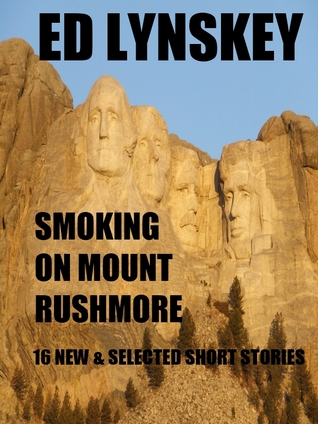
Book Review: Smoking on Mount Rushmore by Ed Lynskey

17228169This is a cracking little short story collection by Ed Lynskey, who’s probably better known for his Frank Johnson PI series and other novels such as “Lake Charles”. It contains 16 stories, some new and some that have been published in other places before. Together they make for a great collection that really show this writers talents, and given that the author reckons to have published over 300 short stories, I hope that this is the first of a number of collections of his work.

The stories range from hardboiled crime, right through to near cosy. They cover a range of subjects, and many are quite poignant. Short story writing often requires a sharp, to-the-point prose style and this collection demonstrates that the author can tell the tale, get you engaged in the character and hit his marks all in a few thousand words.
Some of the characters repeat across a number of stories which is nice, because that gives the readers an opportunity to engage more with them, and I certainly found I wanted more from a couple of the stories.

I feel like I should be picking some favourites, but actually I really liked them all. There were however three that stuck in my head, and are there now as I write this review.

They are:

Lakota Road
How to Defuse a Terrorist; and
Camera Shy

I’m not sure why I should pick them in particular, it was either the story or a particular character that’s stuck in my head, but of all of the stories in the collection, those three are the ones I seem to remember the most or connected with more than the others.

I’d recommend this collection whether or not you are a crime fiction buff; or whether or not you’ve read anything else by this author.

If you are familiar with the author already though, then I wouldn’t waste any more time here, go buy a copy right now.

My Rating: 5 out of 5 stars – I loved it!

About the Author:

692283Ed Lynskey is a crime fiction writer residing not too far from the Pentagon.

His P.I.Frank Johnson mystery series include Pelham Fell Here, The Dirt-Brown Derby, The Blue Cheer, Troglodytes, and The Zinc Zoo. His small town cozy mystery is Quiet Anchorage, featuring his amateur sleuth sisters Alma and Isabel Trumbo. His standalone Appalachian noir is Lake Charles. Ed lives with his family and one black-and-white cat named Frannie after P.I. Frank Johnson. Ed and Frank are both Washington National baseball fans.

You can find out more about Ed Lynskey from his GoodReads page or Amazon

Enhanced by Zemanta