Two Years A Kindle Owner

I’ve had a Kindle for little over two years now.

I wondered when I bought it how it might affect my reading and book buying habits. Would I stop buying physical books and only buy Kindle books from now on? Would my kindle be just a flash in a pan though, and would I be unable to give up the allure of the physical book.

In truth after two years I think it’s none of the above. I think I have spent far more money on “books” than I might otherwise have done in the last two years, having regularly fallen for the temptation of the “Kindle Daily Deal” or other promotions; where I’ve bought books, many of which I still haven’t read. Then again I’ve bought books on promotion that I wouldn’t otherwise, and have enjoyed them and gone on to buy more by those authors.

I haven’t given up on physical books either, although I have probably changed my habits here. I tend to now only buy physical books that are by authors where I particularly want to keep a physical copy, or those that don’t produce a Kindle edition, for whatever reason.

I still visit bookshops too, although I will admit this is one source where I am definitely buying less books from, I’ve become much more of a browser now than I was before.

Overall I think my Kindle has had a positive impact. I’m reading more books than I ever have, and taking advantage of being able to carry my Kindle just about anywhere means I’ve made more time available to read.

I’m also impressed that it is as robust as it is. I did wonder whether it would last this long, but I’m pleased to say that it seems to be working as well today, as the first day I owned it. The battery life is still very good, taking weeks or even months between each charge, even with the Wi-Fi activated. It still has plenty of space for more books too, so no worries about storage space anytime in the near future.

All round a good investment.

Book Review: Proof of Guilt by Charles Todd

ProofofGuilt_banner

Synopsis

An unidentified body appears to have been run down by a motorcar and Ian Rutledge is leading the investigation to uncover what happened. While signs point to murder, vital questions remain. Who is the victim? And where, exactly, was he killed?

One small clue leads the Inspector to a firm built by two families, famous for producing and selling the world’s best Madeira wine. Lewis French, the current head of the English enterprise is missing. But is he the dead man? And do either his fiancée or his jilted former lover have anything to do with his disappearance—or possible death? What about his sister? Or the London office clerk? Is Matthew Traynor, French’s cousin and partner who heads the Madeira office, somehow involved?

The experienced Rutledge knows that suspicion and circumstantial evidence are not proof of guilt, and he’s going to keep digging for answers. But that perseverance will pit him against his supervisor, the new Acting Chief Superintendent. When Rutledge discovers a link to an incident in the family’s past, the superintendent dismisses it, claiming the information isn’t vital. He’s determined to place blame on one of French’s women despite Rutledge’s objections. Alone in a no man’s land rife with mystery and danger, Rutledge must tread very carefully, for someone has decided that he, too, must die so that cruel justice can take its course.

About the Author

Charles Todd is the author of the Inspector Ian Rutledge mysteries, the Bess Crawford mysteries, and two stand-alone novels. A mother and son writing team, they live in Delaware and North Carolina, respectively.

Excerpt

Chapter One

Funchal Harbor, Madeira 3 December 1916

He couldn’t remember, later, what had taken him down to the harbor.

Now, staring out at the masts of the CS Dacia, the British cable-laying ship, he found himself thinking about England.

Dacia was said to be diverting the overseas cable, in an attempt to deny the Germans access to it. Whether it was true or not, he didn’t know. But she and the French gunboat Surprise had brought the war home to him in an unexpected and unwelcome fashion.

England had been at war since August 1914. But Portugal and, by extension, Madeira had remained neutral in spite of a centuries’ old alliance with Britain. In spite, as well, of clashes with Germany in the Portuguese Colony of Angola, in Africa. Neutrality was one of the reasons he’d decided to live here. His grandmother had been a Quaker by conviction, and he himself held strong views about war and the waste it brought in its wake.

He turned to look upward. Madeira was volcanic, its climate temperate, and its soil fertile. A paradise of flowers, which his mother had loved. Clouds were beetling down the mountainside, concealing the heights, but on a promontory to the far side of the bay, he could still see the tower of his house. Three stories, like most in Funchal, and in his eyes far more handsome than the house where he’d grown up in Essex. It was his late grandfather Howard French, his mother’s father, who had introduced him to the wine business here. He’d come as a boy and stayed as a man. An exile, but a happy one.

A flash spun him around to stare at the harbor just as an explosion amidships sent a column of black smoke rising from Dacia. He was trying to think what could have happened aboard when another explosion rocked Surprise, and just above him, from the vantage point of the Grand Hotel grounds, someone was pointing and shouting.

“There—look, it’s a submarine!”

The voice carried clearly, this close to the water.

He didn’t lose time trying to see. He began to run, turning his back on the harbor as other explosions shook it. People were coming out of doorways, stopping in the streets to stare, calling to one another, unable to believe the evidence of their own eyes. He risked a glance over his shoulder and saw pillars of black smoke rising from Dacia, which had been hit again, and Surprise, and even Kangaroo, a third ship near them.

Someone in the water was screaming, and he could hear other cries as the heavy smell of burning timbers wafted inland on the onshore breeze, making him cough.

His offices were on the street just above the harbor. French, French & Traynor, Exporters, handled Madeira, the fortified wine that had made the island famous. And if this shelling of the ships in the harbor was a precursor to an invasion, there was work to be done in a hurry.

Sprinting across the street, where a few motorcars were halted, and several carriages and drays had pulled up, their occupants transfixed by the burning ships, he passed a wild-eyed horse rearing in its traces, the odor of smoke terrifying it.

In the doorway of the export house stood most of his employees, and those who couldn’t crowd into the narrow space were at the windows, their faces nearly as shocked as he felt. “

Mr. Traynor!” his foreman shouted in English. “What are they doing?”

“I don’t know.” He pushed his way inside and ordered his people to follow him.

His own office was in the front, overlooking the street. Behind the offices was the long space where the shop stood and the heavy drays were kept. Above and beyond that the cavernous rooms where great barrels of Madeira, coded by age and type, rested on their sides. And the high-ceilinged rooms with the kettles and vats and gauges that heated the wine, along with the smaller room where all the tools collected through centuries of winemaking were displayed. And at the very back, the long room where employees ate their meals, walls hand-painted by them down the generations and a source of much pride.

Wood, all of them, and they were all vulnerable to fire.

He stopped short, suddenly overwhelmed.

What to do? It would take days—and at best would be a very risky task—to move the wine, and as for the equipment, more days to disengage the pipes and lines that connected kettles to vats. An impossible task.

Even if he managed it, where could he take an entire building to safety?

Matthew Traynor stood there, feeling helpless.

Damn the Germans. And damn the war.

Someone was asking him if Portugal had been attacked—if it had fallen—if this was a prelude to invasion. Others were pleading with him to allow them to leave, to reach their families before it was too late.

Torn, feeling for the first time in his life that he didn’t know how to answer, he tried to collect his wits and act.

Just as he was about to speak, someone poked his head into the doorway behind Traynor and shouted, “The U-boat. She’s surfacing.”

He went to the door to see for himself, and there was the U-boat, in plain view, water still spilling across her hull, gun crews clambering out of the tower, racing across to the deck guns. The fort’s harbor batteries, such as they were, hadn’t opened up. By the time he looked back at the submarine, men had reached the guns, swung them around, and the shelling began.

Not of the harbor, but of Funchal itself.

He realized then that it was too late. “Go home. While you can,” he told the employees waiting anxiously behind him. “If this is an invasion, stay at home. Don’t do anything rash.”

“What about the wine?” his foreman asked. “What are we to do?”

Traynor took a deep breath. “We’ll just have to pray it survives. Now go, take the back streets. Hurry. No, not this way, out through the rear door.”

He could hear the shells exploding now, picture in his mind the damage being done, the cost in property and lives. People were screaming, running in every direction, panicked.

His secretary, a young Portuguese man he’d hired last year, was tugging at his sleeve. “Come, you must go too. Look how the shells are falling!”

And Matt Traynor let himself be led to his own rear door, his mind numbed by shock and a terrible anger he couldn’t control. Around him the building shuddered as a shell landed not more than three houses away.

Years of work. Years. And there was nothing he could do.

The shelling lasted all of two hours. The harbor guns, ineffectual at best, could do little to stop the ravaging of the capital. Runners had been sent to other towns on the island, asking if there had been landings of German troops, but no reports came back.

And then, as suddenly as it had begun, the shelling stopped. The submarine decks cleared, the hatch was closed, and she slipped quietly beneath the harbor waves, leaving behind two burning vessels, the Dacia already sunk, and countless lives lost. In the town itself, shells accounted for other deaths, falling masonry and timbers for more wounded and dying.

Matt Traynor, hurrying by horseback into Funchal again, saw to his utter amazement that the firm’s windows had been blown out, glazing everywhere, but the building was still standing and appeared to be sound. Still, there were the casks, the great barrels, and the shaking they must have sustained, seals broken, staves sprung. The new wine the vats held, which would either be all right or a total loss, nothing in between. Weeks would pass—months— before he learned what the cost of the shelling would actually be. And there were the glaziers, to replace the glass. They would be busy—he must contact them at once, today, to protect the building from looters come for the wine. Meanwhile, he must hire more night watchmen to stand guard until the House of French, French & Traynor was secure once more.

Dismounting, he stood there for a moment, staring around him at the destruction that had changed this familiar street into a nightmare, masonry everywhere, trees shattered, the pavement itself pocked and broken.

And then, taking a deep breath, he prepared himself for what he’d find inside.

Someone was running down the littered street, calling his name. It was a maid from the house of his fiancée. He felt his heart turn over. “What is it?” he shouted to Manuela and stood where he was, rooted to the spot.

“It’s the Senhorita,” she cried, and he wanted to cover his ears.

Please, God, nothing more. I can’t face anything more.

The bleeding of war-torn France, the endless lists of dead, wounded, and missing from Ypres and the Somme, the suffering in England—none of these had touched him. But this was different. This was his own safe, happy world.

“She’s dead,” Manuela was saying, tears streaming down her red face, and he could read her lips even though the words refused to register. “The beam in her bedroom—she was praying before the Madonna, and it—She’s dead.”

He heard himself say, “But—that’s not possible. Her house was out of range, it was safe.”

“It was the shaking, Senhor. It went on and on, and the plaster gave way..”

A week later, his affairs set in order, his fiancée and her mother buried in the hillside cemetery where scarlet bougainvillea spilled luxuriantly over the wall, a brightness that hurt the eyes, he set sail for Portugal. To enlist there.


My Review

proofofguiltA procedural with a historical setting sees Inspector Ian Rutledge of Scotland Yard investigating a death in unusual circumstances and a disappearance. All is not as it seems as Inspector Rutledge investigates.

I’m a great fan of modern police procedurals, and this was a departure from my normal tastes. The book remains faithful to its historical setting and as such elements of the procedural content take much longer than they might now, there are no mobile phones or computers, but the author ensures that he keeps the reader’s attention focussed on the story and the investigation.

The mysterious nature and suspense is maintained throughout the story with little pieces being revealed to the reader paying close attention, but otherwise key parts of the plot come with a sudden bang.

I liked the characters; they seemed true to themselves and to the period setting, with minor characters such as servants playing a role to add authenticity to the story. I personally disliked the character of Hamish (I don’t want to say too much here as that will spoil an element of the story), because I found him annoying, however he was quite fundamental to telling some of the story and to helping Rutledge reach his investigative conclusions. By the end of the book he was tolerable, but I wish the author had found another way to tell this part of the story.

I found the constant driving of Rutledge in his “motorcar”, to be a bit wearing. It was a necessary evil due to period setting of the story, but again I think the author could have found another way to cover this without constant reference to the ‘car.

If you’re a fan of the police procedural, you might enjoy this story; I think you’re more likely to enjoy it, if you’re a fan of historical stories and like a good mystery thrown in for good measure.

My Rating: 3 out of 5 stars – I Liked It

PIC_badge

Book Review: Smoking on Mount Rushmore by Ed Lynskey

17228169This is a cracking little short story collection by Ed Lynskey, who’s probably better known for his Frank Johnson PI series and other novels such as “Lake Charles”. It contains 16 stories, some new and some that have been published in other places before. Together they make for a great collection that really show this writers talents, and given that the author reckons to have published over 300 short stories, I hope that this is the first of a number of collections of his work.

The stories range from hardboiled crime, right through to near cosy. They cover a range of subjects, and many are quite poignant. Short story writing often requires a sharp, to-the-point prose style and this collection demonstrates that the author can tell the tale, get you engaged in the character and hit his marks all in a few thousand words.
Some of the characters repeat across a number of stories which is nice, because that gives the readers an opportunity to engage more with them, and I certainly found I wanted more from a couple of the stories.

I feel like I should be picking some favourites, but actually I really liked them all. There were however three that stuck in my head, and are there now as I write this review.

They are:

Lakota Road
How to Defuse a Terrorist; and
Camera Shy

I’m not sure why I should pick them in particular, it was either the story or a particular character that’s stuck in my head, but of all of the stories in the collection, those three are the ones I seem to remember the most or connected with more than the others.

I’d recommend this collection whether or not you are a crime fiction buff; or whether or not you’ve read anything else by this author.

If you are familiar with the author already though, then I wouldn’t waste any more time here, go buy a copy right now.

My Rating: 5 out of 5 stars – I loved it!

About the Author:

692283Ed Lynskey is a crime fiction writer residing not too far from the Pentagon.

His P.I.Frank Johnson mystery series include Pelham Fell Here, The Dirt-Brown Derby, The Blue Cheer, Troglodytes, and The Zinc Zoo. His small town cozy mystery is Quiet Anchorage, featuring his amateur sleuth sisters Alma and Isabel Trumbo. His standalone Appalachian noir is Lake Charles. Ed lives with his family and one black-and-white cat named Frannie after P.I. Frank Johnson. Ed and Frank are both Washington National baseball fans.

You can find out more about Ed Lynskey from his GoodReads page or Amazon

Enhanced by Zemanta

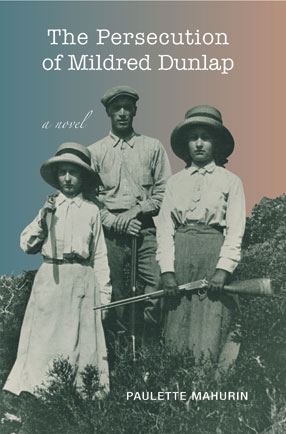
Book Review: The Persecution of Mildred Dunlap by Paulette Mahurin

Synopsis:

Front cover jpegThe year 1895 was filled with memorable historical events: the Dreyfus Affair divided France; Booker T. Washington gave his Atlanta address; Richard Olney, United States Secretary of State, expanded the effects of the Monroe Doctrine in settling a boundary dispute between the United Kingdom and Venezuela; and Oscar Wilde was tried and convicted for gross indecency under Britain’s recently passed law that made sex between males a criminal offense. When news of Wilde’s conviction went out over telegraphs worldwide, it threw a small Nevada town into chaos.

This is the story of what happened when the lives of its citizens were impacted by the news of Oscar Wilde’s imprisonment. It is a chronicle of hatred and prejudice with all its unintended and devastating consequences, and how love and friendship bring strength and healing.

About the Author:

Paulette Mahurin head shotPaulette Mahurin, an award-winning author, is a Nurse Practitioner who lives in Ojai, California with her husband Terry and their two dogs–Max and Bella. She practices women’s health in a rural clinic and writes in her spare time.


My Review:

Every now and again I get asked to read and review a book that is outside of the normal genres that I tend to stick to. Paulette Mahurin asked me if I would read her book and give an honest review. So following her sending me a copy of her book, here’s my thoughts.

Firstly this is a historical novel in setting, and things were very different in then to how they are now, but then some of those things remain the same today. The author however has captured the period well, it felt authenticate, and I really believed as I was reading it that it was indeed 1895. The language and behaviours of the characters also felt very real and the story was very well written.

That story covers a very hard topic; the elements of bigotry and intolerance were well captured as were the gossips and tale-tellers. I really believed that those characters were as hard as they were portrayed and had me feeling sympathy for the targets of their malice. There were times when I truly felt uncomfortable, and this is a credit to the author to be able to put the reader firmly in that place and portray the story in that way.
In individual characters were also particularly well painted, and came across as whole and believable. I particularly liked Charley, and really felt like I went on the same roller-coaster journey that he did through the book.

Despite this book being outside of my normal “comfort-zone”, I did really enjoy it and would recommend it.

My Rating: 4 out of 5 Stars – I really liked it.

The Persecution of Mildred Dunlap by Paulette Mahurin is available from Amazon in the UK and US.

You can find other details about the book and the author on Facebook, Twitter and the authors own website.

Profits from all book sales are going to charity.

Win Your Own Copy!

The author has very kindly offered one free e-book copy (kindle only) of her book to a lucky reader of this blog. To be in with a chance of winning, please leave a comment to this post (trackbacks and “likes” don’t count). I’ll pick a winner in seven days (2nd February 2012).

Book Review: Silverbirch: Fall of the Epicenter by Robert Kaay

Fall of the Epicenter (Silverbirch, Part II)Fall of the Epicenter by Robert Kaay

My rating: 4 of 5 stars

This is the second book in the Silverbirch series, and it takes up more or less where the first book ended. Rob Kaay has gone from strength to strength with the second book.

The first book was well written and this one is no exception. The characters have their unique voices and behaviours, and this time new characters are introduced but the mainstay is the character of Nudge. Whilst Nudge makes the story tick, some of the other minor characters are important and make the story seem more rounded, I particularly liked Novak, who seemed to be the one who was wondering what on earth he’d gotten himself in to. This actually made the story feel a little more real. Although you know you’re reading fantasy, he added something that I think was there to make the reader buy into the story a little more. Making for some true escapism as you turn the pages.

I think I’ve said before that this genre is not one of my favourites but this series does make me want to come back again and again. There’s more detail this time about the Silvers and also this time how the other worlds Venus, Titan and Sirius are also important. I’m not sure where the author will take the series next, but there is definitely room for it to grow, and I’m pretty sure there will be at least a third book in the future.

Congratulations Rob Kaay, and excellent second volume to the Silverbirch stories. Now when’s the third one going to be available?

View all my reviews

Book Review: Amanda’s Story by Brian O’Grady

Synopsis:

In his national bestseller HYBRID, Brian O’Grady created a bracing and vividly realized tale of a virus gone out of control. At the center of that story was Amanda Flynn, a woman not killed by the EDH1 virus, but changed in frightening ways. HYBRID only hinted at the story of Amanda’s work in Honduras that led to her exposure and the ramifications when the American government sought to contain the damage. Now, that story can be told. AMANDA’S STORY is the heart-stopping tale of a woman caught up in a storm she wanted no part of, and what happens when she refuses to be collateral damage. It is the story that readers of HYBRID have been waiting for and that new readers will find impossible to put down.

About the Author


AMANDA’S STORY is Brian O’Grady’s second novel after his best-selling debut with Hybrid. He is a practicing neurologic surgeon and, when he is not writing or performing brain surgery, he struggles with Ironman triath- lons. He lives with his wife in Washington state.between California and Western Washington.

AUTHOR SITES: Website

Excerpt

“Does it make any of you angry that a little less than a year has gone by and very few Americans remember what happened?” Mindy McCoy, super-model turned talk show host asked the four women that surrounded her. She shifted her long legs and casually inclined toward the pale, blonde woman to her left, just as the voice in her ear had instructed.

For a moment Amanda met the gaze of her host, but became distracted by the movement of the cameras that prowled the perimeter of the group just beyond the glare of the stage lights. She had said very little during the fifteen minute interview and it was becoming uncomfortably obvious. Heather Waylens shifted her legs as well, just not as casually as Mindy, and the older woman’s stony glare communicated one message to Amanda: do your part. A weak, joyless smile crossed Amanda’s face as she stared into the cameras; she took a long breath as the panel, the audience, and the TV world waited.

“At this point in my life it takes almost everything I have to get out of bed in the morning. I simply don’t have the luxury of being mad at anyone.”

Mindy McCoy and the rest of the world waited for more, but Amanda’s gaze had returned to the floor. The moment began to stretch and, just as everyone began to shift rather uncomfortably, Heather and one of the other panelists jumped into the void. At first, their comments stepped over the others, but it was Heather’s voice that prevailed. “The American mindset is always looking forward. It is a requisite for progress and one of the reasons that America leads the world in so many ways. Of course, the cost of that is a short memory; we have to guard against the mistakes of the past being forgotten so that we as a people can incorporate those lessons as we work to fulfill our great destiny…” Heather continued for a full two minutes before yielding the floor back to their host who immediately took them to a commercial break.

The stage quickly filled with show personnel. Despite the attention of her make-up artist, Mindy whispered to Amanda, “Honey, we need a bit more from you.” Her careful and practiced elocution had been replaced by a more natural drawl.

“Hold still or you won’t be beautiful,” the make-up artist scolded Mindy with a lilt.

“Amanda,” Heather called from across the stage, but the frenetic activity gave Amanda a convenient excuse to ignore her summons. “You need to tell your story, for everyone’s sake,” she pleaded with a tone that was much too close to a demand.

“Especially yours,” Amanda whispered to herself. Everyone was trying to turn her grief to their advantage, particularly Congresswoman Heather Waylens. Her husband, the previous Representative of Kansas’ third district, had died along with 202 others, including Amanda’s husband and their two-year-old son, when Delta flight 894 crashed into an Iowa cornfield. The governor of Kansas appointed Heather to serve out her late husband’s term, but she had every intention of holding onto that seat well beyond the remaining sixteen months, and perhaps other seats as well. She used her loss and the pain of others to further her ambition, and right now Amanda hated her. She had never hated anything or anyone in her entire 24 years, but she was certain that at this instant she hated the Congresswoman from Kansas. It was a good hate, a righteous hate that for a moment burned brightly in the confines of her hollow soul, and then, just as quickly as it had flared, it began to fade, depriving Amanda of its heat and energy, leaving her drained from the emotional effort.

A figure suddenly blocked the bright lights and Amanda found a young, slight man scanning her face. “Just checking for shiny spots,” he said while leaning in close and inspecting her forehead. “Sweetheart, you were made for TV,” he sang while straightening, and playfully patted her nose with his powder-puff.

“Coming out in thirty seconds,“ a voice screamed, and the flurry of activity that surrounded the group spun even faster. Something touched Amanda’s hand and she turned to find Mindy’s face inches from hers.

“I know that this makes you uncomfortable, and it’s more than a little intimidating, but try and forget all this,” her arm swept across the stage. “Ignore the lights, the cameras, even the Congresswoman, and just talk to me as if we were in your kitchen. Lust us two girls, no one else.” Mindy’s eyes sparkled, her smile was natural and infectious, and Amanda realized that Mindy had more going for her than just a singular beauty, a perfect figure, millions of dollars, her own TV show, and uncounted adoring fans.

“I’ll try,” Amanda answered.

“People what to hear what you have to say; they should hear it, and between you and me, I would prefer that it come from you rather than a politician.” Her head gave a quick jerk toward Heather.

“It’s difficult for me to care about what other people need.” Amanda paused as the stage lights came up. “That didn’t come out right.” She smiled. “I probably should be angry; maybe at the mechanic who didn’t fix the door correctly or Delta Airlines for not insuring that he was properly trained, or, as Heather would like people to believe, the Transportation Board and the government for allowing Delta to perform their own inspections. Maybe I should take it all the way up to God, who gave me something wonderful and then snatched it back. But what does it matter? In the end they’re still gone, and their absence is all I can feel.”

“You’re trapped,” Mindy said.

“I’m stuck; that’s what everyone tells me. It’s why I’m here; to get ‘unstuck.'” Amanda briefly smiled but then her head sagged as she began to examine a spot on the stage a few feet in front of her shoes.

“But you don’t want to get unstuck, because as long as you still feel their absence in some way they’re still with you,” Mindy said softly with a tone that revealed more than understanding. “Getting unstuck means taking a step away from their memory and is an acknowledgement that they are never coming back; that things will never be as they were.”

Amanda looked up from the studio floor and found Mindy’s eyes glistening with unshed tears.

“My parents when I was thirteen.” Mindy said, answering Amanda’s look. “The details aren’t important. What is important is that I know what it means to be stuck. I know what it’s like to have others tell you that you need to do this or that, feel this way for this amount of time, and then move on to this next stage. But they really don’t understand what being stuck means. In some ways, it’s an acknowledgement of the people that we’ve lost, how their passing has torn out a large part of you, and that “moving on” means filling that void with something other than them. In some ways it’s a violation of their memory.”

Amanda stared into Mindy’s flawless face and realized that someone else in the world understood; that she really wasn’t alone. Since the accident, she had met with more than a dozen other “survivors” of Flight 894, and each of them had managed to either move past their grief or controlled it well enough to put on a brave face, which only increased Amanda’s isolation.

“But you survived,” Amanda managed to say with only a slight waver.

“For a long time, that’s all I could manage.” Mindy’s perpetual smile had a painful edge as her hand slipped into Amanda’s and they shared a private moment on national television. “My director is having a fit upstairs because we are so far off topic and I’m starting to sound more like Dr. Phil than an empty-headed talk show host. I think he’s afraid that if I show more than one-dimension I’ll demand more money.” The studio audience erupted in a mixture of laughter and applause. “Well, I think we are right on topic.” Mindy let go of Amanda’s hand and half-rose from her seat. She faced the camera and had to shout over the audience who began to cheer. “A year ago two hundred and two people died in what some say was a plane crash that should never have happened, but the human toll was far greater than that, and these four ladies, along with hundreds of others, will have to deal with their loss every day for the rest of their lives. My next two guests will hopefully try and explain why. Coming up after this short video salute to the victims of flight 894 is Kevin Tilits of the National Transportation Authority, and Dennis Hastings, President of Delta Airlines.” The audience cheered louder and the stage lights dimmed.

A stagehand appeared at Amanda’s side and began to unclip the microphone attached to the collar of her blouse. “Please follow me,” he told Amanda rather curtly the moment she was free.

“Can you give me just a moment?” She asked the young man. “Thanks, Mindy,” she said reaching for her host’s arm.

“Can you stay until I’m done here?” she asked Amanda, who nodded. “Good. Will you please escort Mrs. Flynn to my dressing room?” She ordered the stagehand as much as asked him, and then returned to the argument she was having with her director.

Amanda followed the irritated and hurried man offstage; apparently Mindy’s dismissive attitude toward the crew was not entirely unusual and Amanda felt obliged to apologize for his help.

“Don’t worry about it; she always gets this way when the boss man is riding her.”

“I think she’s in trouble because of me,” Amanda said as they navigated through a maze of cables, wires, and video equipment.

“Are you kidding me? That was great TV. It’ll be all over the entertainment channels in an hour, and tomorrow our share will be up by at least ten points. If she keeps this up she won’t have to ask for more money; they’ll be throwing it at her.” He opened a door for Amanda, and as she walked through, she felt his eyes follow her into the room. “Do you have anyone here with you/ I could bring them up while you wait.”

“That would be nice, but I don’t want to impose.”

“You’re not imposing, it’s my job.”

“My mother-in-law, Lisa Flynn, is in the yellow room. She’s about five-five, short brown hair…”

“It’s OK; I think I can find her. I’ll be back in a moment.” He closed the door and the latch closed with a muted click.

Mindy’s dressing room was in a word sparse. She had a table covered with a variety of cosmetics. Above it was the obligatory mirror rimmed with bright lights, and aside from a small sofa and a recliner, the only other thing in Mindy’s room was a television, which was tuned to her show. Amanda quickly turned the TV off as the video showing the remains of Flight 894 focused on an undamaged teddy bear lying on its side. Behind it was a shattered airplane seat. This particular frame had become the symbol of the tragedy and it pierced Amanda to the core. It was the main reason that she had been invited here. The bear’s name was Fred T. Bear, and Amanda had bought it for her son’s second birthday, a month before he died. She had no idea whether the seat behind Fred belonged to her son, her husband, or someone else. It didn’t really matter; they were gone. Only Fred had survived, and he was safely wrapped in plastic somewhere in her in-laws’s home.E

My Review:
Okay, first things first, this is more of a thriller than a crime novel. That said the thrills do come thick and fast.

The story is strong as are the characters, but at times some of the scenes felt a little overplayed, with detail that perhaps wasn’t necessary.

Don’t get me wrong though, I enjoyed it. It reminded me of the medical thrillers of Robin Cook and others, but bought up-to-date. The action was slick when it came and kept the to moving. The story was good and kept within the realms of believability, which I’ve sometimes found lacking in other books of this particular genre.

I could clearly visualise the characters, including those who only played a small part. This was also true of the background and scene settings, all were clear pictures, and made for a well rounded narrative.

If you’re a fan of thrillers, particularly of the medical variety, then this is definitely one for you.

My Rating: 3 out of 5 stars – I liked it.

Origins

Wilson

I was born on 28th March 2010, at Netley Marsh in Hampshire. I’m a mongrel, or so my paperwork says. That means that my parents were two different breeds of dog.

My mum was a Border Collie, and my dad, a Jack Russell Terrier.

Alan says that I take after my mum for my colouring – black and white – and after my dad for my size.

Alan said from the first day that I came home with him that I would probably take after both my parents for my temperament – smart but stubborn.

Continue reading “Origins”

Rose Garden

Spent this morning clearing a wall in our garden to make way for some climbing roses.
Garden Wall
Looks pretty uninteresting at the moment, but hopefully it will soon become a bit more colourful.

Roses (bareroot) have been ordered  – Tess of the d’Urbervilles (Red) & The Generous Gardener (White).

Need to do a bit to the border in terms of some compost and also something along the wall for the roses to be able to climb up and be tied off to. This will be a bit of an ongoing project for a few weeks, but will hopefully result in colour and fragrance on that side of the garden in due course.