False Springs

Meteorologist would have you believe that it starts on the 1st March each year. Astronomers with the March Equinox. Mother Nature will make you think it’s happening multiple times before it actually does.

Truth is Spring arrives when it arrives, except when it doesn’t and it’s a false spring. There can be a few of these, where the sunshines and the weather is noticeably warmer and if it goes on long enough it can trick some species including humans into thinking that Spring has arrived when it hasn’t and then hopes are dashed when temperatures drop and sunshine is replaced by dull skies and potentially rain.

I think this year we’ve had a few of these, particularly with February being and incredibly dry month but the rains returned in March. I think it’s probably safe to say now that I think Spring is actually here, although there is still a taste of frost in the air early on some mornings, but the days definitely seem to be an improvement.

In the garden seeds that I’ve sown are starting to germinate and there are signs all around the garden of proper springtime plants. Bulbs that were sown months ago are now flowering. I’ve even had to mow part of our lawn, although it looks as though there are a lot of orchid plants in the sward, so some parts of it won’t be getting a cut until the end of the year. At the moment it’s a patchwork of sticks marking where I think the orchids are, but it will take time to see if they are what I think they are. (I’ll try and remember to report back).

I like this slightly wild approach and have never been a fan of having a cricket pitch type lawn that is just grass and only grass without any other type of plant being allowed a place. I’m much happier to let things be, even if potentially the neighbours might not appreciate my “rewilding” attempts.

We’re also waiting for the veg garden to get going. Admittedly we started late this year, but there are some hopeful signs with veg seeds starting to break through the soil.

Here’s hoping that this is Spring proper and not another clever natural deception.

Thanks for reading.

A Free Extension Courtesy of Amazon

I had a packaged delivered by Amazon the other day. I didn’t realise that it had actually been delivered because the delivery driver didn’t ring the doorbell or knock the door and unusually the dogs didn’t hear their approach. I only realised that it had been delivered when I saw the notification in my emails. I was intrigued to read that it had indeed been delivered but also to an entirely new room in our house – the postroom.

Obviously this must be some Narnia-esque place in our home that I never knew existed, perhaps it could only be visited via a secret passage or hidden doorway. Maybe it is even transdimensional and would take me to another world entirely when I wanted to retrieve my package.

Of course it could be that not only had Amazon delivered my package but that there was a new Prime Member bonus that I didn’t know about, in addition to free deliveries, videos, music etc they now also supplied a new room in your home to which they will deliver your packages. A free extension, and a bargain at £79 a year1.

It might also be possible that the driver had delivered my package to one of his usual favourite hiding places. Like our front step, or porch or behind a bush. Don’t get me wrong I’m really grateful that our delivery drivers do such a great job but sometimes it must be easier just to ring the doorbell and we’d come and take the package from them.

So anyway where was this mythical postroom?

I went and checked the usual delivery spots / hiding places and the package was in the front porch, so sadly no new room, transdimensional space or even secret wardrobe. It’s interesting though, I’ve noticed since we’ve moved here that visitors don’t quite know what to make of our front porch. Some think it’s our front door and stand outside and knock there, which is fine, but we don’t always hear them knocking there as it’s the otherside of our actual front door. Others realise that our doorbell is on our front door and correctly open the porch door to ring the doorbell.

We haven’t found a solution to this just yet, although I suspect that we might have to try a video doorbell of some kind, as a sign we put up had no impact

1

I escaped the recent price rise by a few days so until my next renewal date I’m on the old pricing.

Drainage

My Dad taught me how to rod a drain. I’ve maybe practiced those skills about three times. It isn’t actually the sort of thing that you want to practice a lot, although I realise that for some people it’s their job.

The last time I had to do this was last week. On Tuesday morning I got up and when I flushed the loo, I noticed that it was backing up. Now modern toilet pans should be able to contain all of the water from the cistern without overflowing, but it is always a bit alarming to see the water rising and thinking it isn’t going to stop before it does.

After the water had fallen back to a normal level, I flushed again. Same result. It seemed that my morning was going to change from the work I had planned to do to seeing what was wrong with the drains.

Now we’re in an 80 year old house with a private drainage system, this means that we have a cesspit rather than being connected to the main sewer. I’ve held that as sanitaryware has become more water efficient this isn’t always the best thing for such an aged system. It means that there is often more solids than liquids and it is the latter that makes for a happy cesspit.

Anyway I went outside and lifted the first of the inspection covers. The drains were “dry”, not completely so, but there was no water backed up. I went to the next one and lifted the lid and this was part full. I walked down to the end of the line and lifted the chamber manhole there and this too was dry. So basically I knew where the problem was. Of course on the longest run of the system!

There is a set of drain rods in the garage, that I’ve never used. There are 33 of them which you join together with a spanner and feed slowly down the drain, pausing to add a new rod each time you come to the end of the last one. I was wondering how many of the 33 I’d actually need. Turns out 32 is what I needed, I had to rod the whole length and I’m not exactly sure where the blockage was but I had to push it all the way to the end of the line.

Shitty job.

To help with the process I had filled the bath with cold water twice, to provide a bit of a head of pressure to push things along, this helped a lot but it still took me the best part of three hours to do this.

Those skills that I have though, the ones my Dad taught me. Invaluable. I’m not sure how much a professional would have charged to do the same thing, but I’m pretty sure I saved some money.

I’m hoping that is the first and the last time that I’ll have to do that, who knows. We’re careful about treating an old system gently.

Thanks for reading.

Deerwatch

Welcome to new subscribers. It’s great to have you here, but if you decide that this isn’t for you that’s okay, there’s an unsubscribe button at the bottom of this email. Obviously I hope you don’t use it, but no hard feelings if you do.


Years ago I used to travel to work on the train everyday. At certain times of the year when the early morning light was right I used to be able to see deer in a field adjacent to the railway line. Mostly these were silhouettes in pale morning light, but I used to count how many I’d seen and tweet the number with #deerwatch.

When my morning rail commutes stopped when my job changed I still used to see deer, only less frequently and these were in more urban environments. Anecdotally I’d say that “urban” deer are far more skittish and won’t hang about for you to count them much less whip out your phone and take a picture.

Since moving house however, our more rural location means that deer (we have both roe and fallow here, and probably muntjac too) are much more of a daily sighting and they are also more tolerant of humans. When I see a deer now there is a kind of appraisal on behalf of the deer, akin to how much of a threat they perceive me to be I assume. It seems to consist of an assessment of sight, sound and smell.

Ultimately it means that if I am respectful of them, I can sometimes get a photograph, or even a few seconds of video (you’ll need to click through to get the video below).

After I posted the video above, one of my friends reminded me of #deerwatch (Hi Will), and since then I’ve revived the old hashtag. It’s also made me realise and value just how lucky I am to be back in a more rural setting again. I like that my pocket notebook is filled with a list of wildlife each day. I don’t record everything that I see, just the more unusual stuff, but frequently there will be deer listed even if I couldn’t get a photograph because they were too far away. Sometimes the entry is followed with – (lots of) – which means that I effectively lost count after a certain point.

I suspect that over the coming year the list will change and grow with other species and sightings (I’ve talked in previous newsletters about buzzards and cuckoos) and in the last week I’ve been seeing a red kite on a regular basis too. I don’t know what I’ll be writing in those books but I am looking forward to finding out and I dare say that I’ll be reporting back on some of the more unusual stuff here.

After I wrote this I took my dog for a walk and we’d not gone far when I saw two red kites soaring overhead. I managed to capture a short video:

Thanks for reading.

Can I Read All The Books?

First up, welcome to new subscribers. It’s good to have your attention, but if you decide that this isn’t for you that’s okay, there’s an unsubscribe button at the bottom of this email. Obviously I hope you don’t use it, but no hard feelings if you do.


Over the years I’ve read a lot of books, I have no idea how many in total but I do have good data since about 2011. It set me thinking about something my brother-in-law once said to me about never being able to read all of the books I own before I die.

Taken literally he’s right, but then many of the books I own are ones that I have already read, some of those I will read again and there are of course many that I haven’t gotten to yet and of course many that I haven’t acquired yet.

Theoretically then, how many could I read before I die?

Based on the average number of books I’ve read per year (using the data I have) and the average lifespan for my demographic I arrived at the number 1,488. There are obviously a lot of variables. My average number of books is based on books of all sorts of length and an assumption that the average remains the same, for example if I took the last few years only the average is a lot higher. Of course it also assumes that I live to the average lifespan.

Does it matter though?

Would it matter if I never read another book? I’d posit that yes it would, but the number read isn’t important.

Reading should be about enjoying what you’re reading. Learning, exploring, making discoveries. It should be about being present and not worrying about whether or not you’re going to read every book you own. We have to read enough things that frankly aren’t worth it – terms and conditions, work reports, news and views – that when it comes to books it should be something to look forward to and not be a chore governed by arbitrary numbers.

For a few years now I’ve not had a target of the number of books I want to read. Well technically that’s not true, I’ve set my target as reading 1 book. It removes any pressure of having to read and anecdotally I’d say I’ve actually been reading more, and enjoying what I’m reading more.

So do I think I will read my 1,488 books before I die. I don’t know and to be honest I don’t care. I just want to read, what I want to read, when I want to read it.

Thanks for reading!

Should We Edit Literary History?

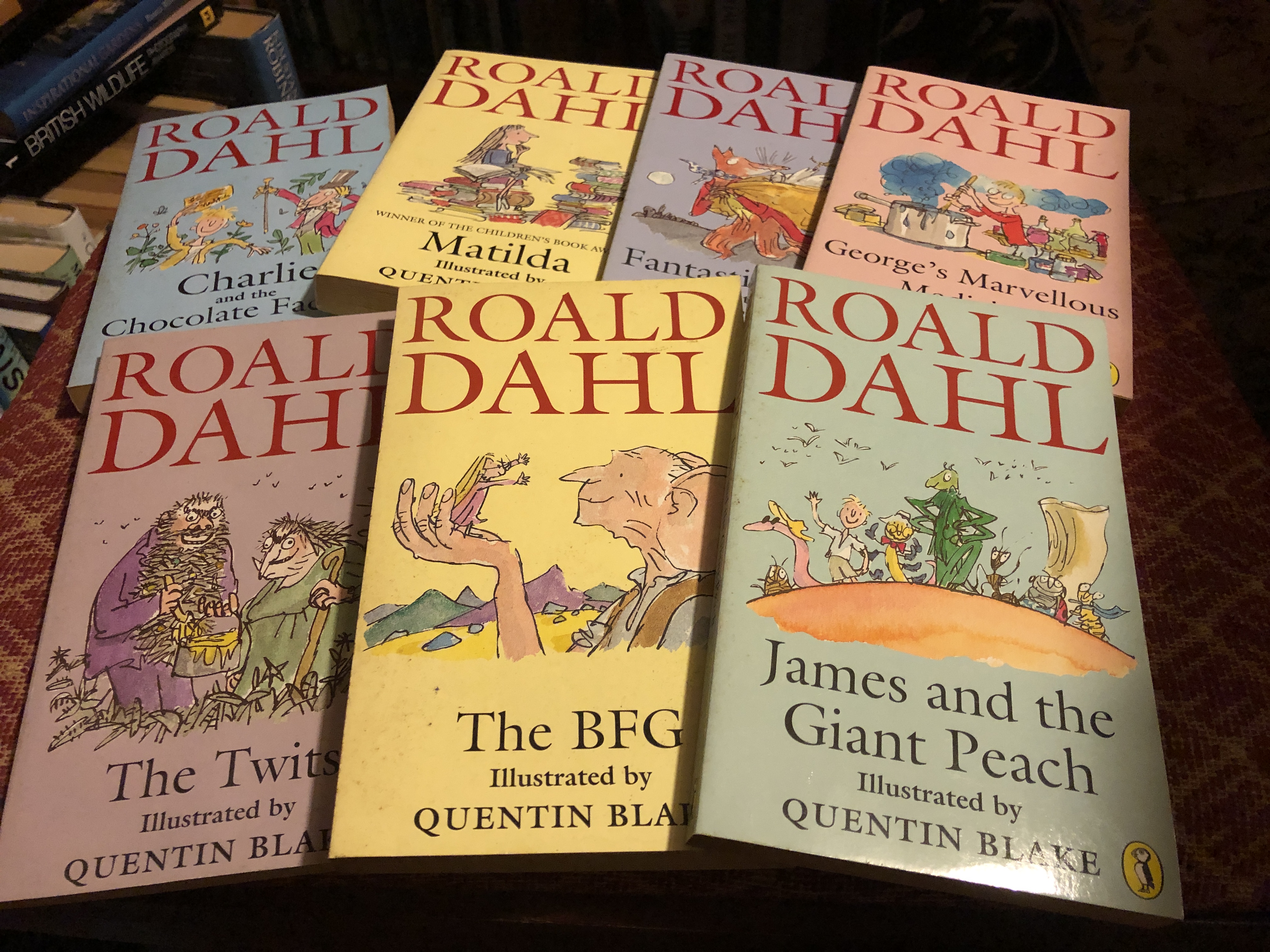
If you have any interest in books at all you probably won’t have escaped the news and debate about the editing of books written years ago and making them more attuned for a “modern” audience. The works of Roald Dahl and Ian Fleming have both come up for the treatment of taking what we would now view as outdated terms and changing them so that they better fit with modern language and attitudes.

This caused quite a bit of furore, particularly with respect to the works of Roald Dahl and ultimately led to the publisher saying that they would produce two versions of the books, one keeping the original text and another with the revised version.

The comments ranging from seeing this as being the right thing to do through to it being an abomination have been quite polarising and I can’t help wondering whether the author, if they were still alive, have made the changes anyway or if they wouldn’t have bothered. Ultimately this now rests with whoever owns the copyright to the works but does owning the copyright give them the moral right to make the changes?

Another parallel is with television programmes or films made during a much earlier time. When these are shown now they often come with a health warning that some of the views and concepts reflect an earlier time. Obviously it is much harder to edit these and so they come with a health warning and the option not to watch if we are likely to be offended. Do we also not therefore have the option not to read if we are likely to be offended?

It is more nuanced than that of course as in Roald Dahl’s case we are talking about books for children who might not necessarily have reached an age where they can interpret and understand a similar health warning or make an informed choice on what is potentially an impressionable mind. But is that perhaps also a teaching opportunity too?

Personally I have mixed feelings about this. I think if the authors were still alive they probably would do some updating of new editions as they came along – honestly they probably did do this with new editions when they were alive. However I would much rather read the book as it was originally published, I’m sensible enough to be able to realise that perhaps what is written doesn’t necessarily fit with modern standards or opinions and if it does offend me I can’t put the book down.

It also makes me think about the value of secondhand books rather than new editions or ebooks. With the latter remember in most cases you don’t actually own the book, just a licence to it, and the owner can change, modify or remove it from your device as is their whim. So updating any Roald Dahl’s or Ian Fleming’s that you might have on your ereader can happen without you even noticing.

I don’t think you need to spoon-feed readers, particularly not adults. Let people make up their own minds.

Thanks for reading.

Decades of Book Recomendations

Or some recommendations from my decades

I said in last weeks newsletter that this week I’d recommend some books. I’ve been trying to think of the best way to do this and to be honest I don’t think a big long list of books is the way to go. This newsletter has a focus around fifty things, but fifty book recommendations? Well I can do that but would you want to read that? So instead what I’ve opted for is a couple or so books recommended from each decade of my fifty years. I suspect your mileage will vary depending on where you sit in the spectrum of those decades and of course your experiences may vary and there would be books you would recommend that are from the same decades of your lifetime but a different era e.g. there was no Harry Potter when I was a lad.

So here goes:

Years 0 to 10

This is a bit difficult as really I think I’m channelling the years 8 to 10 rather than anything younger as those earlier years were full of Ladybird books and Janet and John learn to read type things. But with those caveats in mind I’m going for:

Over Sea Under Stone by Susan Cooper. Actually anything in the ‘Dark is Rising’ sequence, but this one is the first book in the series and the first one that I read. Think Cornish treasure hunt with mystery and mythology thrown in. I still pick it up to read occasionally today and give it as a present to appropriately aged children when I get the chance.

Any of the ‘Adventure’ series by Willard Price. This are a little bit dated now, but I still have fond memories of them. I started with African Adventure but any of them are good and some are amazing.

Years 11 to 20

Alistair MacLean I probably knew Alistair MacLean more from the films made of his books. Where Eagles Dare and The Guns of Navarone were two regulars in our household and still hold fond memories today. With the books though there are other stories that stand out. Ice Station Zebra, San Andreas & Night Without End are some of my favourites.

Dick Francis A friend of mine started me on his books. Flying Finish, which I’ve recently reread is one of my favourites, but many of them are excellent thrillers, although perhaps a bit dated now.

Years 21 to 30

Jurassic Park by Michael Crichton before this was a movie or even a series of movies this was a book. I remember where I was when I read it and how much I enjoyed it. I don’t think I’ve read it since, and maybe I should before recommending it now, but an author who died much to young.

Robert B Parker. His Spenser series are just great as is his Jesse Stone series. Snappy dialogue, no nonsense heroes, although some of the earlier books have some bad stereotypes they are all great stories.

Years 31 to 40

Waterlog by Roger Deakin. Yet another author who died too young but this is probably the original story of wild swimming and an amazing read. If you only read one book from this newsletter make it this one.

Henning Mankell. The author and creator of the detective Wallander, as well as some other great stories. I’m going to recommend a non Wallander novel – After the Fire – although this might technically be one that I read in the 41 to 50 bracket as most of my reading of his books during this decade of my life was his Wallander stories.

Years 41 to 50

Brothers in Arms by James Holland This only scrapes in as technically I think I read it last year or the year before, but it is an amazing piece of non fiction following the Sherwood Rangers Yeomanry, an armoured tank regiment from D-Day to the end of the Second World War. It’s an amazing piece of work and shows the true horrors of war. There are passages that are firmly stuck in my mind still.

Illumination in the Flatwoods by Joe Hutto The author raises a flock of wild turkeys from eggs to adults and writes about his experience of being a “turkey Dad” 24-7. Simply brilliant and an immersive experience that really captures what it was like.

It addition to the above I recently recommended some books to my friend who was starting out on his journey of book writing. Some of the above were amongst the books I recommended to him, the rest are below.

Stephen King – “On Writing”

John McPhee “Draft No. 4”

Pretty much anything by Patrick Leigh Fermor

Anything by Horatio Clare but in particular “A Single Swallow”

Anything by Roger Deakin but in particular “Waterlog”

Anything by Robert Macfarlane but in particular “The Wild Places” & “The Old Ways”

Richard Nelson “The Island Within”

Pete Fromm “Indian Creek Chronicles”

Philip Connors “Fire Season”

Edward Abbey “Desert Solitaire”

Anything by Craig Childs but in particular “The Animal Dialogues”

Anything by Joe Hutto but in particular “Illumination in the Flatwoods”


If you do decide to check out any of these recommendations, I’d be interested to hear how you got on. I realise that not everyone will like the same books you do but also having someone recommend a book can often open up a gateway of new experiences.

Thanks for reading.
Reading Tips

10 Tips in no particular order

First up, a welcome to all the new subscribers who’ve joined in the last couple of weeks, it’s good to have you hear.

I’m Alan and I write this newsletter which originally started out to mark my turning 50 and was 50 Things from 50 Years. When I was reaching the 50th thing I asked subscribers what I should do next and the overwhelming response was – Don’t Stop – so now I write about all manner of things, but normally on a one theme one newsletter basis. Anyway back to your scheduled programming.


In the Discord for subscribers of someone asked how they could read more books, now as you’ll know if you’ve followed me anywhere for awhile I read a lot, and mostly that’s in the form of books. Both traditional paper, but also ebooks and occasionally audiobooks (although now that I travel less I listen to less audiobooks). So you might think I have some thoughts about this and I do, and I thought that rather than just responding to the post there I’d share it more widely here. I’m sure that there are others and perhaps particular tricks that you might have so I’d love to hear what they are in the comments.

  1. To read more books you need to read more. No 5h1t Sherlock you might say, and no I’m not being facetious about this, but if you think about all the things you do in the course of the day do you actually set aside time to read? An hour before bed or perhaps at another point in the day. I tend to set aside some time each afternoon after I’ve finished work and before I get to anything else to spend some time reading. In part this is because I no longer have a commute and this was when I often used to read, so now I have a commute on the sofa with a book and a cup of tea (other beverages are available) and I’ll read for an hour. If I finish work a bit earlier I’ll read for a bit longer and vice-versa, some days it doesn’t happen at all but most days I’ll get a bit of reading done.

    The other time that I’ll read is just before bed, although I have to say that quite often my closing eyelids get the better of me and I know that I’m not taking in what I’m reading so I’ll stop.

  2. Stop Reading What You’re Not Enjoying. If you’re reading something and your not enjoying it, then stop and go and read something else. My general rule is 100 pages or 20% (if an ebook without page numbers), you can also try 100 pages minus your age. The limit is up to you. I was recently reading a novel and had gotten to over 50% and I realised that although I was enjoying it I had stopped doing so. I’ve put it to one side and I will probably go back to it another time, as I know this is a common pattern to me personally, but at the end of the day life is too short and unless this is required reading for a course to similar then if you’re not enjoying it stop.

  3. Read What Interests You. It doesn’t matter if it’s fiction or non-fiction, spy stories or romance, if it interests you read it, if it doesn’t don’t bother.

  4. Don’t Waste Your Time on Social Media. A bit like n°1 above, get off of Twitter, Facebook, Instagram, Tik-Tok or whatever else and read. Look at the stats of the time you spend there and think that you could spend that time reading instead.

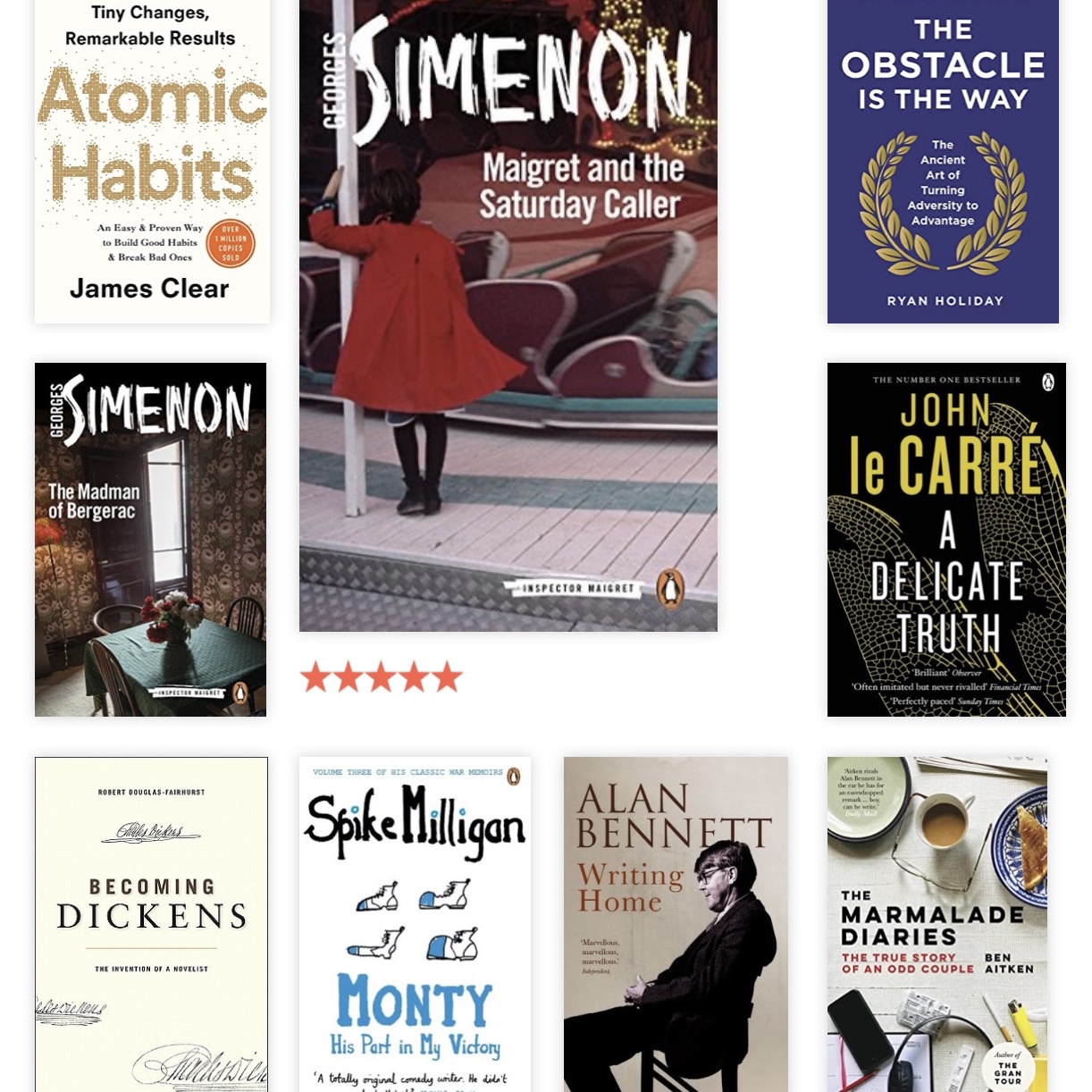
  5. Look for Inspiration on What To Read. In addition to reading what interests you, look at what other people are recommending. I like Ryan Holiday’s reading newsletter. Ryan would say that being a better reader has made him a better writer, and he writes good books too, but I really like his newsletter. Each month he recommends the best books he’s read and although I don’t follow everyone of his recommendations, I have found some amazing books that I probably would never have ever read if Ryan hadn’t recommended them.

    Another great place to look for recommendations is in your local library or bookshop. Both will have a section somewhere of staff recommendations and normally their spot on. Start in the categories that you already like to read and spread out from there.

    Thank you for reading Life After Fifty. If you like these reading tips, please feel free to share them with your networks.

    Share

  6. Make Notes. I read with a notebook and pencil and make notes as I go. Passages that are of particular interest or that strike a chord with me I’ll make a note of or underline and go back to later. In ebooks I use the highlight function and then extract these using a service called clippings.io to import them into an Evernote database. I also highlight other books that are mentioned as possible future books to read, even though in reality I may never get to read them as it’s an ever growing list.

  7. Have a Shortlist of What You’re Going To Read Next. This is probably one of my biggest issues. I have a lot of books, my brother-in-law once said that I have more books than I could ever possibly read before I die. Whilst this might be true, although I’ll have a damn good try, it presents the problem of abundance not always being a good thing and being spoilt for choice can sometimes mean that when I finish one book I don’t know what I’m going to read next. I solve this by having a shortlist of a few books that are my “next-up”, so that when I finish something I’ll move straight on to something from that list. It doesn’t always work but it does more often than not.

  8. Always Carry a Book. Or an ebook. Wherever you are carry a book with you. That way if you’re unexpectedly delayed or something crops up that gives you an unexpected gap in your day you can pick up your book and read. This can also be and ebook reader app on your phone or an audiobook, but don’t get sucked into doing something else on your phone if really what you want to do is read.

  9. Don’t Multi-task. Whilst this might seem like a perfect way to read more, it doesn’t work that way. You can’t actually read and watch TV at the same time. You’ll do neither properly and what you do read won’t go in. Don’t do it.

  10. It’s Okay To Not Read Too. Like most things we need a break now and again, and sometimes the key to reading more is reading less. If you’re really finding that you’re not enjoying reading, it’s okay to stop for a bit and come back to it after a break. We all get fatigued by anything we have to do a lot of even those things we really enjoy, so if that’s the case take a break. If you’re a reader it won’t be long before you get the itch to start reading again.

    It’s also okay to be reading more than one book at a time, by that I mean have multiple books and switch between them. I find that having both a fiction and non-fiction book on the go means that I can switch books when my mood switches.

Okay so that’s ten tips for you on how to read more. If you have any that you’d like to add please do so in the comments. I’m also going to set up a chat in the substack reader on the same topic if you’d like to explore it more there.

Next week, I’ll give trying to recommend some books for you a go. I’ve always found this to be somewhat difficult as in some ways this is a deeply personal thing in terms of my tastes but also it could be a very long list or a very short list depending on what criteria I think I should apply in terms of recommending them. Anyway we’ll see what happens.

Thanks for reading.

A Cuckoo Calling

Or perhaps it will just be a Raven

I’ve been walking a lot in places that I haven’t really explored since childhood. In many ways they are very similar to how I remember them, and in others they have changed.

In particular I’ve noticed that the birds have changed. Years ago a sighting of a Red Kite or a Buzzard would have sent the twitchers running for their binoculars. Now a Buzzard sighting is pretty much an everyday occurrence and a Red Kite a fairly common visitor.

I’m sure that this is mostly down to the impressive reintroduction programmes for Red Kite and an overall reduction in persecution of the Buzzard. Although I’m sorry to say that raptor persecution generally is still a significant problem.

I’ve also seen and heard Ravens, which are as far as I remember are a relatively new species in the are. In my childhood they were preserved for The Tower of London and looked after by beefeaters. They were obviously more widespread than that even then, but now it seems more so.

black crow on gray stone photo

Of course it could just be that my eyes and ears are more tuned these days to those things but maybe not.

I’m looking forward to spring with a certain anticipation of one particular species. It’s not one that you see very often but many will know its call. The Cuckoo. Cuckoos used to be very common here and it would be an unusual year (30 years ago) not to hear one during the springtime. However where the Buzzard and Red Kite have been the success stories I’m thinking that the Cuckoo might be the bird that bucks that trend. There has been a lot of effort to understand where Cuckoos migrate to and from with some satellite tagging, but it does seem that they are a bird in decline and that another year will pass where I don’t hear the call of a Cuckoo, something that I now probably haven’t heard in the wild for many, many years.

I’m also looking forward to the spring to start to be able to see what changes in vegetation there have been as well. Although some of it is visible at the time of the year, it will be much more obvious and easier to identify as the pathways start to green up and plants begin the new seasons growth.

For somewhere that I knew so well it’s great discovering it again.

Trust Me I'm a Biologist

But I Can’t Spell Pysics

Or at least that’s what I have the most formal qualifications in.

I doubt I could have ever made it as a mathematician or a physicist (in fact I once spelt pysics wrong on top of a weekly test paper when I was doing my A-levels and quickly switched courses to botany instead).

However I suspect it’s much more likely because I grew up with a fascination of the natural world and was influenced by the likes of Gerald Durrell, David Bellamy and the books of Willard Price.

It also helped that we lived in what would be regarded as the countryside rather than in town, so my “playground” was the local woods and fields. I was naturally curious about the natural world around me, although when it came to studying it academically I was less enthusiastic. Classrooms and lecture theatres I loathed, but doing out in the field practical work was my thing. Theses on bird feeding followed, as did nighttime badger watching.

As I got older and my career progressed, I found myself much more involved in work that kept me indoors, I made some career choices that in hindsight I regret but at the time seemed like the right thing. I blame youthful ambition and the lure of a little extra money, but they were the right decisions at the time and if I’d chosen differently who knows where I might be or what I might be doing.

As I sit typing these words I have one eye looking out over the top of my laptop screen looking at the birds in the garden on the feeder so my passion is still there and hasn’t diminished over the years.

As I reached the milestone of solar orbits that originally inspired this newsletter this does have me thinking about how I want to spend the remaining years though. I’m unlikely to go back and do anything significant academically but I might perhaps explore other avenues of learning – you can teach an old dog new tricks. Or perhaps I should be inspiring the next generation of biologists? For a number of years I used to go back and give a lecture at my old university to the current students on the course that I was on – a kind of “and this is what I do now”, but I don’t think that’s what I have in mind either.

Maybe it’s just about sharing the marvels of the natural world, although there is plenty of that out there already too – trust me, I’m a biologist.


Welcome to new subscribers, it’s great to have you here.