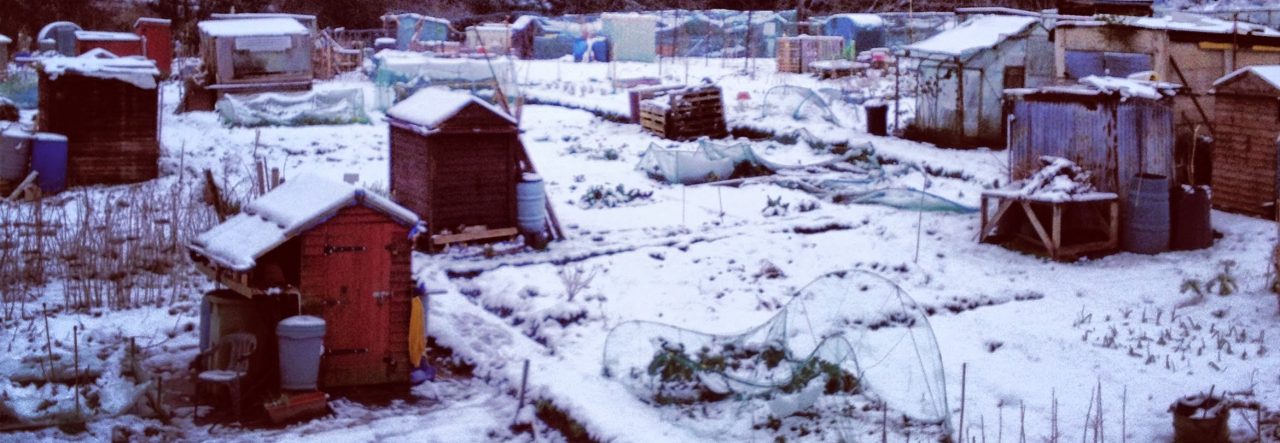
Drainage

My Dad taught me how to rod a drain. I’ve maybe practiced those skills about three times. It isn’t actually the sort of thing that you want to practice a lot, although I realise that for some people it’s their job.

The last time I had to do this was last week. On Tuesday morning I got up and when I flushed the loo, I noticed that it was backing up. Now modern toilet pans should be able to contain all of the water from the cistern without overflowing, but it is always a bit alarming to see the water rising and thinking it isn’t going to stop before it does.

After the water had fallen back to a normal level, I flushed again. Same result. It seemed that my morning was going to change from the work I had planned to do to seeing what was wrong with the drains.

Now we’re in an 80 year old house with a private drainage system, this means that we have a cesspit rather than being connected to the main sewer. I’ve held that as sanitaryware has become more water efficient this isn’t always the best thing for such an aged system. It means that there is often more solids than liquids and it is the latter that makes for a happy cesspit.

Anyway I went outside and lifted the first of the inspection covers. The drains were “dry”, not completely so, but there was no water backed up. I went to the next one and lifted the lid and this was part full. I walked down to the end of the line and lifted the chamber manhole there and this too was dry. So basically I knew where the problem was. Of course on the longest run of the system!

There is a set of drain rods in the garage, that I’ve never used. There are 33 of them which you join together with a spanner and feed slowly down the drain, pausing to add a new rod each time you come to the end of the last one. I was wondering how many of the 33 I’d actually need. Turns out 32 is what I needed, I had to rod the whole length and I’m not exactly sure where the blockage was but I had to push it all the way to the end of the line.

Shitty job.

To help with the process I had filled the bath with cold water twice, to provide a bit of a head of pressure to push things along, this helped a lot but it still took me the best part of three hours to do this.

Those skills that I have though, the ones my Dad taught me. Invaluable. I’m not sure how much a professional would have charged to do the same thing, but I’m pretty sure I saved some money.

I’m hoping that is the first and the last time that I’ll have to do that, who knows. We’re careful about treating an old system gently.

Thanks for reading.
Deerwatch

Welcome to new subscribers. It’s great to have you here, but if you decide that this isn’t for you that’s okay, there’s an unsubscribe button at the bottom of this email. Obviously I hope you don’t use it, but no hard feelings if you do.


Years ago I used to travel to work on the train everyday. At certain times of the year when the early morning light was right I used to be able to see deer in a field adjacent to the railway line. Mostly these were silhouettes in pale morning light, but I used to count how many I’d seen and tweet the number with #deerwatch.

When my morning rail commutes stopped when my job changed I still used to see deer, only less frequently and these were in more urban environments. Anecdotally I’d say that “urban” deer are far more skittish and won’t hang about for you to count them much less whip out your phone and take a picture.

Since moving house however, our more rural location means that deer (we have both roe and fallow here, and probably muntjac too) are much more of a daily sighting and they are also more tolerant of humans. When I see a deer now there is a kind of appraisal on behalf of the deer, akin to how much of a threat they perceive me to be I assume. It seems to consist of an assessment of sight, sound and smell.

Ultimately it means that if I am respectful of them, I can sometimes get a photograph, or even a few seconds of video (you’ll need to click through to get the video below).

After I posted the video above, one of my friends reminded me of #deerwatch (Hi Will), and since then I’ve revived the old hashtag. It’s also made me realise and value just how lucky I am to be back in a more rural setting again. I like that my pocket notebook is filled with a list of wildlife each day. I don’t record everything that I see, just the more unusual stuff, but frequently there will be deer listed even if I couldn’t get a photograph because they were too far away. Sometimes the entry is followed with – (lots of) – which means that I effectively lost count after a certain point.

I suspect that over the coming year the list will change and grow with other species and sightings (I’ve talked in previous newsletters about buzzards and cuckoos) and in the last week I’ve been seeing a red kite on a regular basis too. I don’t know what I’ll be writing in those books but I am looking forward to finding out and I dare say that I’ll be reporting back on some of the more unusual stuff here.

After I wrote this I took my dog for a walk and we’d not gone far when I saw two red kites soaring overhead. I managed to capture a short video:

Thanks for reading.

Can I Read All The Books?

First up, welcome to new subscribers. It’s good to have your attention, but if you decide that this isn’t for you that’s okay, there’s an unsubscribe button at the bottom of this email. Obviously I hope you don’t use it, but no hard feelings if you do.


Over the years I’ve read a lot of books, I have no idea how many in total but I do have good data since about 2011. It set me thinking about something my brother-in-law once said to me about never being able to read all of the books I own before I die.

Taken literally he’s right, but then many of the books I own are ones that I have already read, some of those I will read again and there are of course many that I haven’t gotten to yet and of course many that I haven’t acquired yet.

Theoretically then, how many could I read before I die?

Based on the average number of books I’ve read per year (using the data I have) and the average lifespan for my demographic I arrived at the number 1,488. There are obviously a lot of variables. My average number of books is based on books of all sorts of length and an assumption that the average remains the same, for example if I took the last few years only the average is a lot higher. Of course it also assumes that I live to the average lifespan.

Does it matter though?

Would it matter if I never read another book? I’d posit that yes it would, but the number read isn’t important.

Reading should be about enjoying what you’re reading. Learning, exploring, making discoveries. It should be about being present and not worrying about whether or not you’re going to read every book you own. We have to read enough things that frankly aren’t worth it – terms and conditions, work reports, news and views – that when it comes to books it should be something to look forward to and not be a chore governed by arbitrary numbers.

For a few years now I’ve not had a target of the number of books I want to read. Well technically that’s not true, I’ve set my target as reading 1 book. It removes any pressure of having to read and anecdotally I’d say I’ve actually been reading more, and enjoying what I’m reading more.

So do I think I will read my 1,488 books before I die. I don’t know and to be honest I don’t care. I just want to read, what I want to read, when I want to read it.

Thanks for reading!

Should We Edit Literary History?

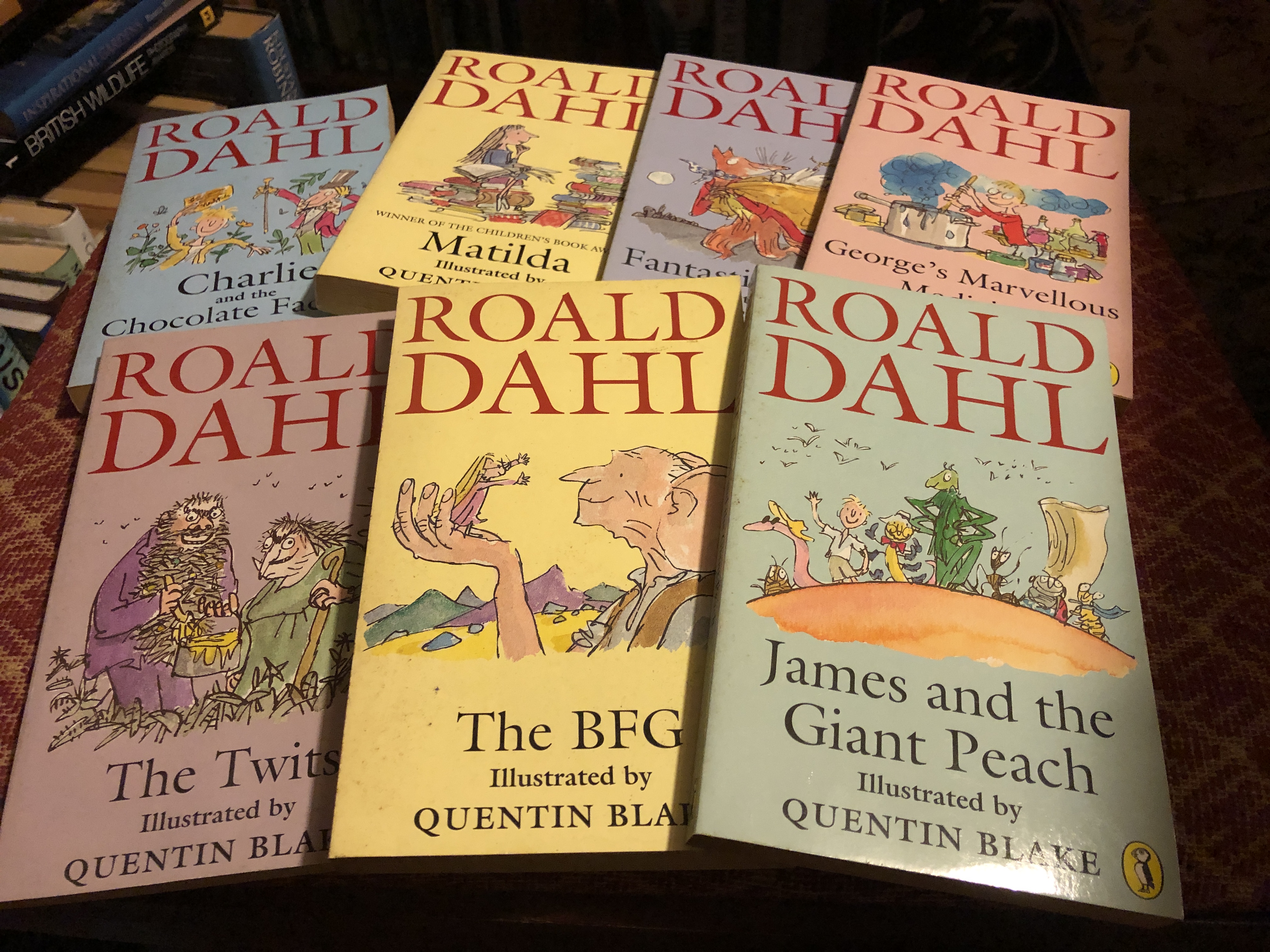
If you have any interest in books at all you probably won’t have escaped the news and debate about the editing of books written years ago and making them more attuned for a “modern” audience. The works of Roald Dahl and Ian Fleming have both come up for the treatment of taking what we would now view as outdated terms and changing them so that they better fit with modern language and attitudes.

This caused quite a bit of furore, particularly with respect to the works of Roald Dahl and ultimately led to the publisher saying that they would produce two versions of the books, one keeping the original text and another with the revised version.

The comments ranging from seeing this as being the right thing to do through to it being an abomination have been quite polarising and I can’t help wondering whether the author, if they were still alive, have made the changes anyway or if they wouldn’t have bothered. Ultimately this now rests with whoever owns the copyright to the works but does owning the copyright give them the moral right to make the changes?

Another parallel is with television programmes or films made during a much earlier time. When these are shown now they often come with a health warning that some of the views and concepts reflect an earlier time. Obviously it is much harder to edit these and so they come with a health warning and the option not to watch if we are likely to be offended. Do we also not therefore have the option not to read if we are likely to be offended?

It is more nuanced than that of course as in Roald Dahl’s case we are talking about books for children who might not necessarily have reached an age where they can interpret and understand a similar health warning or make an informed choice on what is potentially an impressionable mind. But is that perhaps also a teaching opportunity too?

Personally I have mixed feelings about this. I think if the authors were still alive they probably would do some updating of new editions as they came along – honestly they probably did do this with new editions when they were alive. However I would much rather read the book as it was originally published, I’m sensible enough to be able to realise that perhaps what is written doesn’t necessarily fit with modern standards or opinions and if it does offend me I can’t put the book down.

It also makes me think about the value of secondhand books rather than new editions or ebooks. With the latter remember in most cases you don’t actually own the book, just a licence to it, and the owner can change, modify or remove it from your device as is their whim. So updating any Roald Dahl’s or Ian Fleming’s that you might have on your ereader can happen without you even noticing.

I don’t think you need to spoon-feed readers, particularly not adults. Let people make up their own minds.

Thanks for reading.